
- Operator
- Setonaikaikisen (瀬戸内海汽船)
- Route
- Miyajima pier to Kure Chuo Sanbashi Terminal (No. 3 pier), direct by sea
- Crossing time
- About 45 minutes (regular service); about 50 minutes (August Sea Spica)
- Adult fare, one way
- ¥2,500 (regular season); ¥3,000 (August Sea Spica). Kure→Miyajima adds ¥100 visitor tax
- Season
- April 4 – November 29, 2026; no service December–March
- Operating days
- Saturdays, Sundays, public holidays (regular); adds Fridays and Mondays in August
- Reservation
- Phone 082-253-1212 by 16:00 the day before; no walk-up guarantee, no online booking
- Kure arrival point
- Kure Chuo Sanbashi Terminal — 1 minute from the Yamato Museum, 5–7 minutes from JR Kure Station
- Japan Rail Pass valid?
- No
This post contains affiliate links. We may earn a small commission at no extra cost to you.
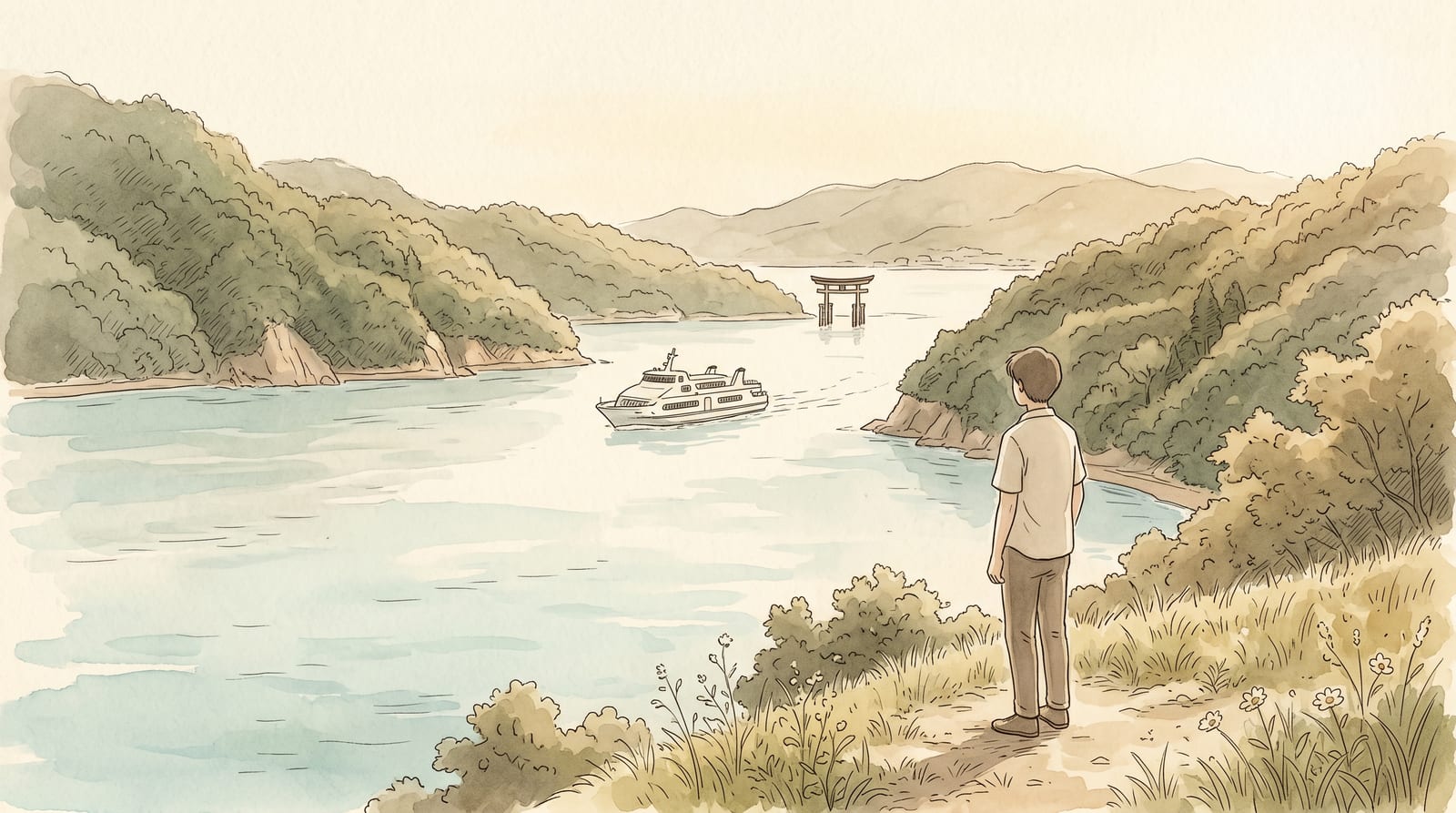
The ferry slip at Miyajima is quieter than the deer and the souvenir shops behind it. Step aboard, and within a few minutes the vermilion torii is already shrinking in the wake. Forty-five minutes later, the grey shapes of JMSDF submarines appear along the Kure waterfront — a different Japan entirely from the one you just left. Almost nobody coming off the Miyajima ropeway thinks to arrive in Kure this way.
The sea route from Miyajima to Kure is one of the least-known access options in the Hiroshima region. Most visitors take the ferry back to Hiroshima Port or the JR Miyajima ferry to Miyajimaguchi, then catch a train. The Setonaikaikisen Blue Line does something different: it skips the land leg and drops you straight at the Kure waterfront, a short walk from the naval museums. For anyone planning a two-stop day, Miyajima in the morning and Kure in the afternoon, this is the route that makes the geography work.
What is the Blue Line, and who runs it?
Setonaikaikisen (瀬戸内海汽船) has operated passenger and ferry services across Hiroshima Bay and the Seto Inland Sea for generations. Their Blue Line is a seasonal high-speed service connecting Miyajima and Kure directly by water, without the usual land detour through Hiroshima.
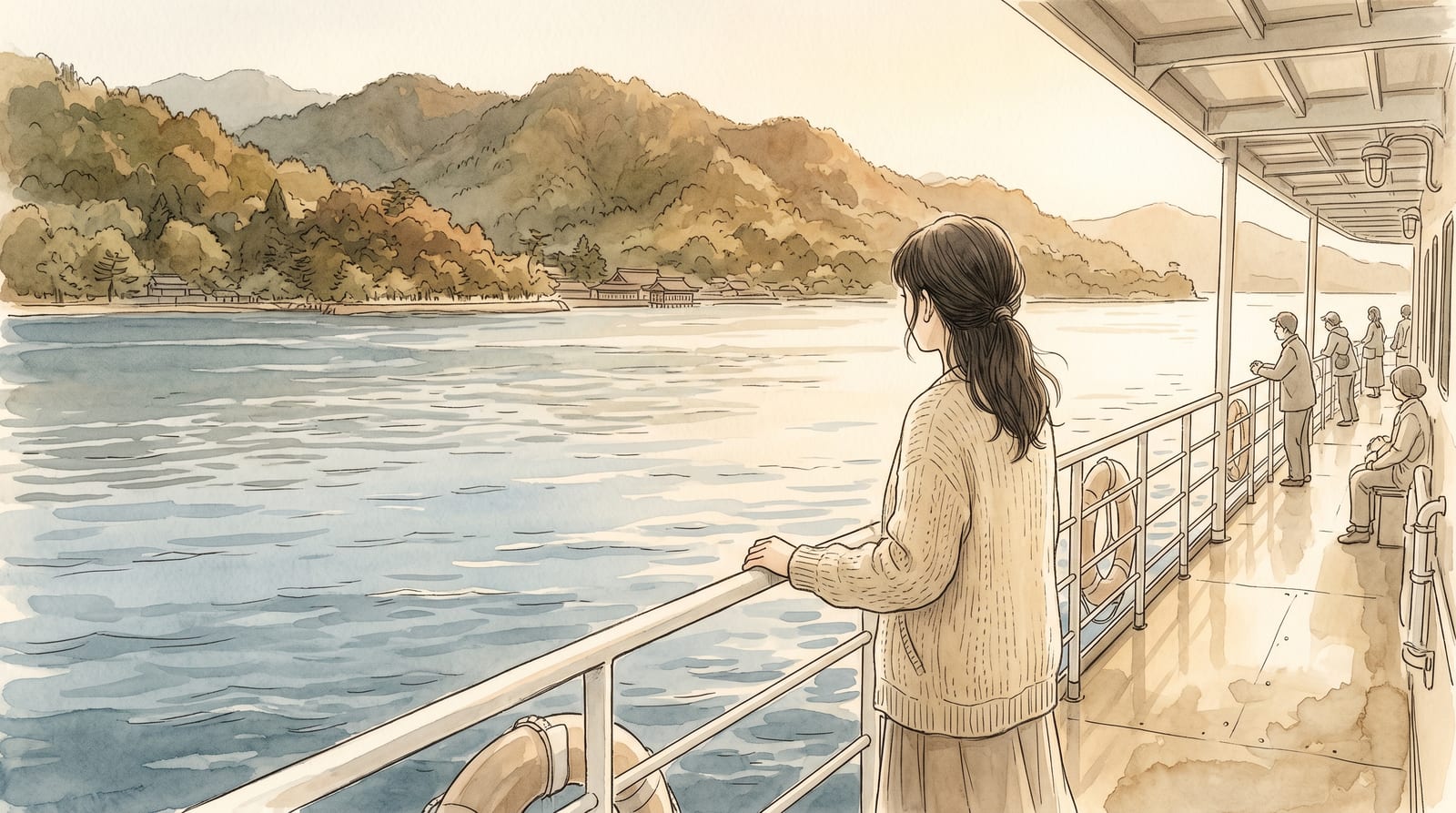
The crossing takes about 45 minutes in the regular season. It is not a car ferry — this is a passenger-only high-speed vessel. The route passes through open Hiroshima Bay and approaches Kure harbour from the water, which means you arrive with a clear view of the base before you set foot on shore.
Blue Line vs. JR Kure Line: which should you take?
This is the practical question. The two options are genuinely different in cost, route, and what kind of day they support.
| Blue Line Ferry | JR Kure Line (train) | |
|---|---|---|
| Route | Miyajima pier → Kure waterfront (sea) | Miyajimaguchi or Hiroshima Station → Kure Station (land) |
| Fare (adult) | ¥2,500 regular / ¥3,000 August | About ¥510 IC card |
| Journey time | About 45 min (regular) / About 50 min (August) | About 35 min rapid / about 50 min local |
| Days of operation | Sat/Sun/holidays (regular); Fri/Sat/Sun/Mon/holidays (August) | Every day, roughly every 20–30 min during the day |
| Advance booking | Phone reservation by 16:00 the day before | No booking required |
| JR Pass valid? | No | Yes |
| Best for | Miyajima → Kure direct; scenic harbour approach | Everyday reliability; JR Pass holders; budget travellers |
A JR Pass is not worth buying for the Hiroshima–Kure leg alone — the single IC fare is about ¥510 each way. If Kure is part of a wider Japan itinerary that already involves Shinkansen travel, Japan Rail Pass can still bundle the whole trip economically. But the Blue Line ferry is in a different category: you are paying for the direct Miyajima–Kure connection, not transport efficiency. For the Hiroshima-to-Kure journey specifically, our Hiroshima to Kure day trip guide covers all four access routes in detail.
Fares and seasons: regular vs. August Sea Spica
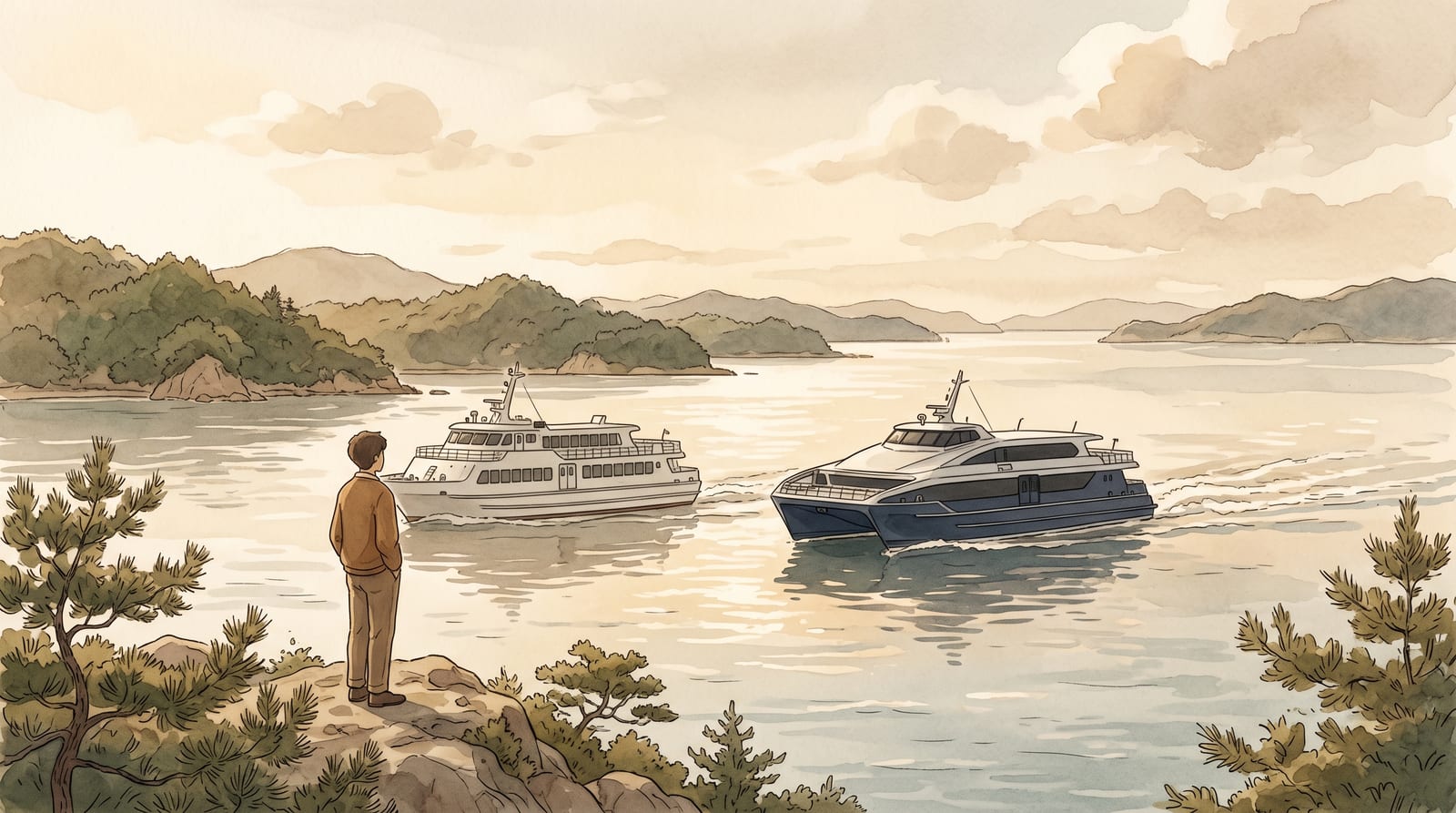
There are two operating modes, and they are not interchangeable. The regular service and the August Sea Spica run different vessels, different schedules, and different fares. The full season runs from April 4 to November 29, 2026, on weekends and public holidays, with the August service swapping in the Sea Spica; there is no Blue Line service from December through March.
The regular service covers the April-to-July and September-to-November stretches; August runs separately on the Sea Spica. The operator does not publish the exact date the regular service pauses for August or resumes in September, so check the current calendar when you book.
| Regular service | August Sea Spica | |
|---|---|---|
| Season | April through July and September through November | August 2026 |
| Operating days | Saturdays, Sundays, and public holidays | Fridays, Saturdays, Sundays, Mondays, and public holidays |
| Adult fare (one way) | ¥2,500 | ¥3,000 |
| Child fare (one way) | ¥1,250 | ¥1,500 |
| Kure→Miyajima visitor tax | Add ¥100 | Add ¥100 |
| Crossing time | About 45 min | About 50 min |
The ¥100 Miyajima Visitor Tax applies to the Kure→Miyajima direction only — you pay it whether you are arriving at Miyajima by ferry, JR ferry, or any other means. If you are only travelling Miyajima→Kure, no visitor tax applies.
The timetable: what departs when
Regular service (April–July and September–November, Sat/Sun/holidays)
The regular service runs two sailings per day in each direction.
Kure → Miyajima:
- 10:40 → 11:25
Miyajima → Kure:
- 11:30 → 12:15
- 15:10 → 15:55
Kure → Miyajima (second departure):
- 14:20 → 15:05
This is a partial schedule. Confirm the full current timetable at setonaikaikisen.co.jp/language/en/highspeedship5/ before your trip, as Setonaikaikisen sometimes adjusts departure times within the season.
The Miyajima→Kure 11:30 sailing pairs naturally with a morning at Miyajima: depart Hiroshima early, spend two to three hours at the island, board the 11:30 ferry, and arrive in Kure in time for lunch near the museums.
August Sea Spica (Fri/Sat/Sun/Mon/holidays)
The August service adds a third sailing in each direction and operates on more days of the week.
Kure → Miyajima:
- 09:35 → 10:25
- 13:15 → 14:05
- 15:30 → 16:20
Miyajima → Kure:
- 10:30 → 11:20
- 14:10 → 15:00
- 16:25 → 17:15
The extra flexibility in August comes at a higher fare (¥3,000 adults, ¥1,500 children).
How to book: phone reservation by 16:00 the day before
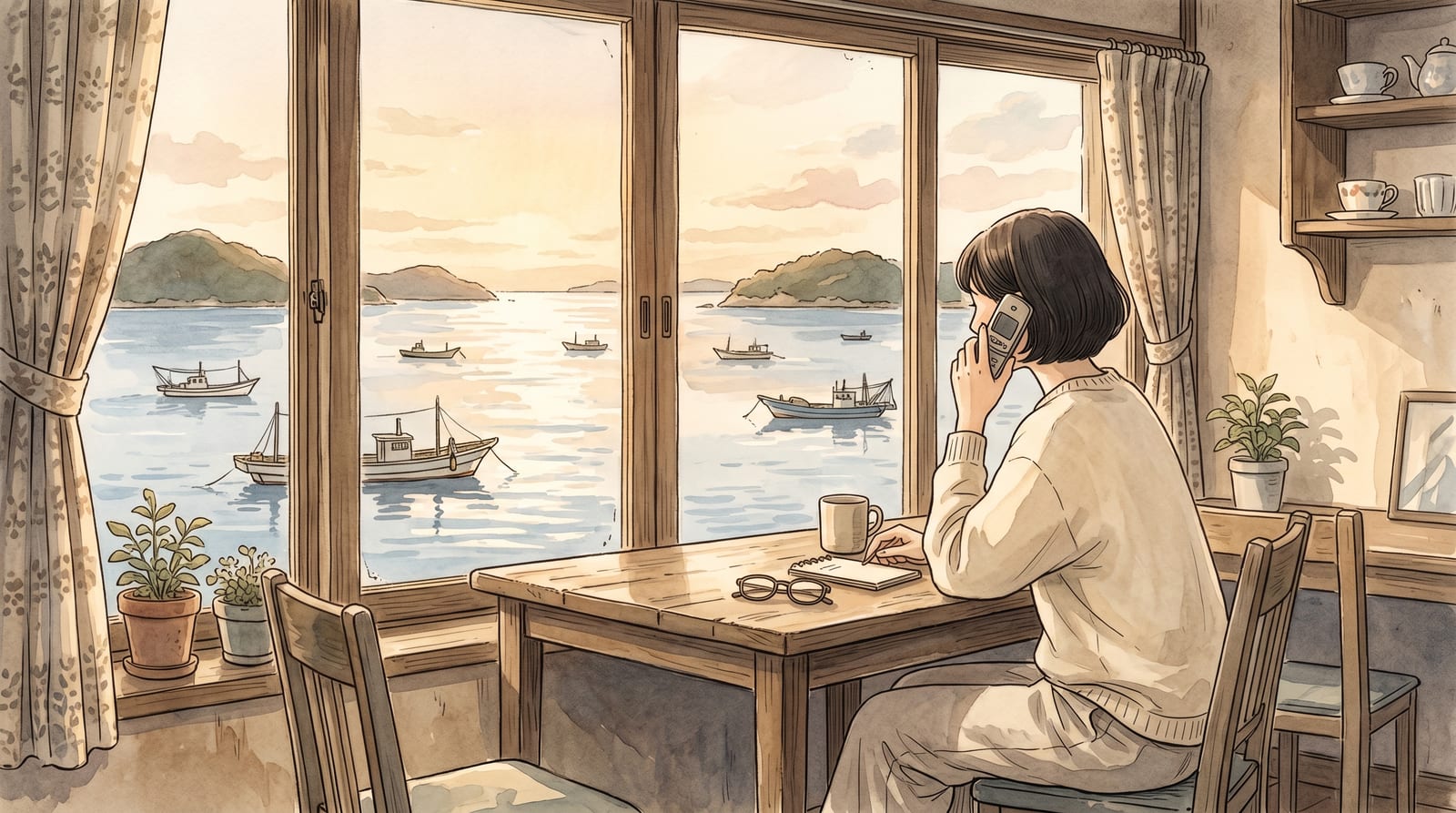
Reservations are by telephone only. Call Setonaikaikisen on 082-253-1212 by 16:00 the day before you want to travel.
There is no online booking system for the Blue Line. The phone line is the only way to secure your seat. If you call the morning of travel, it is too late.
A few practical notes for international travellers:
- The reservation line is handled in Japanese. If you do not speak Japanese, ask your hotel's front desk to call on your behalf — this is a routine favour at most mid-range hotels in Hiroshima and Kure.
- Confirm the direction (Miyajima→Kure or Kure→Miyajima), the date, and the specific departure time.
- Klook Japan eSIM Having a Japanese eSIM in your phone lets you make domestic calls during your trip without roaming charges.
If you would rather skip the logistics of a Japanese-language phone reservation, a guided day tour that includes transport can be worth considering. GetYourGuide Kure day tour GetYourGuide runs private tours from Hiroshima that cover transport and an English-speaking guide.
Where to board in Kure
The Kure departure point is the Kure Chuo Sanbashi Terminal (呉中央桟橋ターミナル), 4-44 Takaramachi, Kure. High-speed ships, including the Blue Line, depart from the No. 3 pier at this terminal.
This terminal is the same one used by the Kure harbour warship cruise. From the Yamato Museum main entrance, it is a 1-minute walk along the waterfront. From JR Kure Station, it is about a 5–7 minute walk south toward the waterfront.
Where to board in Miyajima
On the Miyajima side, the Blue Line departs from a pier that Setonaikaikisen explicitly notes is separate from the regular Miyajima ferry terminal used by the Miyajimaguchi boats. The operator does not publish the exact pier name or a walking time on its English or Japanese schedule pages. Local tourism listings place the boarding point a short walk east of the passenger terminal (their accounts say roughly 80–100 m, and the figures vary). Because the official source stops short of a precise number, confirm the boarding point when you phone to reserve, and on the island look for the Setonaikaikisen Blue Line signage rather than the main ferry queue.
What to do on arrival in Kure
The ferry drops you at the Kure Chuo Sanbashi Terminal, one minute from the Yamato Museum. If you have an afternoon in Kure, the natural plan is:
13:00–13:15 Arrive by the 12:15 ferry (Miyajima departure 11:30). Walk to the waterfront area.
13:15–15:30 Yamato Museum — the 1:10 scale model of battleship Yamato, a Zero fighter, and the Kaiten human torpedo. Last entry is 17:30; the museum closes at 18:00. Admission ¥1,000 adults.
15:30–17:00 JMSDF Kure Museum (Tetsu no Kujira) — free entry, a 1–2 minute walk across the plaza from the Yamato Museum. Walk through the decommissioned JS Akishio submarine. Closes at 18:00, last entry 17:30. Closed Tuesdays.
17:00 onward Lunch or dinner at a naval curry restaurant in the Akarenga Doori area, or head to JR Kure Station for the return train to Hiroshima (about 35 minutes, about ¥510).
For more on what to see in a single afternoon in Kure, see our one-day Kure itinerary.
How does this fit into a two-day Hiroshima itinerary?
Miyajima Morning, Kure Afternoon
Ferry connection, no backtracking to Hiroshima
- Depart Hiroshima early for Miyajima (JR or ferry from Hiroshima Port)
- Miyajima: Itsukushima Shrine, waterfront
- Board Blue Line ferry at Miyajima pier
- Arrive Kure Chuo Sanbashi Terminal
- Yamato Museum + Tetsu no Kujira; naval curry lunch at Akarenga Doori
- JR Kure Station → Hiroshima (~35 min, ~¥510)
Best Balance
Full Miyajima + full Kure afternoon + harbour cruise
- Depart Hiroshima for Miyajima; arrive before the crowds
- Miyajima: shrine, ropeway, deer, oysters at a vendor on the main street
- Blue Line ferry from Miyajima
- Arrive Kure; walk 1 min to waterfront
- Lunch at a naval curry restaurant near the terminal
- Yamato Museum (audio guide, 2–3 hours)
- Tetsu no Kujira (free, 1 hour)
- Return train to Hiroshima
Recommended
Overnight in Kure
Adds the warship cruise, Etajima, or the Tobishima cycling route
- Day 1: Miyajima morning → Blue Line ferry → Kure afternoon (museums + naval curry)
- Day 2: [Kure harbour warship cruise](/kure-harbor-warship-cruise) (¥2,200, ~40 min; book 2 days ahead) or Etajima Naval Academy tour (free, ferry ¥450–650 from Kure pier)
- Stay: Rakuten Travel Kure hotels Hotel options near JR Kure Station, 5–7 min walk to the museums
Practical tips for the crossing
How much luggage can I bring?
The official English page does not publish a luggage policy for the Blue Line. For practical planning: high-speed passenger ferries in Japan typically allow standard carry-on travel bags without issue, but oversize luggage may be difficult on a smaller vessel. If you are travelling with large bags, confirm with Setonaikaikisen when you call to reserve.Kure Station has coin lockers if you want to leave luggage while touring the museums.
Accessibility
The official English page does not state accessibility details for the high-speed ferry. If you or someone in your group uses a wheelchair or has mobility requirements, contact Setonaikaikisen before booking.Weather cancellations
The Blue Line is a small high-speed vessel operating in open Hiroshima Bay. Setonaikaikisen may cancel or delay sailings in rough weather or strong winds. If you are visiting in late autumn, check the weather forecast and have a backup plan (the JR Kure Line from Hiroshima to Kure runs daily regardless of sea conditions).
Stay connected
If your phone plan does not cover calls and data in Japan, a Klook Japan eSIM Japan eSIM is worth picking up before your trip. You will need it to call the reservation line and navigate the Japanese booking forms you may encounter elsewhere in Hiroshima.
FAQ
Does the Blue Line ferry run every day?
No. The regular service runs Saturdays, Sundays, and public holidays only, from early April to late July and again from early September to late November. The August Sea Spica service adds Fridays and Mondays to the weekend schedule but uses a different vessel and costs ¥3,000 per adult instead of ¥2,500. There is no service at all outside these seasonal windows. If you need to get to Kure on a weekday, the JR Kure Line from Hiroshima or Miyajimaguchi is the reliable option — about 35 minutes and ¥510 each way.
How long does the Miyajima–Kure ferry take?
The crossing takes about 45 minutes on the regular service (April–July, September–November) and about 50 minutes on the August Sea Spica. Both depart from the Miyajima pier and arrive at Kure Chuo Sanbashi Terminal, a 5–7 minute walk from JR Kure Station and a 1-minute walk from the Yamato Museum entrance.
Do I need to book in advance?
Yes. Setonaikaikisen requires a telephone reservation made by 16:00 the day before travel. Call 082-253-1212. Walk-up boarding is not guaranteed and is not recommended during busy weekends or public holidays. There is no online booking system.
Can I use a Japan Rail Pass on the Blue Line ferry?
No. The Japan Rail Pass is not valid on Setonaikaikisen ferries. The Blue Line is a private ferry service with its own fares. However, a JR West Miyajima/Setouchi Gururin Pass allows travel at an additional ¥500 (adults) or ¥250 (children), so holders of that regional pass pay a reduced supplement rather than the full fare.
Where in Kure does the ferry dock?
The ferry docks at the No. 3 pier, Kure Chuo Sanbashi Terminal, 4-44 Takaramachi, Kure. This terminal is about a 5–7 minute walk from JR Kure Station and a 1-minute walk from the Yamato Museum entrance.
Is there a visitor tax on top of the fare?
Yes, but only for the Kure-to-Miyajima direction. The ¥100 Miyajima Visitor Tax is added to the Kure→Miyajima ticket price, making the effective adult fare ¥2,600 (regular season) or ¥3,100 (August Sea Spica). Travelling Miyajima→Kure, no visitor tax applies.
Is there anything to see on the crossing itself?
The route passes through Hiroshima Bay and approaches Kure from the water. On a clear day you can see the Kure JMSDF base appearing on the horizon as you approach — submarines and destroyers at berth, visible from the water before you disembark. Whether any specific vessels are present depends on the JMSDF's operational schedule. The crossing itself takes about 45 minutes and is pleasant on calm days; in rough autumn weather, conditions on a small high-speed vessel can be choppy.
Call before 16:00. Everything else follows from that.
The ferry reservation is the single constraint that shapes this day. Once you have the seat confirmed, the Kure side is straightforward: the museums are one minute from the dock, the naval curry restaurants are a short walk, and the return train to Hiroshima runs every 20–30 minutes. If you want backup options for transport, a guided day tour, or a Kure hotel for an overnight stay, these are the practical bookings to have ready.
Related guides
More in our Kure and Hiroshima series:
- Best day trips from Hiroshima — the full menu of options beyond Miyajima
- Hiroshima to Kure day trip guide — all four transport options (train, bus, ferry, car) with times and fares
- One day in Kure: the 2026 itinerary — how to spend a full day at the museums, naval curry, and waterfront
- Yamato Museum complete guide — the 26.3-meter scale model, Zero fighter, and 2026 reopening
- JMSDF Kure Museum (Tetsu no Kujira) — walking through a real submarine, free entry
- Kure harbor warship cruise — 40 minutes on the water past active JMSDF vessels, ¥2,200
Last visited: 2026-06 | Author: Masayuki Ogasahara | Illustrations generated with AI (Gemini) using real reference photographs. Photographs are original or used with permission; some include light AI-assisted post-processing for cleanup or exposure, with the scene itself unchanged. This article contains affiliate links to GetYourGuide, JRPass.com, Klook, and Rakuten Travel. We may earn a small commission at no extra cost to you. All ferry pricing, schedule, and operational information was verified against the official Setonaikaikisen English page (setonaikaikisen.co.jp) in June 2026; please confirm with the operator before your visit as schedules and prices can change.