
This post contains affiliate links. We may earn a small commission at no extra cost to you.
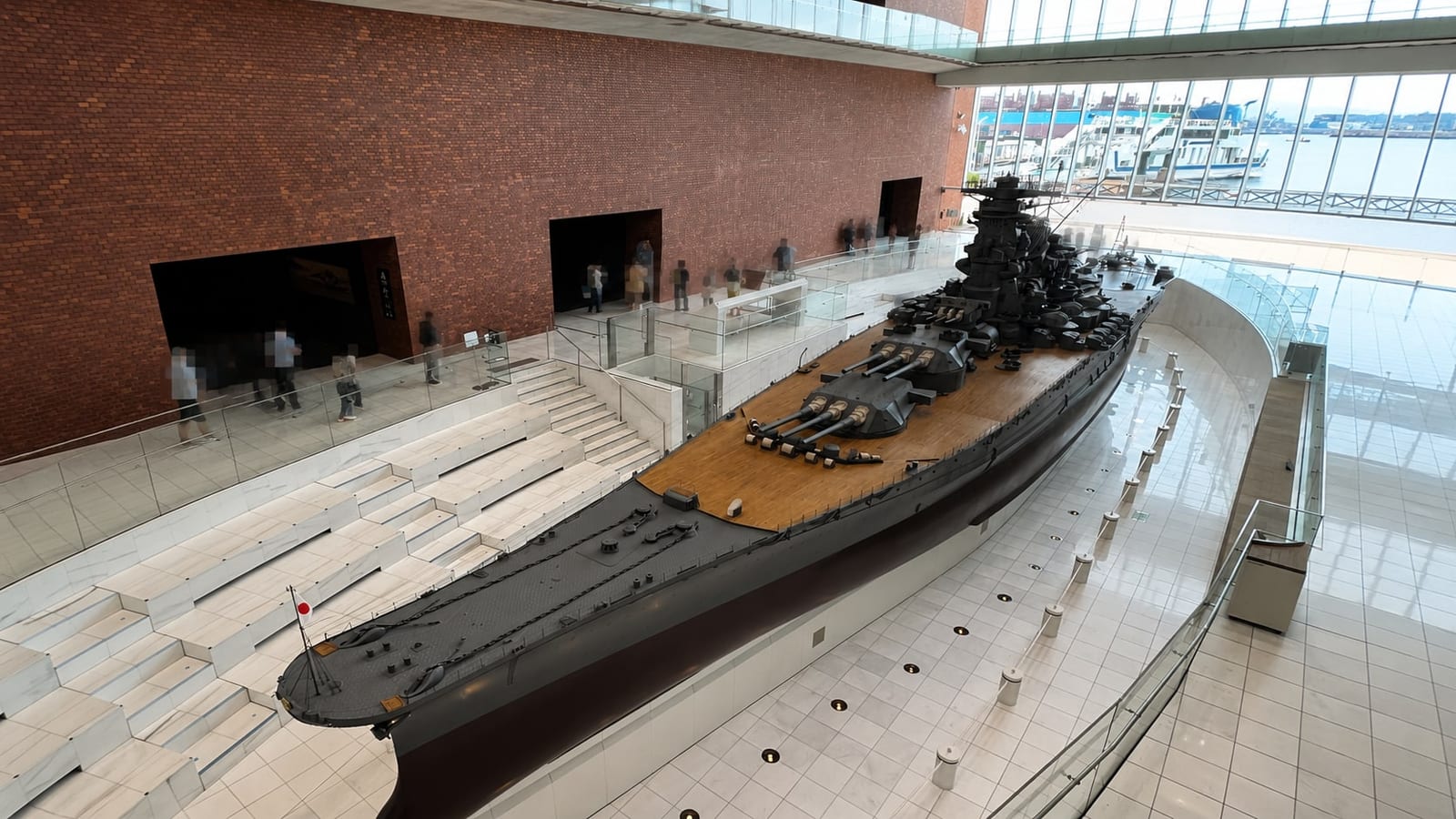
The 1:10 scale model of battleship Yamato hangs in the museum atrium like a suspended thought — 26.3 meters of wood and steel, hand-built from the original construction drawings. Looking down on it from the upper walkway is the kind of moment that doesn't translate to a photo, which is why most foreign visitors to Hiroshima still don't know it sits an easy 35-minute train ride away.
If you are staying in Hiroshima and want a quieter, more local side trip than Miyajima, Kure is one of the easiest and most meaningful half-day trips you can take. We spent a day there in May 2026, weeks after the museum reopened on April 23 from its longest renovation since the building first opened in 2005. Here is what we learned about the reopened exhibits, what hasn't changed, and how to plan a visit that does the place justice.
What is the Yamato Museum and why does it matter?
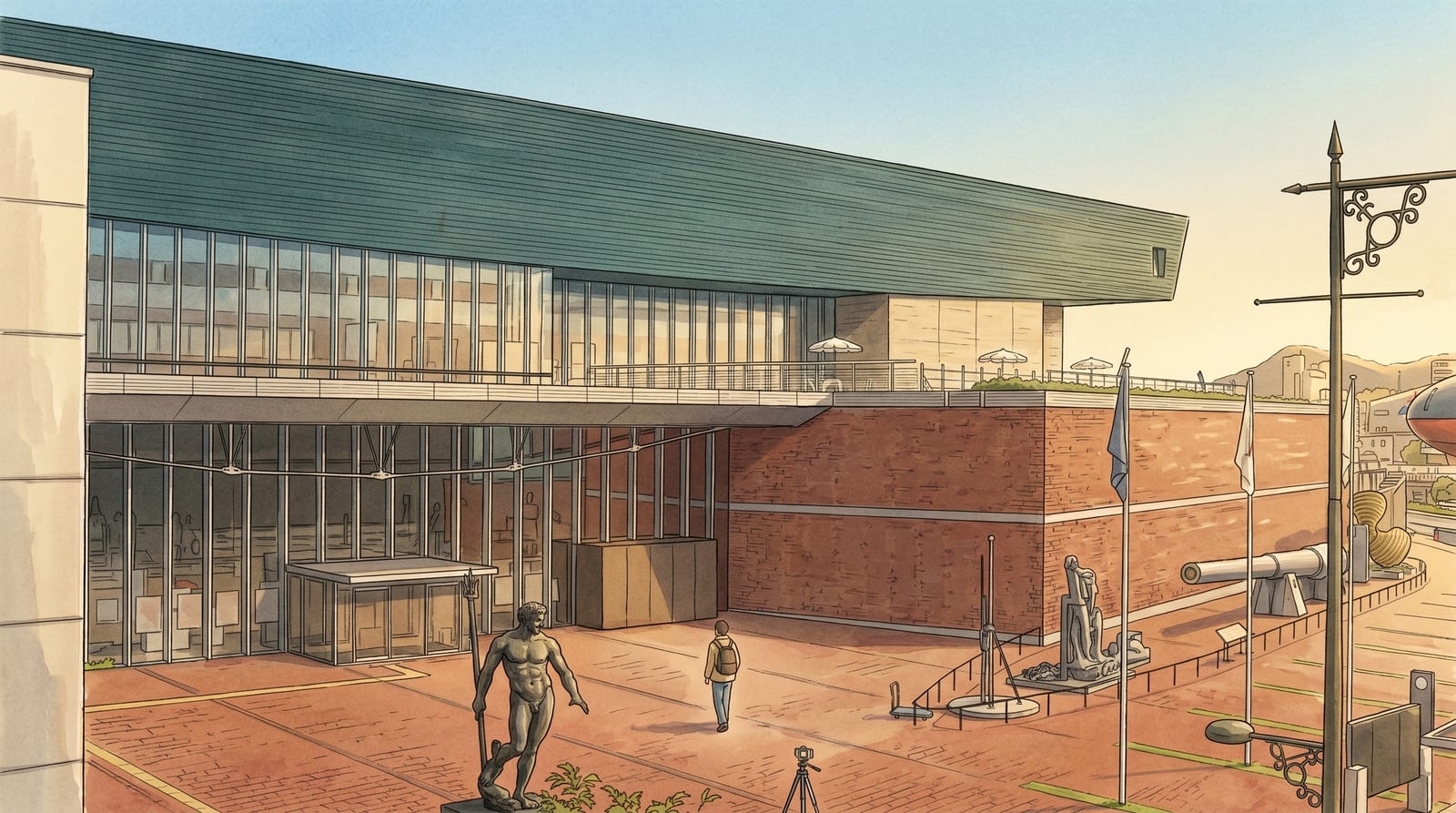
The Yamato Museum, officially the Kure City Maritime History and Science Museum (呉市海事歴史科学館), tells the story of Japan's shipbuilding heritage through the lens of one ship: the battleship Yamato, the largest warship ever built.
The Yamato was constructed in secrecy at the Kure Naval Arsenal between 1937 and 1941, displaced 72,800 tons fully loaded, and carried nine 46-centimeter main guns — the largest ever fitted to any warship. To conceal the guns' true capability, they were officially designated the "40 cm/45 Type 94," a name matching Japan's existing Nagato-class battleships. US intelligence estimated 40 cm throughout the war; the real 46 cm caliber was not confirmed until after Japan's surrender.
That secrecy went beyond paperwork. A half-length roof was built over the drydock so the ship could not be seen from above. Board fences sealed visible sightlines at ground level. Woven palm-frond screens covered the wider construction area. Nearby residents were reportedly told not to open windows facing the sea, and military police patrolled the surrounding hillside farms. What the museum's own annex records — with a quiet honesty — is that despite all of it, workers could still glimpse the hull through gaps in the roof, and residents on the slopes could see her from above. Formidable concealment. Never total.
She was sunk on April 7, 1945, during Operation Ten-Go, an attempt to attack American forces at Okinawa. Of her complement of roughly 3,332 (including Vice Adm. Itō's staff), about 3,000 died; sources put the survivors at 269–276.
The museum opened in 2005 on the site where the Yamato was actually built. That is the part most visitors miss: you are standing on the slipway. The building's central feature is a 26.3-meter, 1:10 scale model built from the original construction plans recovered after the war. Looking down on it from the upper deck is the closest anyone will get to seeing the ship as it appeared in 1941.
The 2025–2026 renovation (closed February 17, 2025; reopened April 23, 2026) added a new permanent exhibit on the human stories of the Kure Naval Arsenal workers, refreshed the historical timeline with newly digitized photographs, and improved English-language signage throughout the building.
For visitors with no background in Pacific theater history, the museum works as a quiet, factual introduction. For visitors who already know the Yamato story — and there are millions, between the historical interest and the Space Battleship Yamato anime franchise — it works as a pilgrimage.
How do I get to Yamato Museum from Hiroshima?
The museum is located at 5-20 Takaramachi, Kure, Hiroshima 737-0029, a 5-minute walk from JR Kure Station and the central bus terminal.
By train (recommended, cheapest)
The JR Kure Line runs directly from Hiroshima Station to Kure Station. Local trains take about 50 minutes; rapid trains take 35 minutes. Fare is about ¥510 each way (IC card).
Trains depart every 15–25 minutes during daytime. If you hold a Japan Rail Pass, the entire trip is covered.
A JR Pass is not worth it for the Hiroshima–Kure ride alone — the single IC fare is about ¥510 each way. But if Kure is part of a wider Japan itinerary that includes Shinkansen travel, Japan Rail Pass can still be the most economical way to bundle the entire trip.
The walk from the station is hard to get wrong. Here is the route, photographed in July 2026:
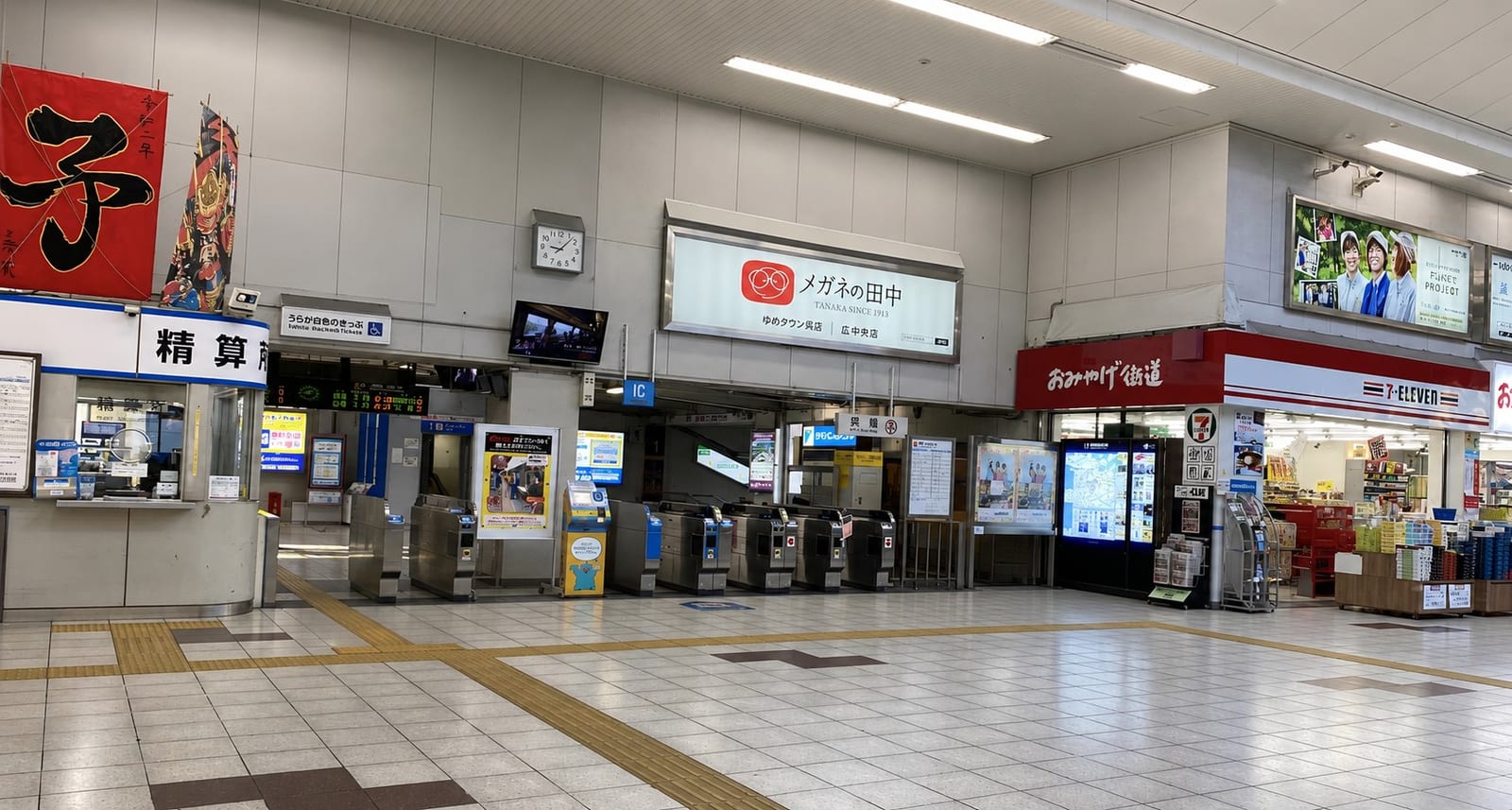
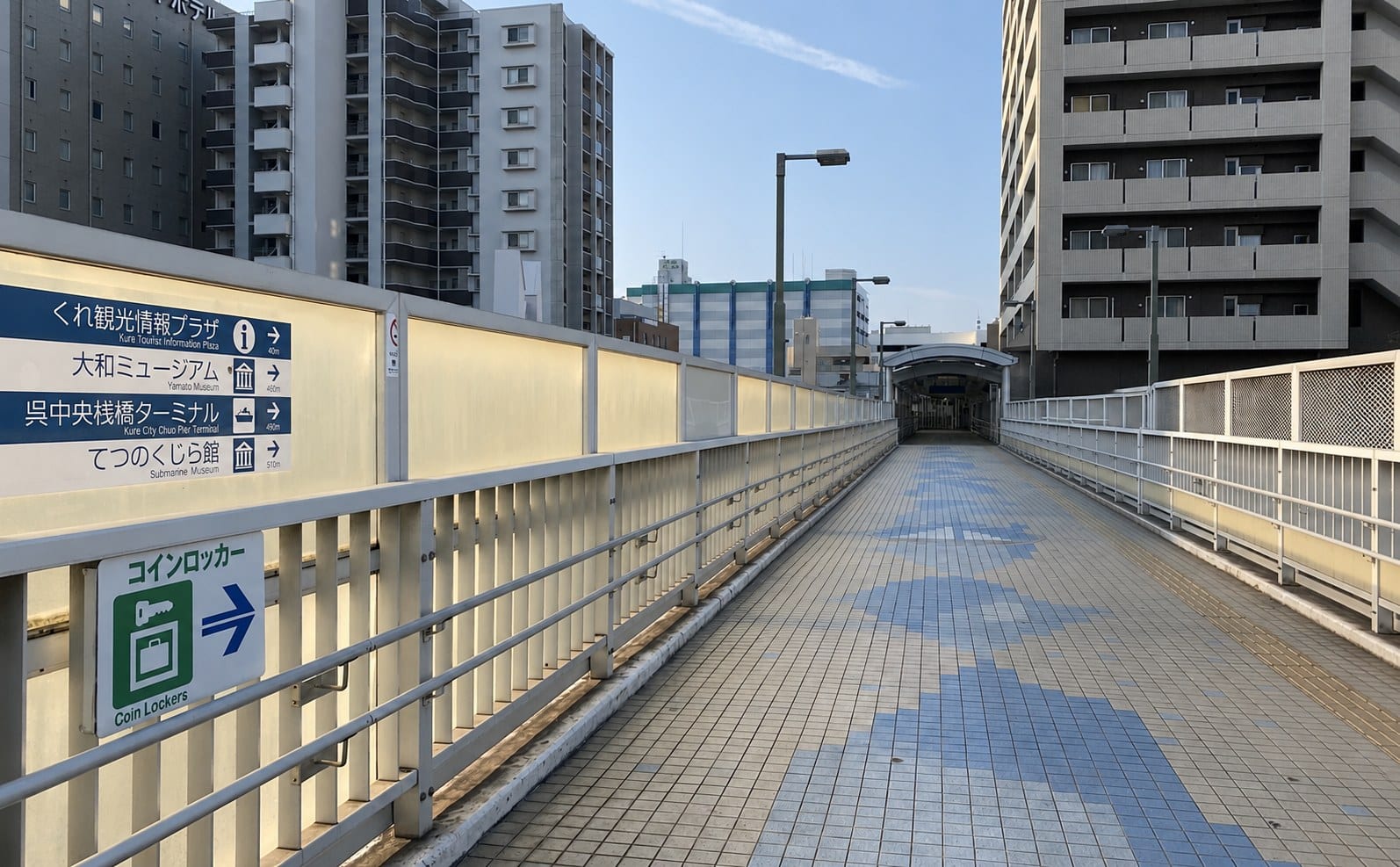

Leave the ticket gates, take the elevated pedestrian deck toward the harbour, and follow the bilingual signs — the museum is marked at 460 m. The covered route passes through the Youme Town shopping centre; keep straight and the signs pick up again on the far side. If it is raining, this stretch is the reason you barely get wet.
By bus (alternative)
Hiroshima Bus runs limited-express coaches from Hiroshima Bus Center to Kure Station Bus Terminal. Journey time is 55 minutes, fare ¥740. Less frequent than trains, but useful if you are starting from Hiroshima Peace Park.
By car
The Higashi-Hiroshima/Kure Expressway connects Hiroshima to Kure in roughly 40 minutes of driving. The museum has a paid parking lot of around 65 spaces at ¥100 per hour.
From Hiroshima Airport
Take the airport limousine bus to JR Shiraichi Station (45 minutes), then transfer to a JR Kure Line train to Kure Station (about 35 minutes). Total trip is roughly 90 minutes.
Guided alternative
If you would rather skip the logistics — especially if your group does not speak Japanese — GetYourGuide Kure day tour runs private day tours from Hiroshima that include round-trip transport, an English-speaking guide, and the Yamato Museum entry. Useful if you have only one day in Hiroshima and want to maximize the visit.
From the Peace Park or A-Bomb Dome
Most international visitors see the memorial first and come to Kure afterward, so the real starting point is the Peace Park, not Hiroshima Station. The simplest route is still the train: take the Hiroden tram (Route 2) or walk back to Hiroshima Station, then the JR Kure Line rapid, about 35 minutes. If you would rather not double back through the city, Setonaikaikisen runs a ferry from Hiroshima Port (Ujina) to Kure in about 45 minutes for around ¥1,100, landing a one-minute walk from the museum. Hiroshima Port sits south of the centre and takes a while to reach by tram, so the ferry is worth it for the harbour views more than for speed. Full options are in our Hiroshima to Kure day trip guide.
From Miyajima
Coming straight from Miyajima, you do not have to backtrack through Hiroshima at all. The Setonaikaikisen "Blue Line" high-speed boat runs Miyajima to Kure directly in about 45 minutes, landing a one-minute walk from the museum. The catch: it sails only on weekends and public holidays, in season (early April to late November), and you must reserve by phone by 16:00 the day before. On days it does not run, take the regular ferry to Miyajimaguchi and the train around. The current schedule and fares are in our Miyajima to Kure Blue Line ferry guide.
What can I see inside the Yamato Museum?
The museum has three main floors plus an outdoor exhibit area. Most visitors spend 2–3 hours here. Highlights below in the order we would recommend:
1. The 1:10 scale Yamato (central atrium)
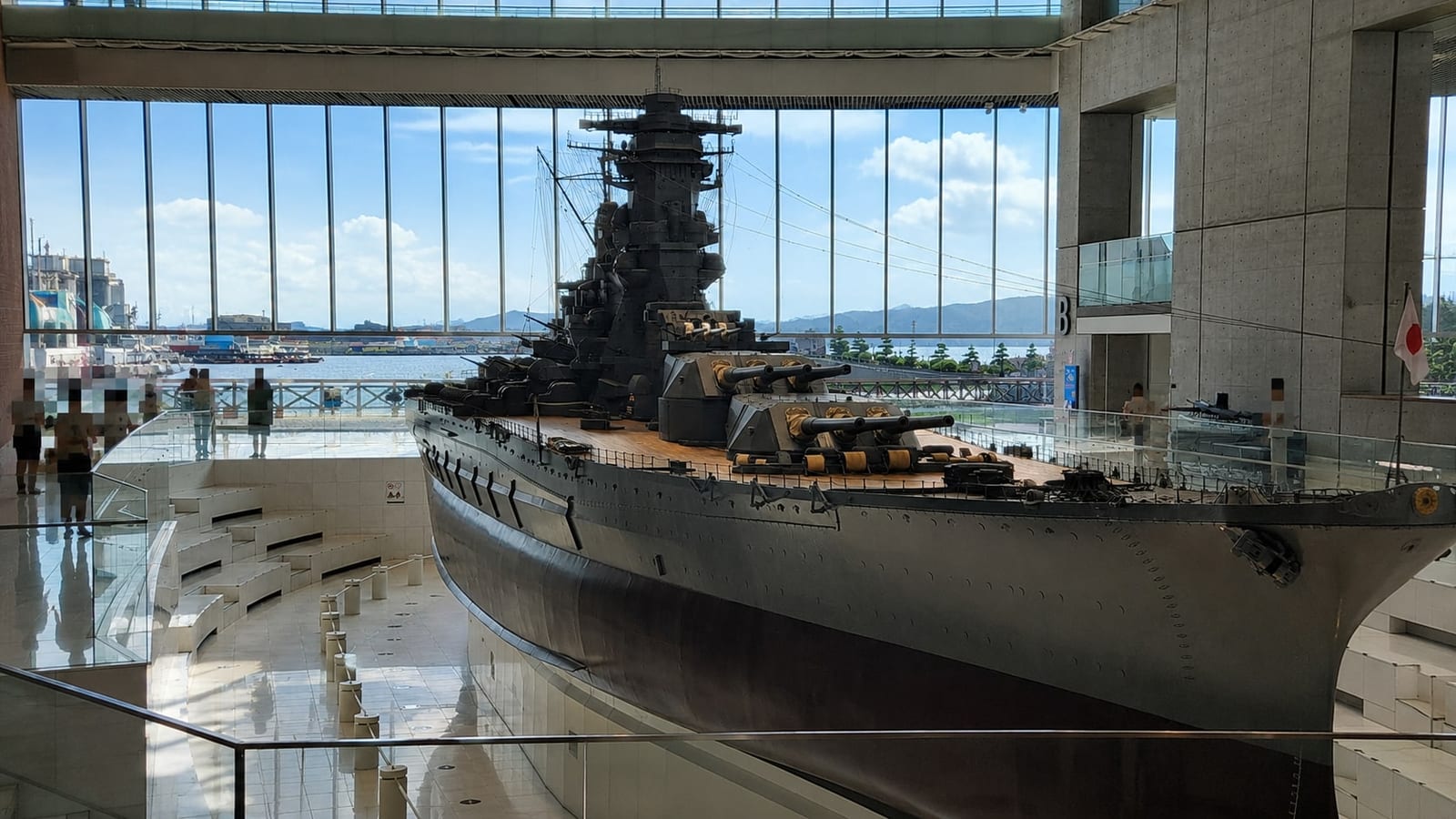
This is what most people come for. The model is 26.3 meters long — 1:10 the scale of the real Yamato's 263-meter hull. For the most recent version, the museum drew new plans from the original construction documents, survivor accounts, and footage from the 2016 seabed survey — which captured the wreck in enough detail to correct the size of the bow chrysanthemum crest on the prow. The model was built at a shipyard in Tamano City.
The best photo angle is from the second-floor walkway on the bow side, where you can frame the entire ship against the museum's curved ceiling. Tripods are not permitted; handheld photography is fine.
2. The history exhibition (Floor 1)
A chronological journey through Kure's history as Japan's largest naval port from the Meiji era to 1945. The renovated 2026 version adds digitized worker photographs, oral history audio (English subtitles available), and a new section on the postwar conversion of the naval arsenal.
Plan 45 minutes here if you are interested in the history; 20 minutes if you are not.
3. The Zero Fighter Type 62 (Floor 1)
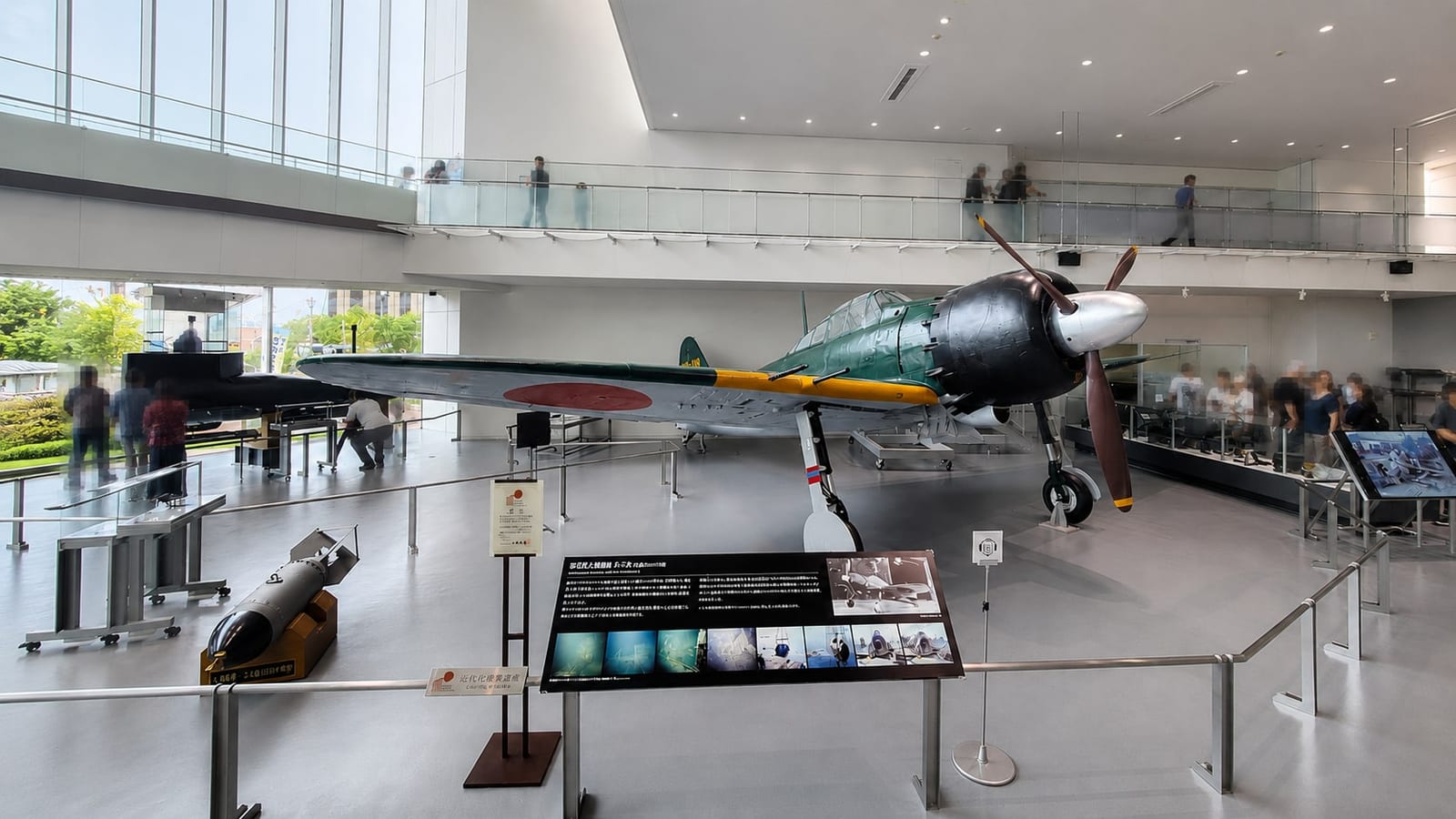
An actual restored Mitsubishi A6M Zero fighter aircraft, recovered from Lake Biwa in 1978. One of only a few intact Zeros displayed anywhere in the world. Worth ten minutes alone.
4. The Kaiten human torpedo (Floor 1)
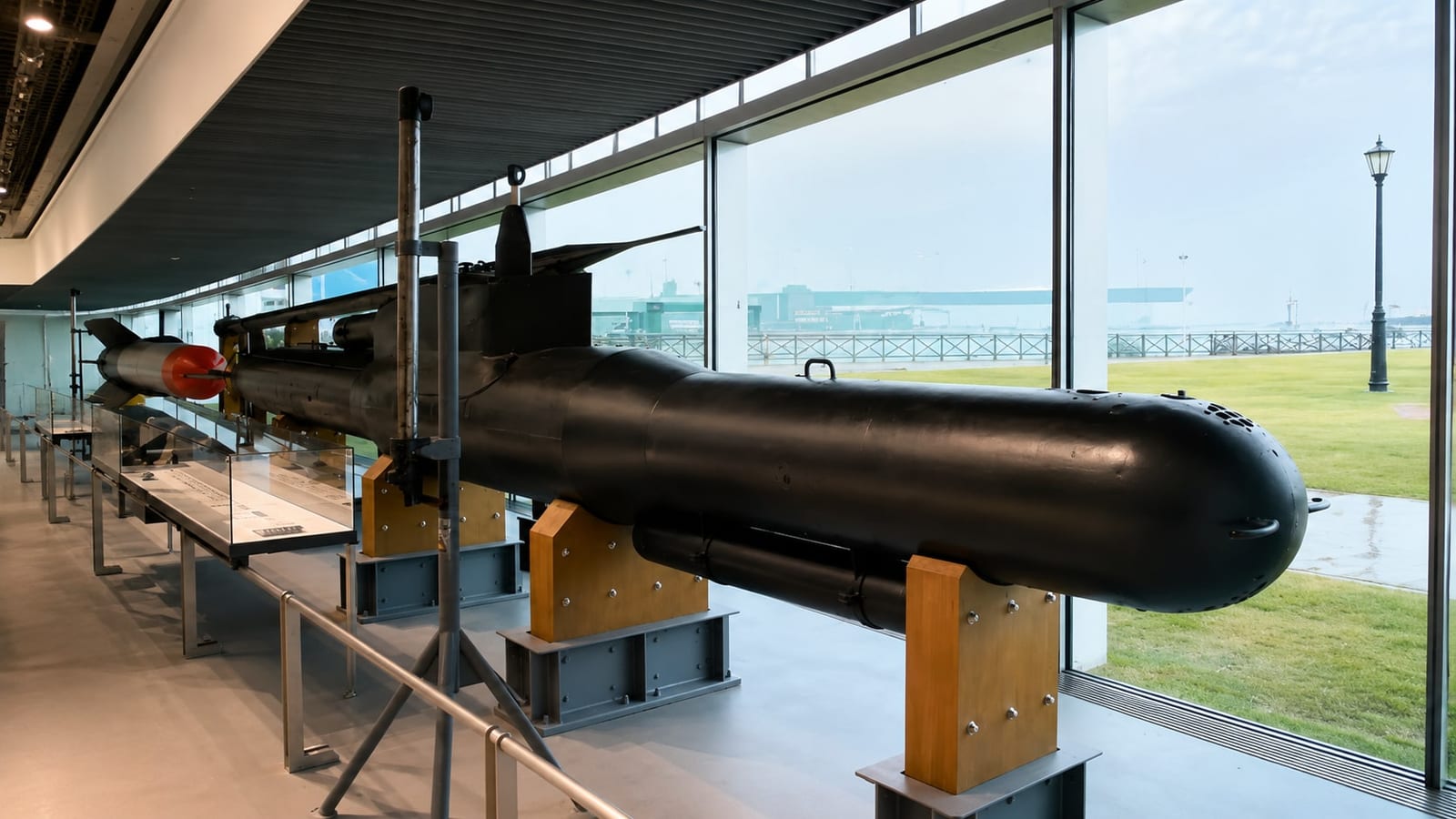
A genuine Type 10 Kaiten, the prototype variant built on the Type 92 electric torpedo (the combat-deployed Type 1 was the only variant actually used in attacks). Walking around it is sobering rather than thrilling — the curators have framed it carefully, with explanatory panels that take a clear position on the human cost of the program.
5. The battleship Mutsu's gun barrel (outdoor, free)
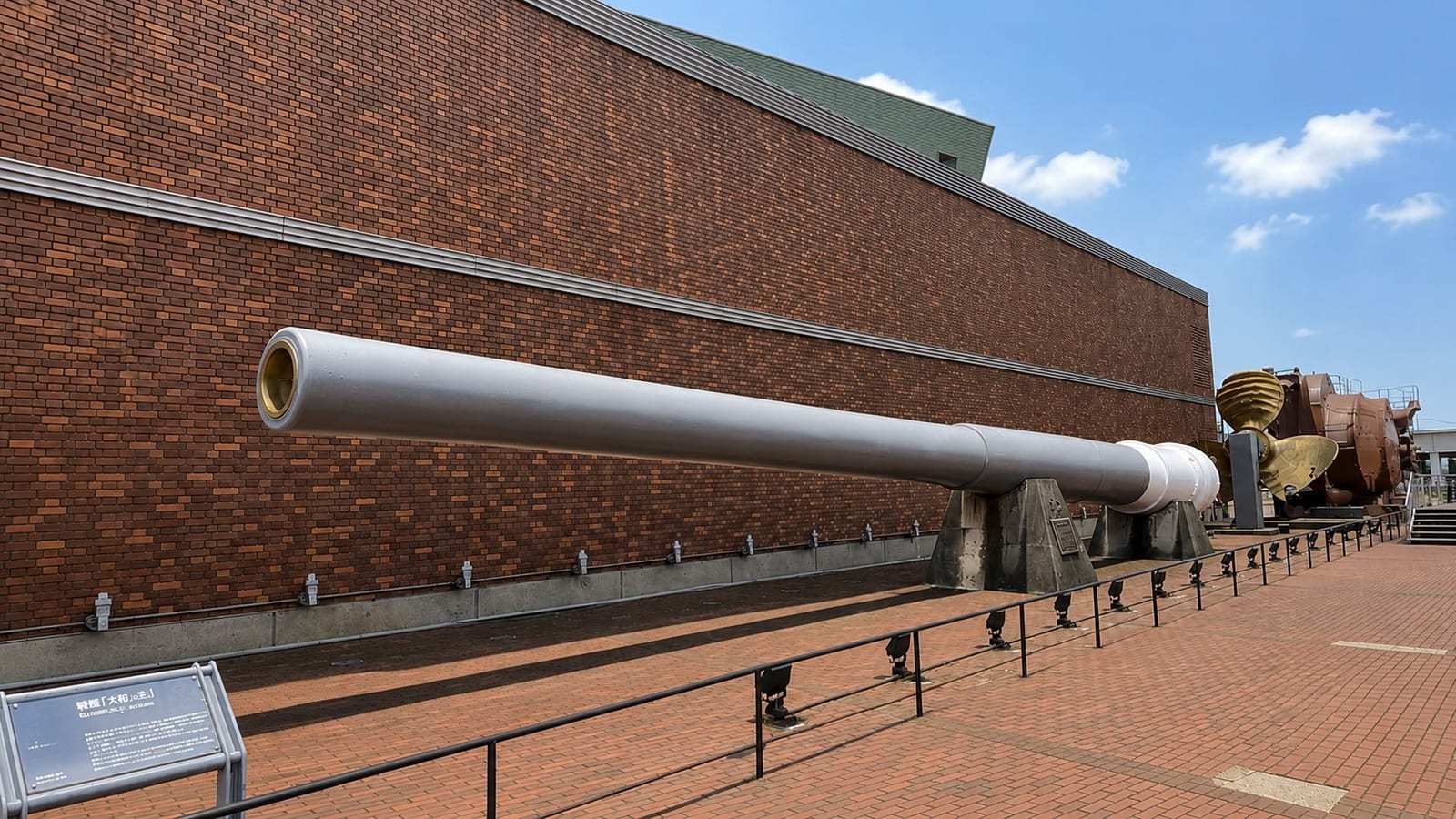
Lying along the brick terrace in front of the museum is a genuine main gun barrel from the battleship Mutsu, raised from the Seto Inland Sea where she was lost in 1943, displayed together with her salvaged propeller and rudder. It is free to view without entering the museum, and it is the best sense of scale you will get all day: Yamato's guns were one class larger still — each of her three triple turrets weighed approximately 2,730 tons, about the displacement of a destroyer of the era, and threw a 1.46-ton shell roughly 42 kilometers.
6. The hands-on area (Floor 3)
The rebuilt third floor includes a workshop space with hands-on science activities and make-it-yourself sessions. If you are visiting with children, plan 30 extra minutes here. They will not want to leave.
7. What the 2026 renovation changed
The largest change is the rebuilt third-floor Science and Technology gallery. It now tells the story of the Hiro Naval Arsenal, the aviation counterpart to Kure's shipbuilding, through real aero-engines: a Homare engine recovered locally and a Mitsubishi Kasei engine donated by the Smithsonian, shown alongside a Meiji-era triple-expansion steam engine from a torpedo boat. A new first-floor wide-screen theater covers Kure's postwar recovery and the wreck of the Yamato on the seabed. The renovation also digitized the letters and memoirs of Yamato crew lost in the April 1945 Operation Ten-Go, displayed with the casualty roster. The museum shop has moved to a separate building beside the entrance.
When should I go, and how should I see it?
The official website, yamato-museum.com, gives you the hours and the price — open 09:00–18:00, last admission 17:30, closed Tuesdays, adult tickets ¥1,000 at the door. What it does not give you is when the museum is actually pleasant to walk through, or the order that makes the 1:10 Yamato land. We have pulled this together from Japanese-language reviews and international visitor reports since the April 2026 reopening, because the two audiences notice different things.
Which day of the week is quietest?
Thursday. Kure City publishes the museum's daily visitor numbers as an open dataset, and across the 764 days we pulled, Thursday is the quietest day the museum is open. It runs at roughly half of a Sunday.
The figures are an index where 100 is the 2017 daily average, covering September 2022 to February 2025, the last full stretch before the renovation closure.
| Day | Visitor index | |---|---:| | Sunday | 120 | | Saturday | 110 | | Monday | 70 | | Friday | 68 | | Wednesday | 62 | | Thursday | 55 |
Tuesday is the regular closing day, so it is not in the table. Weekends run about 1.8 times a weekday. That gap is wider than most visitors expect, and choosing the day is the easiest thing you can do to change how the visit feels.
Which month is quietest?
January, by a wide margin. The same data, averaged by month, runs: August 120, May 97, November 92, March 90, October 88, September 80, July 78, February 74, April 73, June 67, December 64, January 56.
August is more than double January. Golden Week and Obon are the sharpest peaks of the year: 4 May 2024 reached 305 and 12 August 2024 reached 275.
Stack the two effects and the gap gets large. A January Thursday averages 43 against about 201 for a Golden Week weekend day, so the quiet end of the calendar runs at roughly a fifth of the peak. The single quietest day in the series was Thursday 12 January 2023 at 16, and the single busiest was Saturday 4 May 2024 at 305, a spread of about nineteen times between one day and another.
What time of day should I arrive?
At opening. Kure City also publishes hourly foot-traffic counts for the Takaramachi block, which holds the museum, the submarine and the cruise terminal. On weekends and public holidays the 9:00 hour is the quietest daylight hour, at about 60 to 70 percent of the 10:00 to 14:00 peak, and the crowd does not start thinning again until after 15:00. We checked two separate months and the shape was the same in both. The museum opens at 09:00.
What these numbers do not tell you. They are an index of relative crowding, not a headcount, and they stop when the museum closed for its renovation on 17 February 2025. Kure City has published very little since the 23 April 2026 reopening, so we cannot yet say how the renovation changed the absolute level. The shape of a week and the shape of a year are structural, though, and we would not expect a January Thursday to stop being the quiet end of the range.
What Japanese visitors and local coverage emphasize
- The reopening has been busy. Crowds concentrate in two places: the third-floor terrace that looks down on the 1:10 Yamato, and the first-floor Yamato Hiroba, both now photo points.
- Most reports put a thorough visit at one to two hours, or about two and a half if you read everything.
- The redisplay leans on new digital exhibits, and the rebuilt third floor now shows real aero-engines and machinery tied to the aviation work of the nearby Hiro arsenal.
What international visitors emphasize
- The 1:10 model does the heavy lifting. A common line in English reviews is that it is nearly worth the admission on its own.
- English coverage is partial: there are English summaries on the main exhibits and a free multilingual audio-guide app, but reviewers are blunt that much of the detail is Japanese-only. The practical takeaway is to install the audio-guide app before you start, not halfway through.
- The full-size Kaiten human torpedo is the exhibit people remember. Several describe it as the most affecting thing in the building.
Our read
If you can pick your day, pick a Thursday in January and be at the door for 09:00. Any weekday morning outside Golden Week and Obon gets you most of the same benefit. Walk the 1:10 Yamato from the top down: third floor for the full hull, second floor for the deck line, ground floor for the bow and turrets up close. Load the audio-guide app at the entrance. Give the Kaiten exhibit more time than you think you need. Eat at the food court in the Youme Town mall next door, then cross to the free submarine at Tetsu no Kujira for the afternoon.
Practical tips for foreign visitors
These are the details that the official site mentions only in passing or buries on subpages.
English Sunday tours (free with admission)
Free English-language guided tours run every Sunday morning between 9:00 AM and 12:00 PM. Ask at the main entrance for the next departure time; no advance booking is required. Tours are led by trained volunteers and typically last 45–60 minutes. If you are visiting on a Sunday, plan to arrive by 8:45 AM for the first departure.
Audio guide (free via smartphone app)
The multilingual audio guide is available free via the Yamato Museum Navi smartphone app in English, Traditional Chinese, Korean, and Japanese. Connect to the in-museum Wi-Fi (YAMATOMUSEUMNAVIGATION) and download the app — bring earbuds. Rental tablets are available at the ticket counter for visitors without a smartphone.
We strongly recommend the audio guide for non-Japanese speakers — about 40% of the in-exhibit text panels are now English-translated post-renovation, but the audio guide fills the gaps with longer historical context.
Photography rules
Photography is permitted throughout the museum with two exceptions: the temporary exhibits area on the third floor, and the Yamato crew letters display on the first floor (added during renovation). Tripods, selfie sticks, and flash are not allowed.
Accessibility
The museum is fully wheelchair-accessible with elevators between all three floors. Free wheelchair loans at the ticket counter (first-come, first-served, 5 chairs available). Baby strollers welcome. A baby changing room and a nursing room are on the first floor near the entrance.
Coin lockers and cash
Free coin lockers are available in the lobby (¥100 refundable deposit). Capacity is generally sufficient for day visitors.
Many restaurants in the immediate area are cash-only, particularly the older curry shops. ATMs accepting foreign cards are at the 7-Eleven 200 meters from the museum entrance and at the Kure Station post office.
Restrooms and water
Restrooms on every floor, with one accessible restroom per floor. Free water fountains by the entrance and on the third floor. No food or drink permitted in the exhibit areas, but a café is on the first floor.
Stay connected
If your phone plan does not include data in Japan, pick up a Klook Japan eSIM eSIM before your trip. The museum has free Wi-Fi but it is slow on weekends.
Should I combine it with JMSDF Kure Museum (Tetsu no Kujira)?
Yes. The Japan Maritime Self-Defense Force Museum, locally known as Tetsu no Kujira (Iron Whale), is a 2-minute walk across the plaza from the Yamato Museum. It is free to enter and houses a decommissioned submarine — the JS Akishio — that visitors can walk through.
| Yamato Museum | Tetsu no Kujira | |
|---|---|---|
| Focus | Historical naval shipbuilding (WWII Yamato) | Modern Japanese maritime defense |
| Ticket / admission | ¥1,000 | Free |
| Time needed | 2–3 hours | 1–1.5 hours |
| Highlight | 26.3m, 1:10 model of Yamato; Zero fighter; Kaiten | Walk through the JS Akishio submarine |
| Atmosphere | Quiet, curated, contemplative | Visceral, hands-on, intimate |
| Best for | History fans, families, anime / Yamato fans | Submarine fans, modern JMSDF interest |
A typical itinerary that includes both:
- Morning (9:00–12:00): Yamato Museum, including the English Sunday tour if applicable
- Lunch (12:00–13:30): Kaigun curry at one of the shops on Akarenga Doori
- Afternoon (13:30–15:30): Tetsu no Kujira
If you have to choose only one, the Yamato Museum is the deeper experience and worth the admission fee. The Tetsu no Kujira is more visceral but smaller. We are publishing a dedicated guide to Tetsu no Kujira separately.
Where to eat near Yamato Museum
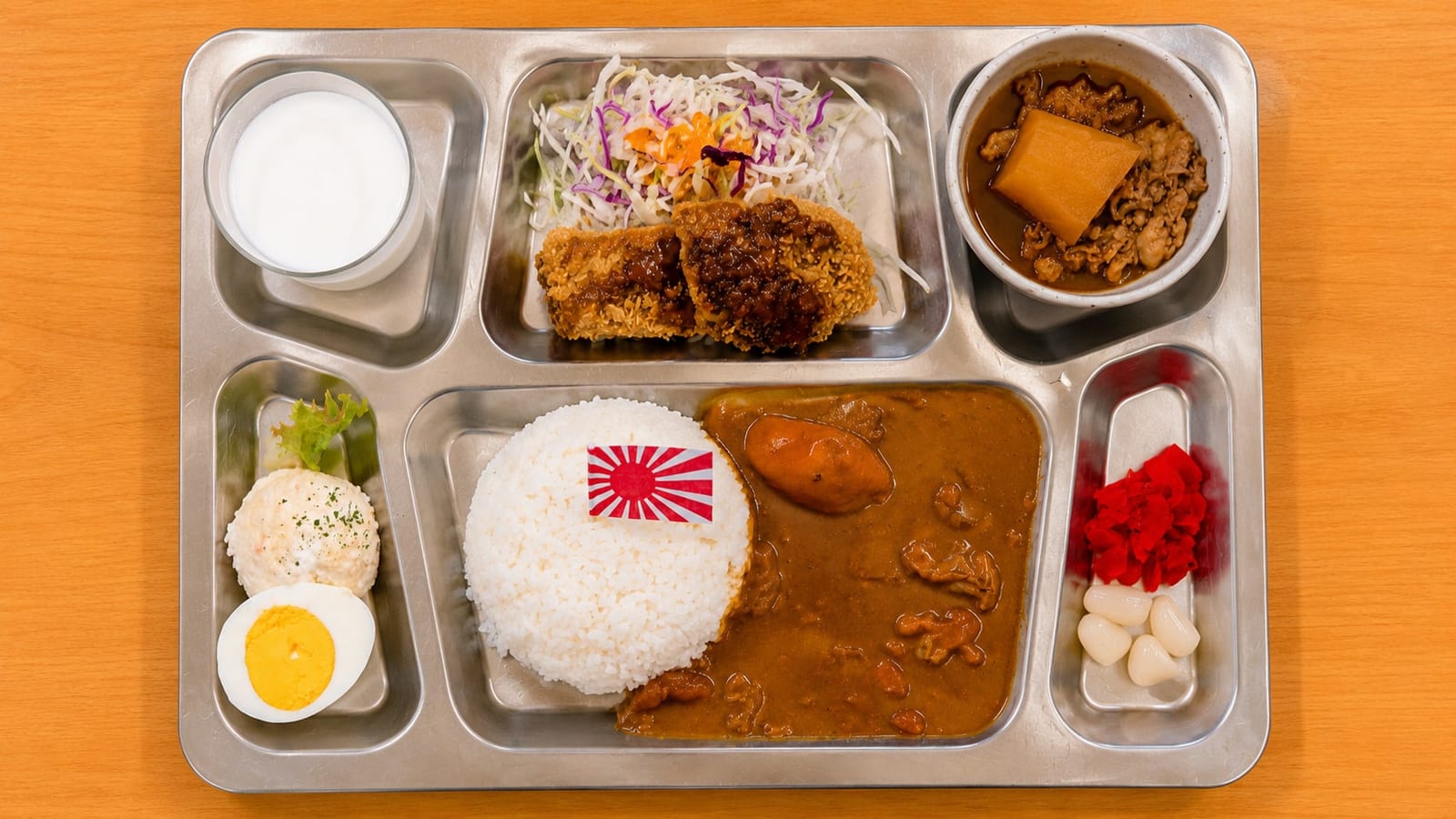
Kaigun (Japanese Naval) curry was the standardized weekly meal for the Imperial Japanese Navy, and Kure has maintained the tradition through the Kure Kaiji Curry (呉海自カレー) network — each certified shop serves a recipe sourced from a specific JMSDF ship.
Two confirmed network members within walking distance of the museum:
Kure Haikara Shokudou (呉ハイカラ食堂)
A short walk from the museum on Akarenga Doori. Serves the recipe from JS Sōryū, a Sōryū-class submarine, plated as their signature "Teppan Curry." Lunch is typically the busiest hour; arrive before noon or after 1:30 PM for a quieter table.
Minato Machi Coffee Ten (港町珈琲店)
A registered Kure Kaiji Curry member with a harbor-view café atmosphere — you can spot JMSDF submarines from the windows while you eat. Best paired with coffee after the museum if you're not in a rush.
For the full list of certified shops and the 2026 stamp-rally map, see the official Kure Kaiji Curry site (kure-kaijicurry.com) or the city of Kure's 呉海自カレー page. Many of these restaurants are cash-only.
A deeper food guide including dishes beyond curry is coming as a separate Kure naval curry guide.
Half-day vs full-day: Sample itineraries from Hiroshima
Pick the plan that fits the time you have. Most first-time visitors choose the full day.
Quick Visit
Yamato Museum only, from Hiroshima Station
- Depart Hiroshima Station, JR Kure Line rapid
- Arrive Kure, walk to museum
- Yamato Museum + free audio-guide app
- Quick lunch at any Akarenga Doori kaigun curry shop
- Return train to Hiroshima
- Back in Hiroshima
Best Balance
Both museums + naval curry lunch
- Depart Hiroshima Station
- Arrive Kure (English Sunday tour 9:00 if Sunday)
- Self-guided Yamato Museum
- Akarenga Doori lunch (kaigun curry)
- Tetsu no Kujira submarine museum
- Akarenga Doori shopping, optional Mt. Haigamine view
- Return to Hiroshima
- Back in Hiroshima
Deep Kure
Adds Etajima + Mt. Haigamine sunset
- Day 1: 8-hour full day above, ending with sunset at Mt. Haigamine — one of the "Three Great Night Views of Chugoku and Shikoku."
- Day 2: Ferry to Etajima (former Imperial Navy Academy, now JMSDF officer school) or the Tobishima island chain by car.
- Stay: Kure Hankyu Hotel (3-min walk from museum, mid-range) or APA Hotel Kure-Ekimae (budget, by the station).
Japan's three nationally famous night views are Hakodate, Mt. Maya, and Mt. Inasa — not Haigamine — so the Chugoku/Shikoku ranking is the correct one to quote. A dedicated Mt. Haigamine sunset guide is coming separately.
History context: The Battleship Yamato
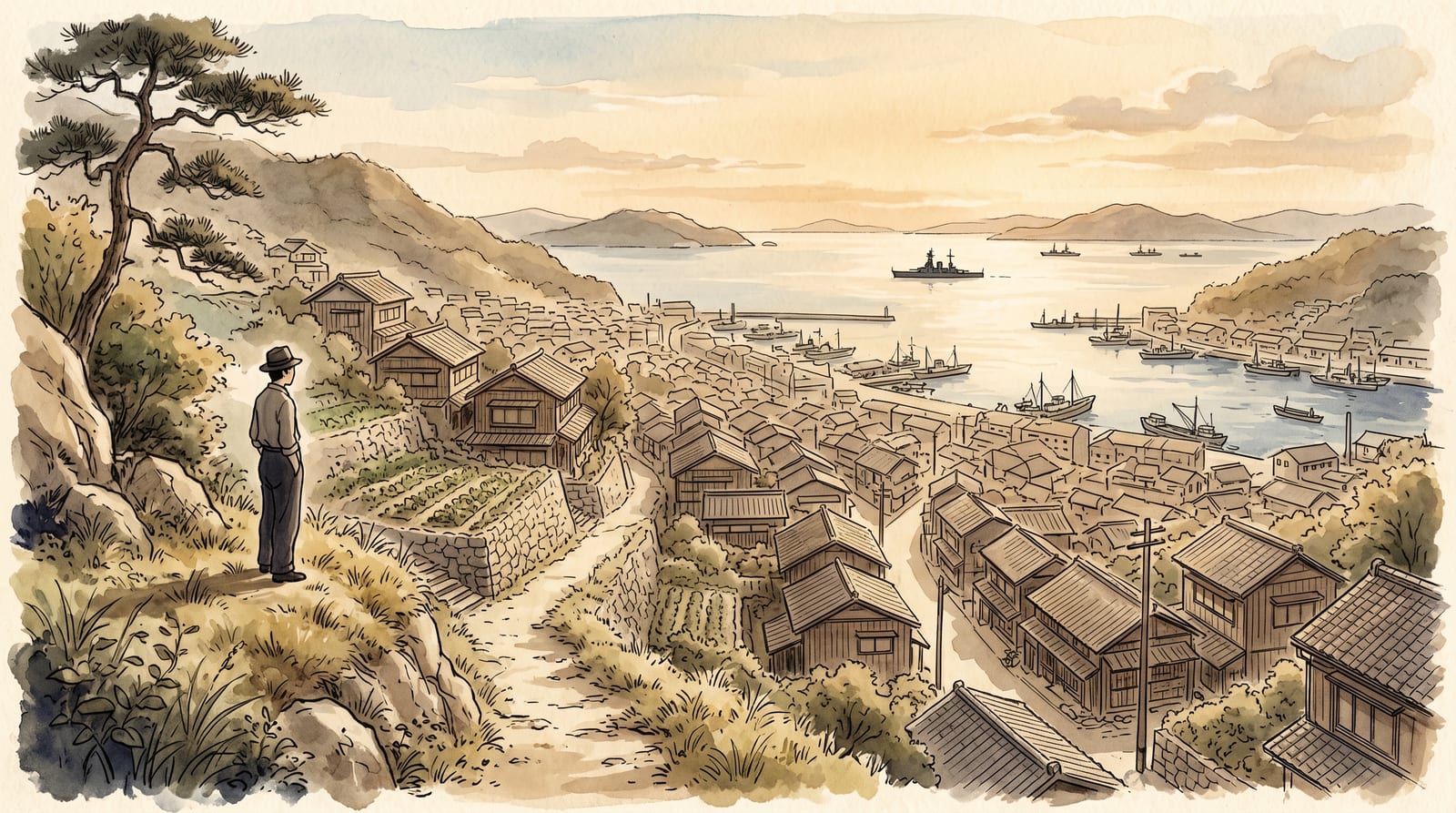
If you visit without background on the Yamato story, the museum will explain it. But knowing the outline in advance makes the visit richer.
The Yamato was the lead ship of the Yamato-class, designed to be Japan's answer to the numerical superiority of the US Pacific Fleet. That strategy assumed a single decisive surface battle. The war that actually came was air- and submarine-dominated, and the Yamato saw limited combat.
Her sister ship, the Musashi, was sunk in October 1944 in the Sibuyan Sea. The Yamato herself was sunk five months later off Kyushu, in an attack mission with no realistic chance of success. The decision to send her remains the subject of serious historical dispute today.
A widely repeated claim holds that Yamato sailed on her final sortie with only enough fuel for a one-way trip. The mission was genuinely one-way — the fleet was ordered to beach at Okinawa and fight until destroyed — but the fuel load was not. The Defence Ministry's own battle report records approximately 4,000 tons of heavy fuel oil aboard at departure, roughly two-thirds of full capacity and enough for a round trip. Naval headquarters had ordered a one-way allotment; the fuel depots quietly loaded what they could find in the tanks regardless. The confusion has a traceable origin: Yoshida Mitsuru, a student officer who survived the sinking, wrote a 1952 memoir (戦艦大和ノ最期 / Battleship Yamato's End) describing a one-way mission — which was accurate — and that account has often been read as a statement about the fuel rather than the orders. Most English sources still conflate the two.
The wreck lies in three main sections at approximately 350 meters of depth, about 200 kilometers off Makurazaki, Kagoshima. Kure City organized four survey dives: 1980, 1985, 1999, and 2016. The 2016 expedition captured roughly 50 hours of video and about 7,000 photographs — footage that later helped the museum correct the 1:10 scale model, including the exact size of the bow chrysanthemum crest. A theater at the museum screens footage from the dive. The site is a war grave for the roughly 3,000 sailors who did not return.
Many of the museum's overseas visitors come from the United States and Australia, both Pacific War nations. Americans often arrive having already seen Pearl Harbor or the battleship Missouri; Australians, whose own mainland was bombed at Darwin in 1942 and whose harbour at Sydney was raided by midget submarines the same year, sometimes come in the spirit of ANZAC remembrance. Standing in the naval museum of a former wartime enemy is a quiet, complicated thing, and the museum's refusal to argue the war — no heroic framing, no political argument — is what lets visitors from every side stand in the same room.
In the postwar era, the Yamato became an unusual cultural symbol. The 1974 anime Space Battleship Yamato (Uchū Senkan Yamato) reimagined her as a starship and launched one of Japan's most influential science fiction franchises. The 2005 film Yamato and In This Corner of the World (2016, with the 2019 extended cut In This Corner (and Other Corners) of the World adding 33 minutes around the Rin/Shusaku/Suzu storyline) both feature Kure prominently. A dedicated pilgrimage map is in our In This Corner of the World filming-locations guide.
Both histories are present in the building, and the 1:10 model does not resolve which brought you there.
What to watch before or after you visit
Two Japanese films make the museum land differently, and the order you watch them in changes what you take from the day.
Before you go: The Great War of Archimedes (2019)
Takashi Yamazaki's film is not a battle picture. It is a 1930s political and budget drama about the fight over whether to build the Yamato at all. Watch it first and the museum's shipbuilding and engineering exhibits read as the end of an argument you have already seen play out. It is widely available with English subtitles (US Amazon Prime Video, Netflix, and Plex among others), though streaming options change by country, so check JustWatch for what is available where you are.
After you go: Yamato (2005)
Junya Sato's Yamato (男たちの大和) follows the battleship's final mission under Operation Ten-Go and the young crew who did not return. It is a heavy, character-driven war drama. We would watch it after the visit rather than before: once you have stood under the 1:10 model and read the crew's letters, the human story lands harder. The director described it as anti-war. Critics disagree on how cleanly it separates mourning from spectacle — so go in aware of that tension. English-subtitle availability varies by platform and region, so check JustWatch or Plex for current options. The full-size set built for the film at Onomichi was taken down in 2006, but the gun replicas made for it were donated to the Yamato Museum.
Don't confuse it with the spaceship
If you search "Yamato movie," most results will be Space Battleship Yamato, the 2010 live-action film and the 1970s anime behind it, about a starship rather than the battleship. Different genre entirely.
FAQ
How long does it take to visit Yamato Museum?
Plan 2–3 hours for a thorough visit including the audio guide. Add 30 minutes if you are taking the free English Sunday tour, and another 30 minutes if you are visiting with children who want time in the hands-on area.
Is Yamato Museum suitable for children?
Yes. The rebuilt third-floor Science and Technology gallery has hands-on workshops and science activities aimed at younger visitors, and the renovated exhibits are designed to be approachable. Older children interested in history will engage with the main exhibits. The kaiten human torpedo display includes context that may need parental explanation for sensitive younger children.
Can I take photos inside?
Photography is permitted throughout the museum with two exceptions: the third-floor temporary exhibits, and the Yamato crew letters display on Floor 1. Tripods, selfie sticks, and flash are not allowed anywhere.
Is the audio guide available in English?
Yes. The audio guide is free via the Yamato Museum Navi smartphone app and is available in English, Traditional Chinese, Korean, and Japanese. Connect to the in-museum Wi-Fi (YAMATOMUSEUMNAVIGATION) and download the app, or borrow a rental tablet at the ticket counter if you do not have a smartphone.
How much are Yamato Museum tickets, and are there discounts?
General adult admission (university students and above) is ¥1,000. The published rates are:
- General adult: ¥1,000
- Groups of 20+ adults: ¥800 per person
- High school students: ¥300
- Elementary and junior high school students: ¥200
- Children under 6: free
- Kure City residents: ¥500 (adult resident discount; bring proof of address)
An annual pass is sold at the ticket counter if you live in the region — ask staff for current rates.
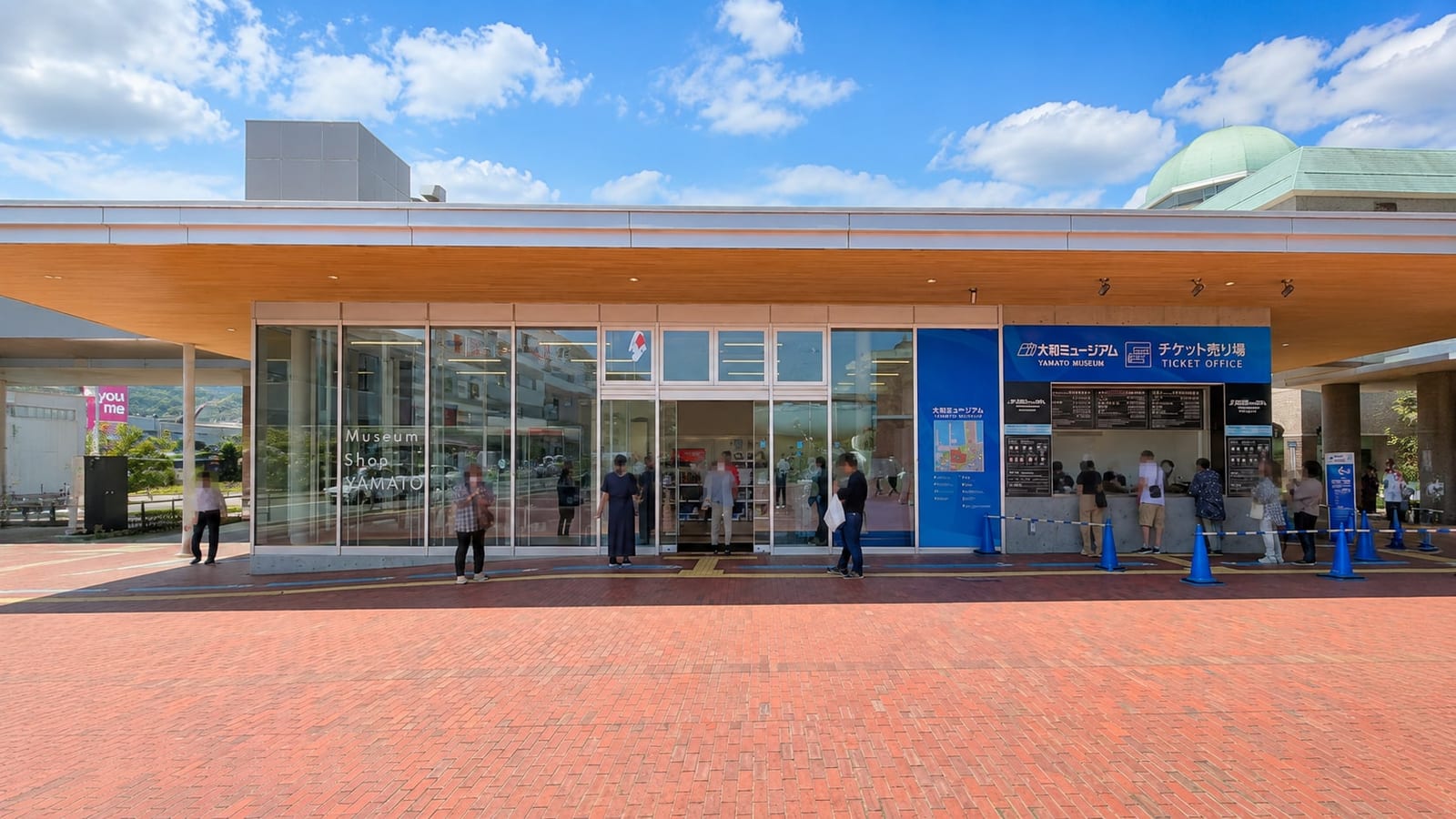
Standard tickets are paid at the door, and the ¥1,000 entry does not need advance booking. If you would rather arrive with everything arranged, a GetYourGuide Kure day tour from Hiroshima bundles the entry fee with round-trip transport and an English-speaking guide.
What's the difference between Yamato Museum and JMSDF Kure Museum?
The Yamato Museum focuses on historical naval shipbuilding centered on the Battleship Yamato and World War II. It is a paid museum with curated exhibits.
The JMSDF Kure Museum (Tetsu no Kujira) focuses on modern Japanese maritime defense. It is free and centers on a decommissioned submarine you can walk through. The two are 2 minutes apart and complement each other.
What are the Yamato Museum's opening hours in 2026?
The Yamato Museum is open 09:00 to 18:00, with last admission at 17:30, and is closed on Tuesdays. These hours apply since the museum reopened on April 23, 2026. Check the official site for occasional closures around New Year and during exhibit changeovers.
Where is the Yamato Museum's official website?
The official website is yamato-museum.com. Most of the site is Japanese-only; the English visitor page covers admission, opening hours, and access. We verify the practical details in this guide against it — most recently in May 2026.
When did the Yamato Museum reopen after its renovation?
The Yamato Museum reopened on April 23, 2026, after a 14-month renovation that began on February 17, 2025, its largest refurbishment since the building opened in 2005. The reopening added new exhibits and refreshed the layout around the 1:10 scale Yamato model.
Is the Yamato Museum worth visiting?
Yes, especially for anyone interested in naval history, World War II, or Japanese engineering. The centerpiece is a 26.3-meter, 1:10 scale model of the battleship Yamato, alongside a real Zero fighter and a Kaiten human torpedo. At ¥1,000 and a 5-minute walk from JR Kure Station, it works as a half-day trip from Hiroshima.
Related guides
More in our Kure series:
- Day trips from Hiroshima, ranked — how a Kure museum visit compares to Miyajima and Okunoshima
- JMSDF Kure Museum (Tetsu no Kujira) — submarine museum complete guide
- Hiroshima to Kure day trip — full day-trip itinerary
- Where to eat kaigun curry in Kure — naval curry guide
- In This Corner of the World locations — anime pilgrimage map
- Mt. Haigamine sunset — Kure's "Three Great Night Views of Chugoku and Shikoku" (coming soon)
Last visited: 2026-05 | Author: Masayuki Ogasahara | Illustrations generated with AI (Gemini) using real reference photographs. Hero illustration derived from Yamato Museum in October 2008 by Nick-D, CC BY-SA 3.0. Photographs are original or used with permission; some include light AI-assisted post-processing for cleanup or exposure, with the scene itself unchanged. This article contains affiliate links to GetYourGuide, JRPass.com, Klook, and Rakuten Travel. We may earn a small commission at no extra cost to you. All admission, pricing, and operational information was verified against official sources in May 2026; please confirm with the museum before your visit as details can change.
