
This post contains affiliate links. We may earn a small commission at no extra cost to you.
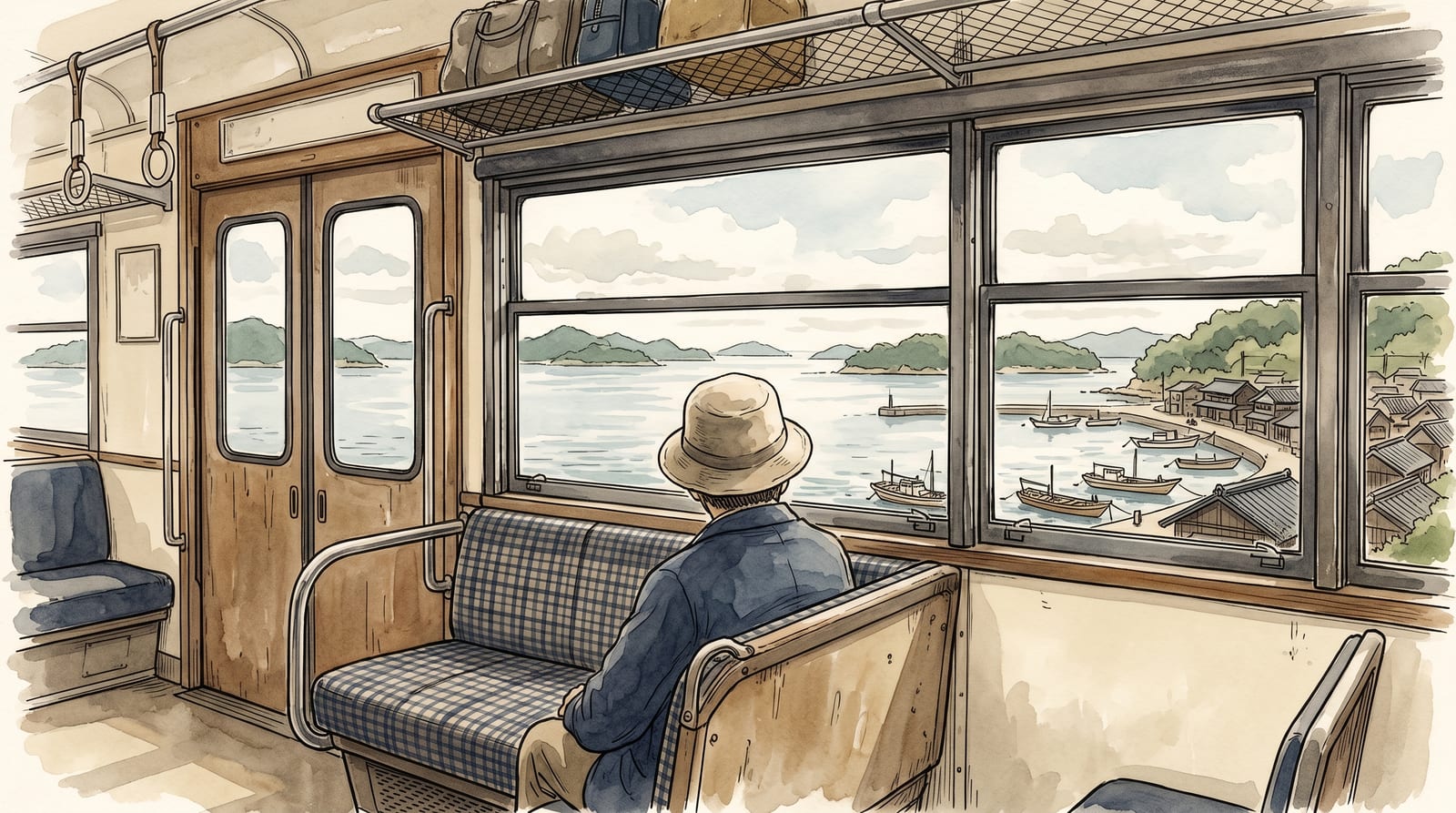
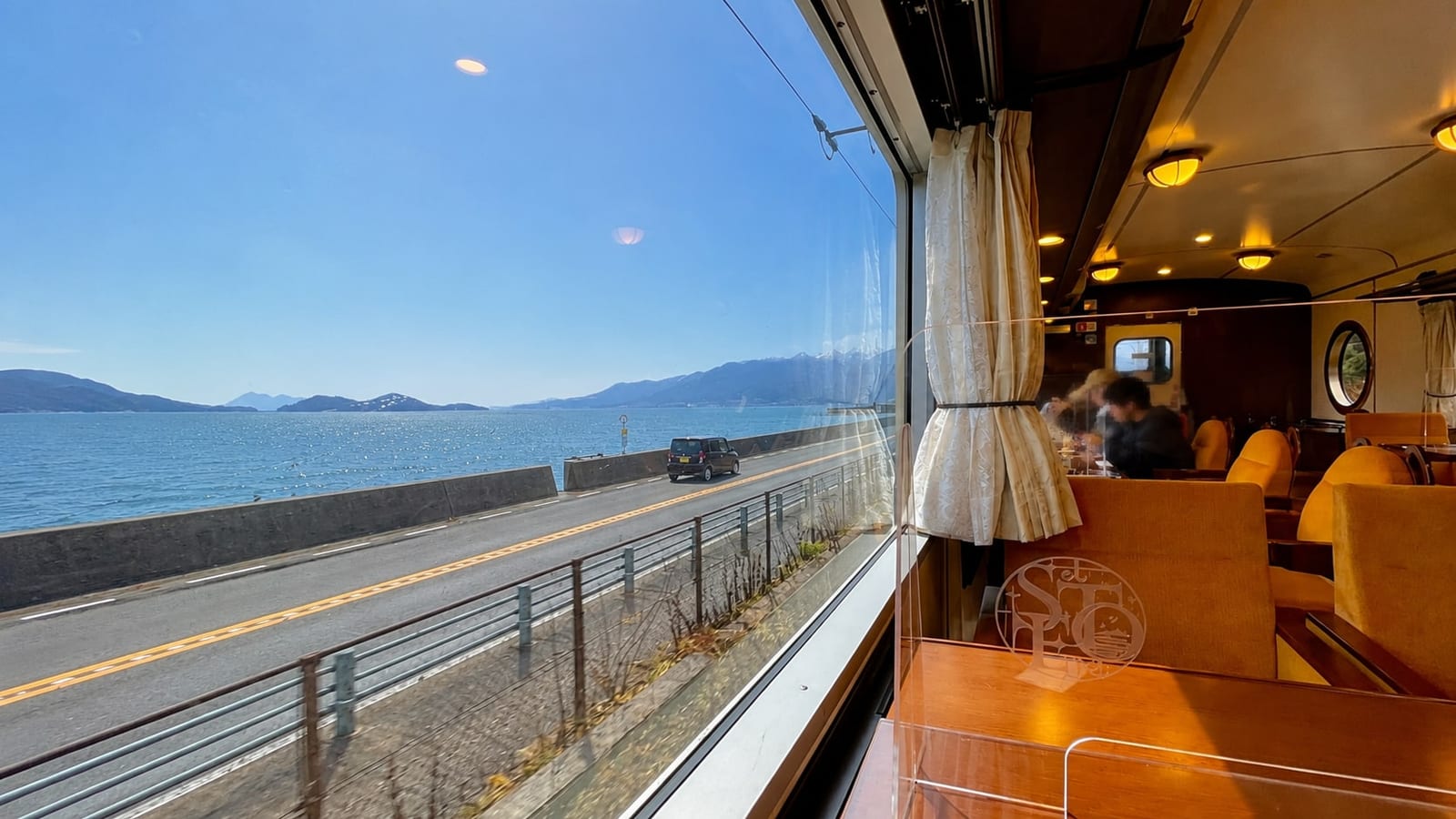
For the last ten minutes into Kure, the train stops being about getting somewhere. The Kure Line drops down to the shoreline, the Seto Inland Sea slides into the window, and low islands drift past close enough to count the boats moored against them. It is the kind of approach that makes you wonder why almost no English itinerary mentions the place.
Most people who fly into Hiroshima never leave the city. They see the Peace Park, they take the boat to Miyajima, and they move on. Kure sits about 50 minutes down the coast for ¥510 — a working naval port with a battleship museum, a submarine you can walk through, and its own style of curry — and the trip is far easier than the lack of English coverage suggests. Here is exactly how to get there, what each route costs, and how to spend the day once you arrive.
Why take a day trip to Kure?
Kure (呉) was the home of the Imperial Japanese Navy's largest shipyard, the place where the battleship Yamato was built. Today it is still a base for the Japan Maritime Self-Defense Force, and that history is concentrated into a compact, walkable waterfront that you can reach from Hiroshima in less time than it takes some people to cross their own city.
The appeal is that the three things Kure is known for sit almost on top of each other. The Yamato Museum and the JMSDF Kure Museum — the one with the retired submarine beached beside the building — face each other across a plaza a five-minute walk from the station. The city's Japanese naval curry restaurants are a few minutes further. You are not chasing sights across a sprawling city; you are working one small, dense waterfront.
How do I get from Hiroshima to Kure?
The quickest and cheapest way from Hiroshima to Kure is the JR Kure Line: a rapid (Akiji Liner) train takes about 35 minutes, a local about 50, for ¥510 one way, departing every 20–30 minutes from Hiroshima Station. No transfer is needed — it is a single direct line from Hiroshima Station to Kure Station.
There are four practical ways to make the trip — train, highway bus, ferry, and car — plus a taxi if you are in a group or carrying heavy luggage, and a guided tour if you would rather not plan at all. For almost everyone, the train is the right answer. The rest are useful in specific situations, which the sections below spell out.
By train (recommended, cheapest)
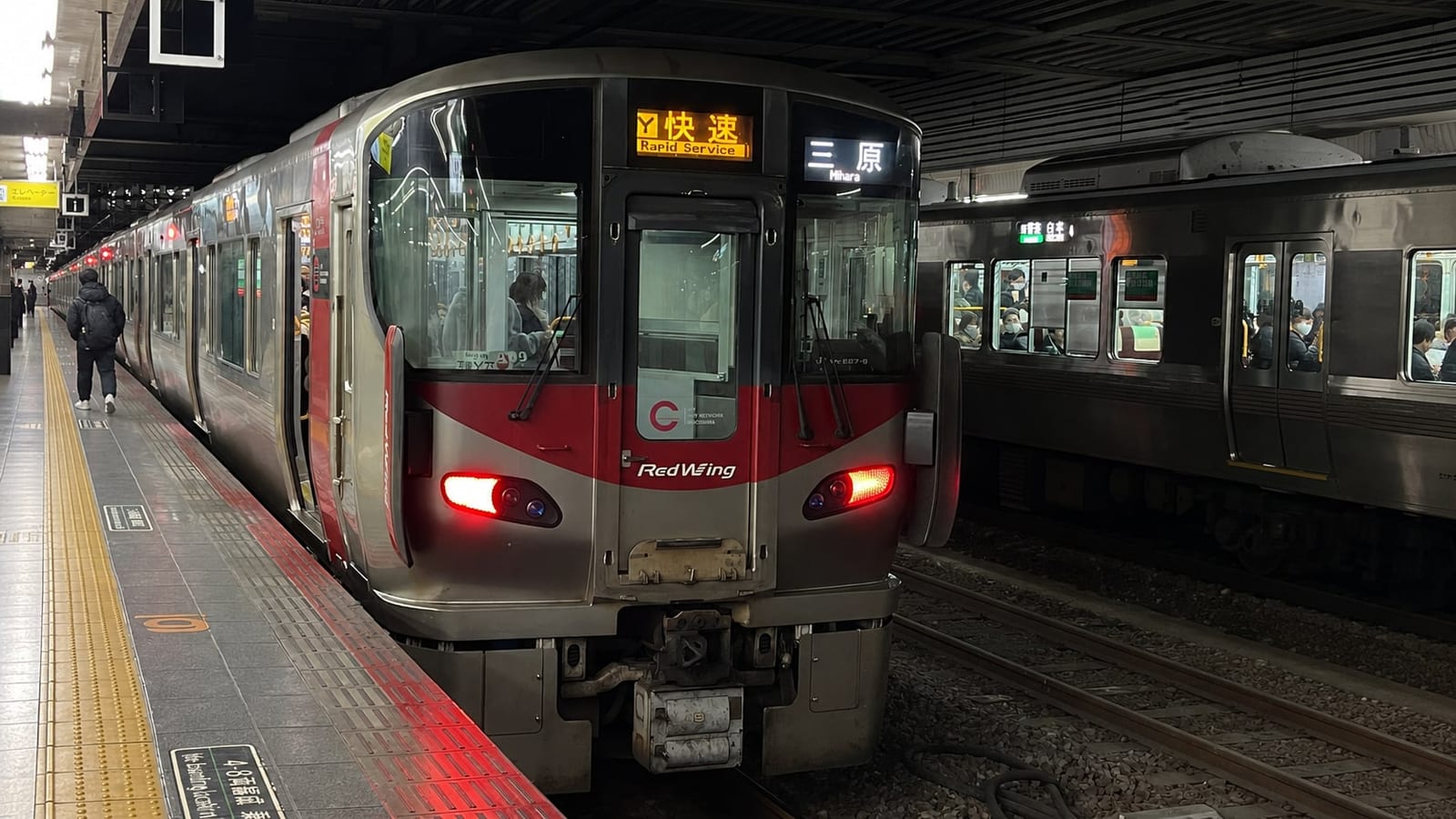
The JR Kure Line runs directly from Hiroshima Station to Kure Station. A local train takes about 50 minutes; the Akiji Liner rapid service does it in roughly 35 minutes when one is running. Trains depart about every 20 to 30 minutes through the day, so you rarely wait long. The one-way fare is around ¥510 with an IC card such as ICOCA or Suica.
Some services run straight through to Kure, while others involve a quick same-platform-area change at Kaitaichi; the station displays and app routing will tell you which is which. Either way you tap in at Hiroshima and tap out at Kure — no reservation, no ticket office queue.
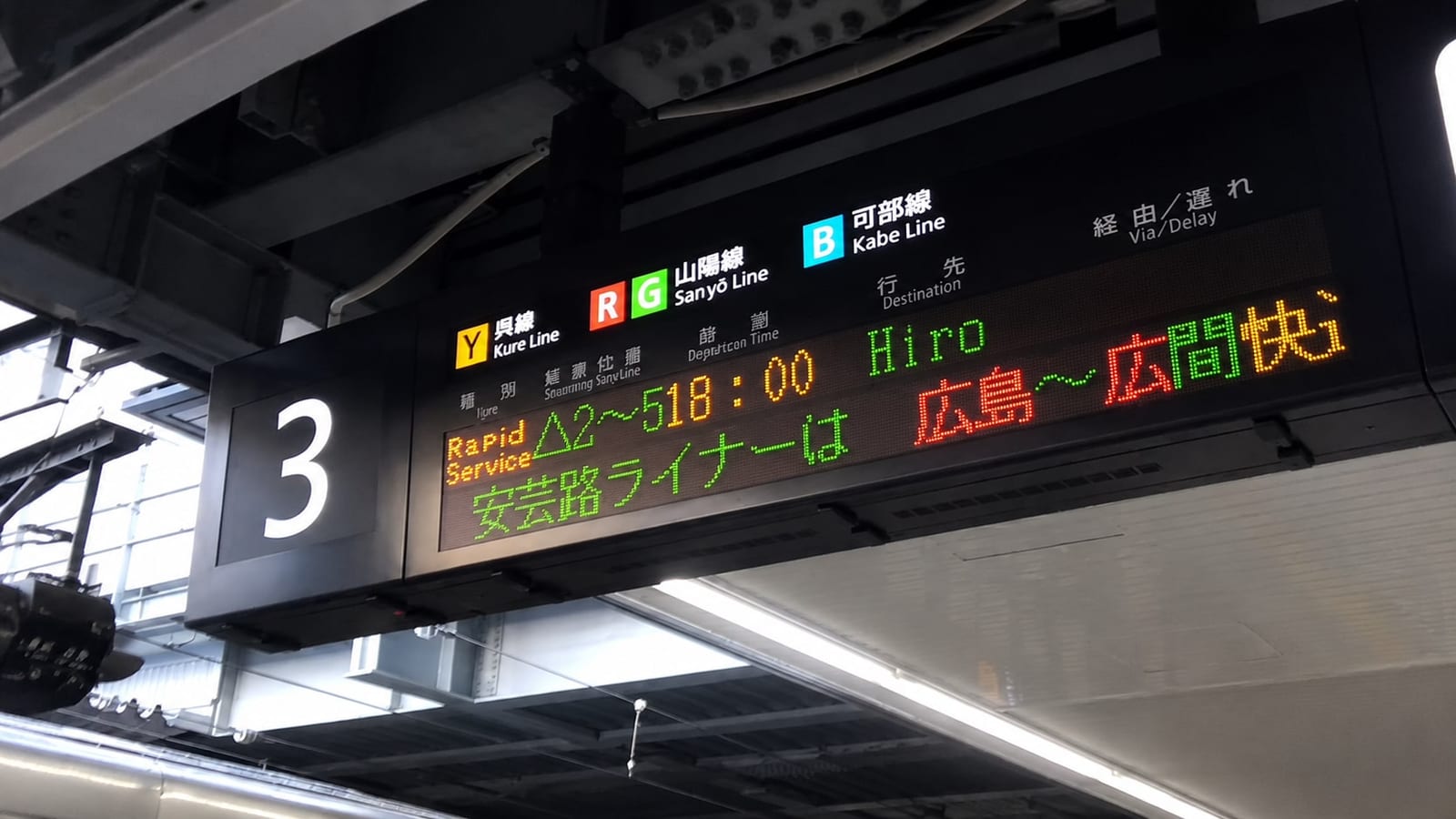
At Hiroshima Station, look for the yellow Y symbol on the departure boards — that is the Kure Line. The ride itself is part of the reward: the line hugs the Seto Inland Sea for a stretch of the journey, close enough to watch fishing boats and islands slide past the window.
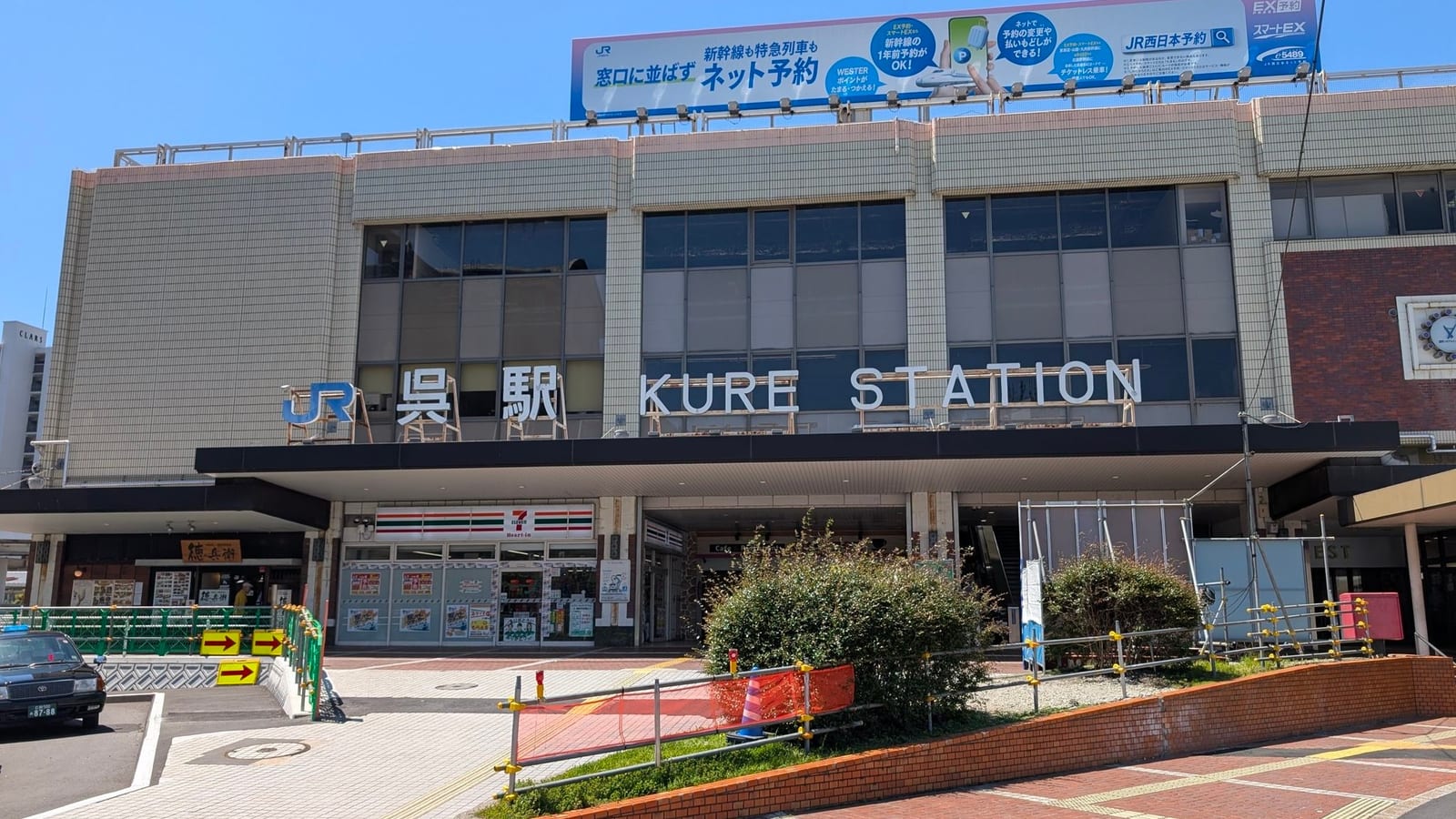
This is where the train drops you — the photo above is the station front, taken in July 2026. Everything in the next section starts from here.
A JR Pass is not worth it for the Hiroshima–Kure ride alone — at about ¥510 each way, the pass can never earn back its price on this leg. But if Kure is one stop in a wider Japan itinerary that already includes Shinkansen travel, Japan Rail Pass can still be the most economical way to bundle the whole trip, and the Kure Line ride is covered by it.
By bus (alternative)
The Crea Line (クレアライン) highway bus connects central Hiroshima with Kure. It leaves from the Hiroshima Bus Center in the city centre — not Hiroshima Station — runs every 15 to 20 minutes, takes about 45 to 50 minutes, and costs about ¥860 one way, paid with an IC card when you board. No reservation needed — seats are unreserved.
The bus makes sense if you are already staying near the Bus Center or Hondori rather than the station. For most visitors arriving by Shinkansen, the train from Hiroshima Station is simpler and a little cheaper.
By ferry (scenic option)
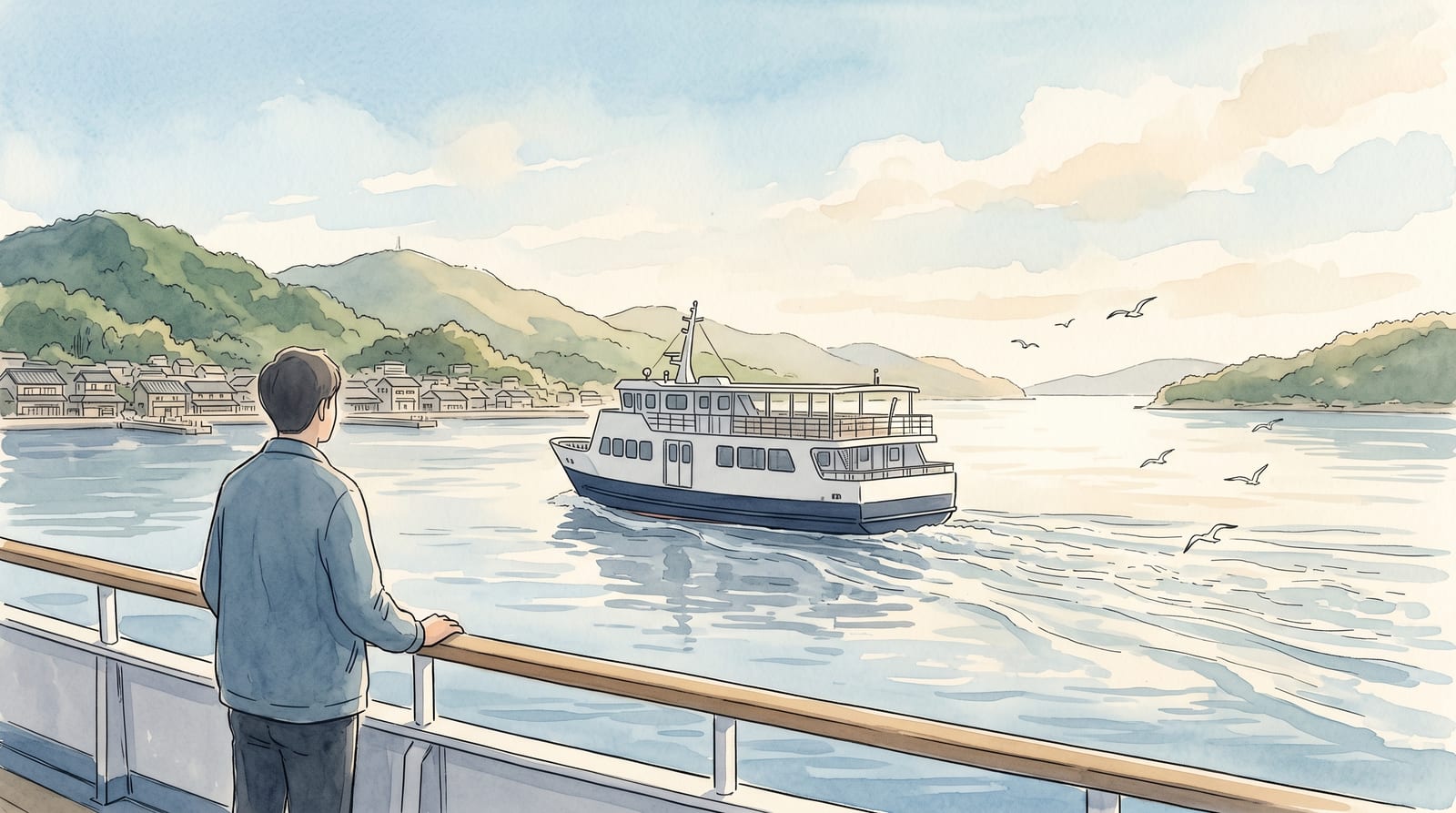
Setonaikaikisen runs boats from Hiroshima Port (Ujina) to Kure Port. The cruise ferry costs about ¥1,100 one way, and the faster SuperJet about ¥2,800 one way . The SuperJet is the quicker of the two; the cruise ferry is slower but cheaper. Either way it drops you right on the Kure waterfront near the museums.
The catch is the starting point: Hiroshima Port is south of the city centre, reached by tram, so the boat is rarely faster door-to-door than the train. Treat it as the scenic choice for the journey itself rather than the fastest route, and check the current timetable before you go.
By car
The Hiroshima–Kure Road (広島呉道路) is a toll expressway that links the two cities along the coast and gets you there in roughly 30–40 minutes outside of rush hour. A car only makes sense if you are already driving in the region; in central Kure the museums have paid parking, and the Yamato Museum lot charges about ¥100 per hour .
By taxi
A taxi from Hiroshima to Kure takes about 20 to 35 minutes depending on traffic, but costs roughly ¥8,000–¥10,000 one way . It is only worth it if you are short on time, splitting the fare among a group, or carrying heavy luggage.
Guided alternative
If you would rather not deal with timetables at all, GetYourGuide Kure day tour runs day tours from Hiroshima that bundle round-trip transport with an English-speaking guide. It costs more than the train, but it removes every logistical decision from your day.
Which route should I choose?
For most travellers the decision is quick: take the train. The comparison below is for the cases where it is not.
| Train (Kure Line) | Bus (Crea Line) | Ferry (Setonaikaikisen) | |
|---|---|---|---|
| One-way fare | ~¥510 | ~¥860 | ~¥1,100 (cruise) / ~¥2,800 (SuperJet) |
| Time | ~35–50 min | ~45–50 min | Scenic; slower door-to-door |
| Departs from | Hiroshima Station | Hiroshima Bus Center | Hiroshima Port (Ujina) |
| Frequency | ~every 20–30 min | ~every 15–20 min | Several daily |
| Best for | Almost everyone | Staying near the Bus Center | Travellers who want the view |
What to do in Kure on a day trip
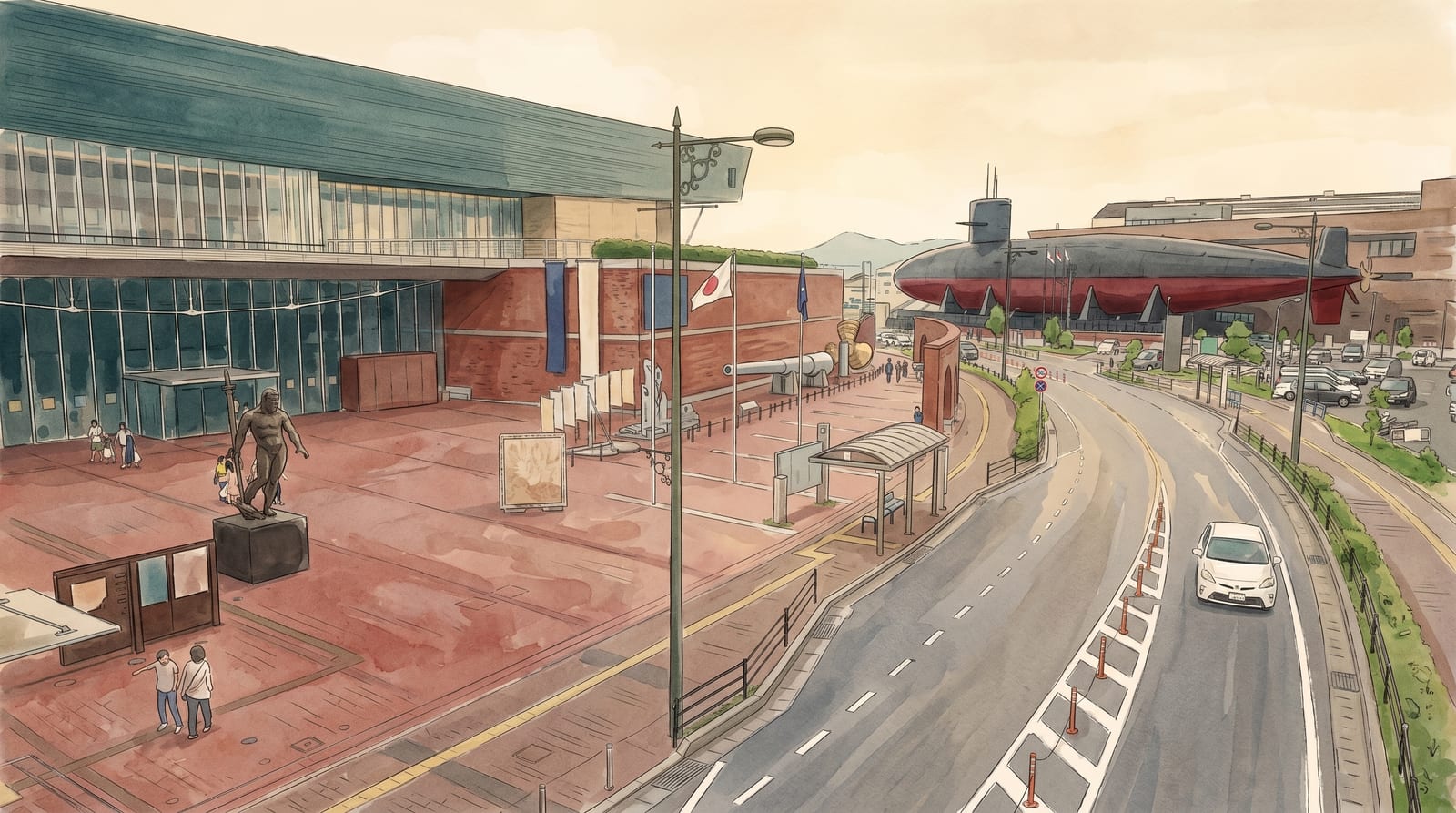
Almost everything a first-time visitor wants is on the same short waterfront, about five minutes' walk from Kure Station.
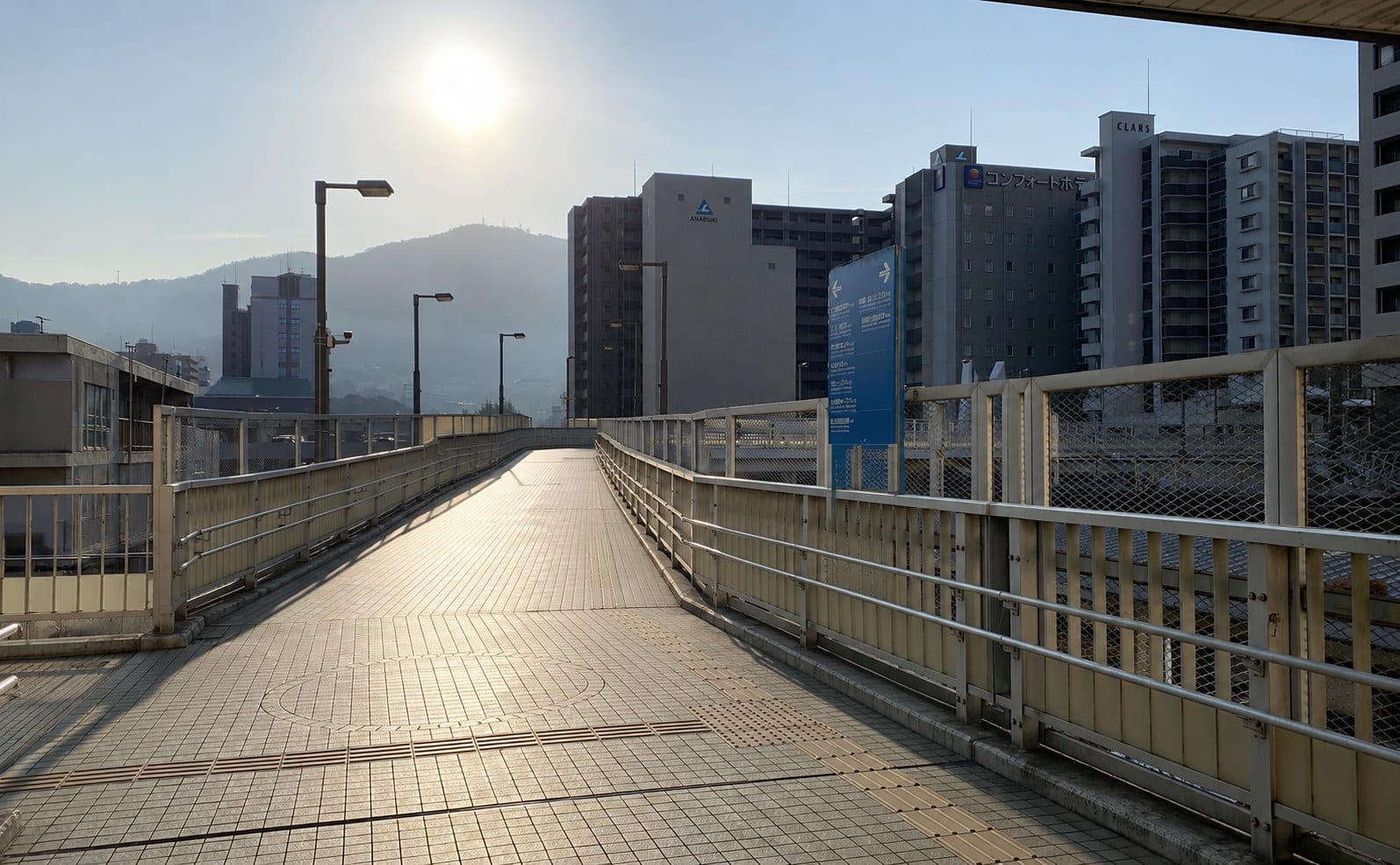
The elevated deck outside the station (photographed above) carries you most of the way — follow the bilingual signs toward the harbour and you will hit the museum plaza without touching a road crossing.
The Yamato Museum is the anchor. Its centrepiece is a 1:10 scale model of the battleship Yamato, and general adult admission is ¥1,000. Most people spend ninety minutes to two hours here. Directly across the plaza, the JMSDF Kure Museum — nicknamed the "Iron Whale" — lets you walk through a real retired submarine, and admission is free. The plaza between them — brick-paved, with the battleship Mutsu's salvaged gun barrel and propeller lying along the museum side — is easier to get your bearings from than any map. That is the whole waterfront.
When you are hungry, Kure's signature dish is Japanese naval curry, a recipe with roots in the navy's mess halls. A network of certified restaurants near the station each serves its own version, often tied to a specific ship. Many are cash-only, so carry some yen.
Half-day vs full-day: sample itineraries from Hiroshima
Pick the plan that fits the time you have. Most first-time visitors are happiest with the full day.
Quick Visit
Yamato Museum + lunch, from Hiroshima
- Train from Hiroshima Station
- Arrive Kure, walk to the waterfront
- Yamato Museum
- Naval curry lunch near the station
- Train back to Hiroshima
Best Balance
Both museums + curry + waterfront
- Train from Hiroshima Station
- Arrive Kure
- Yamato Museum
- Naval curry lunch
- JMSDF Kure Museum (the submarine)
- Waterfront walk, then train back
Deep Kure
Adds sunset and a slower pace
- Day 1: Both museums, curry, harbour at dusk
- Day 2: Mt. Haigamine viewpoint, backstreets, coffee
- Stay: a hotel near Kure Station
FAQ
How long does it take to get from Hiroshima to Kure?
About 50 minutes on a local JR Kure Line train, or roughly 35 minutes on the Akiji Liner rapid. Trains leave Hiroshima Station about every 20 to 30 minutes, and the one-way fare is around ¥510 with an IC card.
Is a JR Pass worth it for the Hiroshima to Kure trip?
Not for this ride on its own. The single Kure Line fare is only about ¥510 each way, so a pass never pays for itself on the Hiroshima–Kure leg alone. It only makes sense if Kure is part of a wider Japan trip that already includes Shinkansen travel.
What is there to do in Kure on a day trip?
The Yamato Museum, the submarine museum across the plaza, and the certified naval curry restaurants nearby are all within a five-minute walk of Kure Station. A half day covers one or two of them; a full day covers all three comfortably.
Can I do Kure as a half-day trip from Hiroshima?
Yes. With a round-trip train ride of under two hours total, a half day is enough for the Yamato Museum plus lunch. If you want the submarine museum and a proper curry stop too, give yourself a full day.
Is there a ferry from Hiroshima to Kure?
Yes, but it leaves from Hiroshima Port (Ujina) rather than Hiroshima Station. Setonaikaikisen runs a cruise ferry (about ¥1,100 one way) and a faster SuperJet (about ¥2,800 one way) to Kure Port. It is scenic but slower door-to-door than the train for most travellers.
What is the cheapest way from Hiroshima to Kure?
The JR Kure Line at about ¥510 each way is both the cheapest and the most convenient, because it leaves directly from Hiroshima Station and runs frequently all day.
Do I need to change trains?
Some Kure Line services run directly to Kure, while others involve a brief change around Kaitaichi. The station boards and route apps will show which trains are direct; the fare is the same either way.
Related guides
More in our Kure series:
- The wider list: best day trips from Hiroshima — where Kure ranks against Miyajima, Okunoshima, and the rest
- In This Corner of the World locations — walking the film's real settings
- Tobishima Kaido cycling from Kure — island-hopping by bike
- Mt. Haigamine sunset guide — the night view over the harbour and shipyards (coming soon)
Last visited: 2026-05 | Author: Masayuki Ogasahara | Illustrations generated with AI (Gemini) using real reference photographs where a specific place is shown. The Kure waterfront illustration is derived from Yamato Museum and JMSDF Kure Museum by Yousuke, CC BY-SA 2.0. Other photographs are original or used with permission; some include light AI-assisted post-processing for cleanup or exposure, with the scene itself unchanged. This article contains affiliate links to GetYourGuide, JRPass.com, Klook, and Rakuten Travel. We may earn a small commission at no extra cost to you. All fares, times, and operational details were verified against official sources in May 2026; please confirm with the operator before your trip as schedules can change.
