
This post contains affiliate links. We may earn a small commission at no extra cost to you.
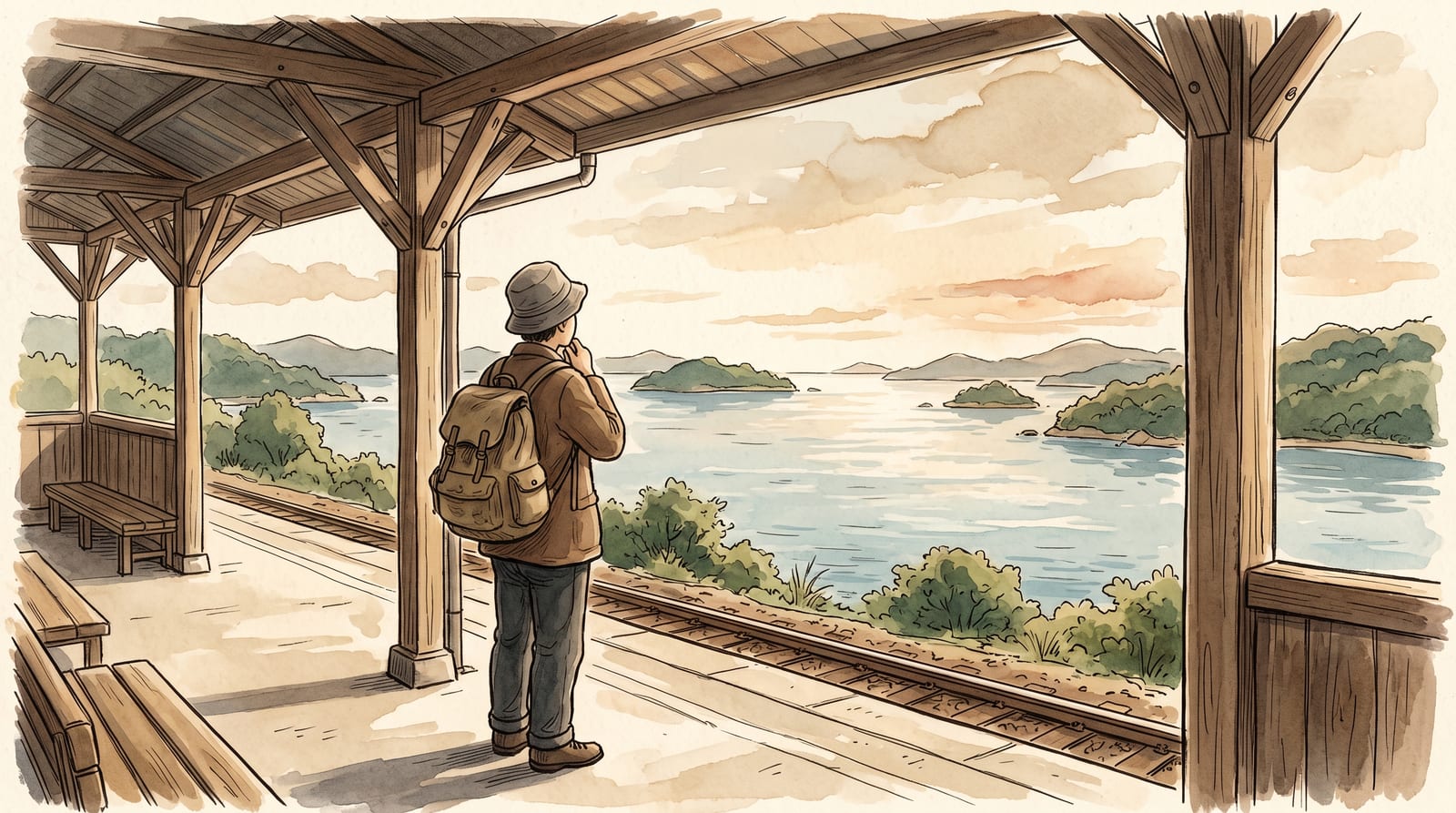
You have probably already done the obvious day. The Peace Memorial Park in the morning, the streetcar out toward the ferry, the torii gate at the hour the light is supposed to be best. It is a good day, and almost everyone takes it. The harder question is the one that comes after: you have a second free morning in Hiroshima, maybe a third, and you would rather not repeat the postcard. So where do you actually go?
Hiroshima is one of the best bases in western Japan for day trips, and not because of any single famous sight. It sits at the mouth of the Seto Inland Sea, with a rail line and a ferry network that reach naval cities, a rabbit island, Edo-era port towns, and the quiet half of Japan's most famous cycling road, all within one or two hours. This guide compares the eight trips we think are worth the train fare: what each one costs, how long it takes, and the part most lists skip, who each one is actually for.
Because the city works best as a hub you return to each evening, most travelers book several nights in Hiroshima and ride out from there. Rooms range from the business chains by the station to traditional ryokan, and Rakuten Travel Hiroshima hotels lists both; the ryokan stock in particular is worth checking around early August, when the August 6 anniversary fills the city's hotels well ahead of time.
We are based around Kure, so we will be plain about our bias. Kure is our first recommendation for most travelers, and the cards below explain why. It is not the right call for everyone, though, and several of these trips beat it for specific tastes. Prices and times were checked against operator and city sources in June 2026; confirm before you travel, because fares do change. (The Kintaikyo bridge toll at Iwakuni, for one, goes up on 1 September 2026.)
A rail line and a ferry network that reach naval cities, a rabbit island, Edo-era port towns, and the quiet half of Japan's most famous cycling road, all within one or two hours of Hiroshima.
1. Kure: the naval city we send most people to first
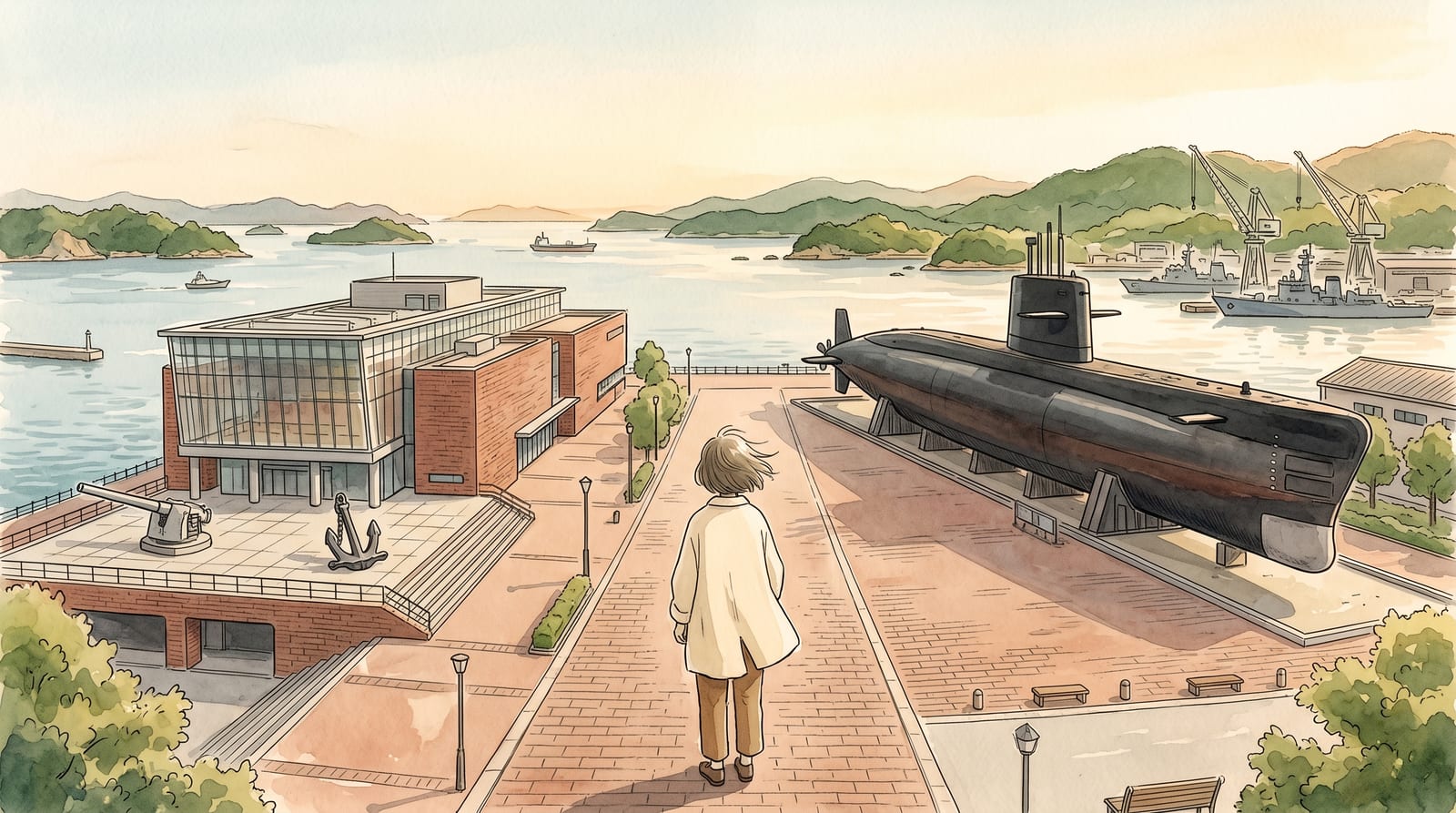
Closest, quietest, the easiest yes.
- Fare
- ¥510 one way
- Time needed
- Half to full day
- Best for
- Naval history, anime, food
Kure built the battleship Yamato, and for the first half of the twentieth century it housed the Imperial Japanese Navy's largest arsenal. Today that history sits in a tight, walkable cluster a five-minute walk from the station: the Yamato Museum with its 26.3-metre scale model of the ship, the JMSDF Kure Museum (the "Iron Whale," a real decommissioned submarine you walk through, free to enter) directly across the plaza, and the cruise terminal where boats run out past the modern Maritime Self-Defense Force fleet, close enough to read the hull numbers. It is also the setting of the animated film In This Corner of the World, and the home of certified "naval curry," recipes handed down from individual JMSDF ships.
No other day trip from Hiroshima offers this much variety in one place, for this little money, this close. That is why it is our default recommendation. The rapid train on the JR Kure Line takes about 35 minutes for around ¥510, and a Japan Rail Pass covers the leg.
If you take only one thing from this guide, start here:
- One Day in Kure: the complete itinerary is the master plan: morning museums, naval curry for lunch, an afternoon you choose, and the Mt. Haigamine night view to close.
- Hiroshima to Kure day trip covers the transport in full (train, bus, and ferry options) so we do not repeat it here.
- The Yamato Museum guide, the Iron Whale submarine museum, the Kure harbor warship cruise, and the naval curry guide go deep on each piece. Anime travelers should read the In This Corner of the World locations.
2. Miyajima: crowded, famous, and still the right first choice
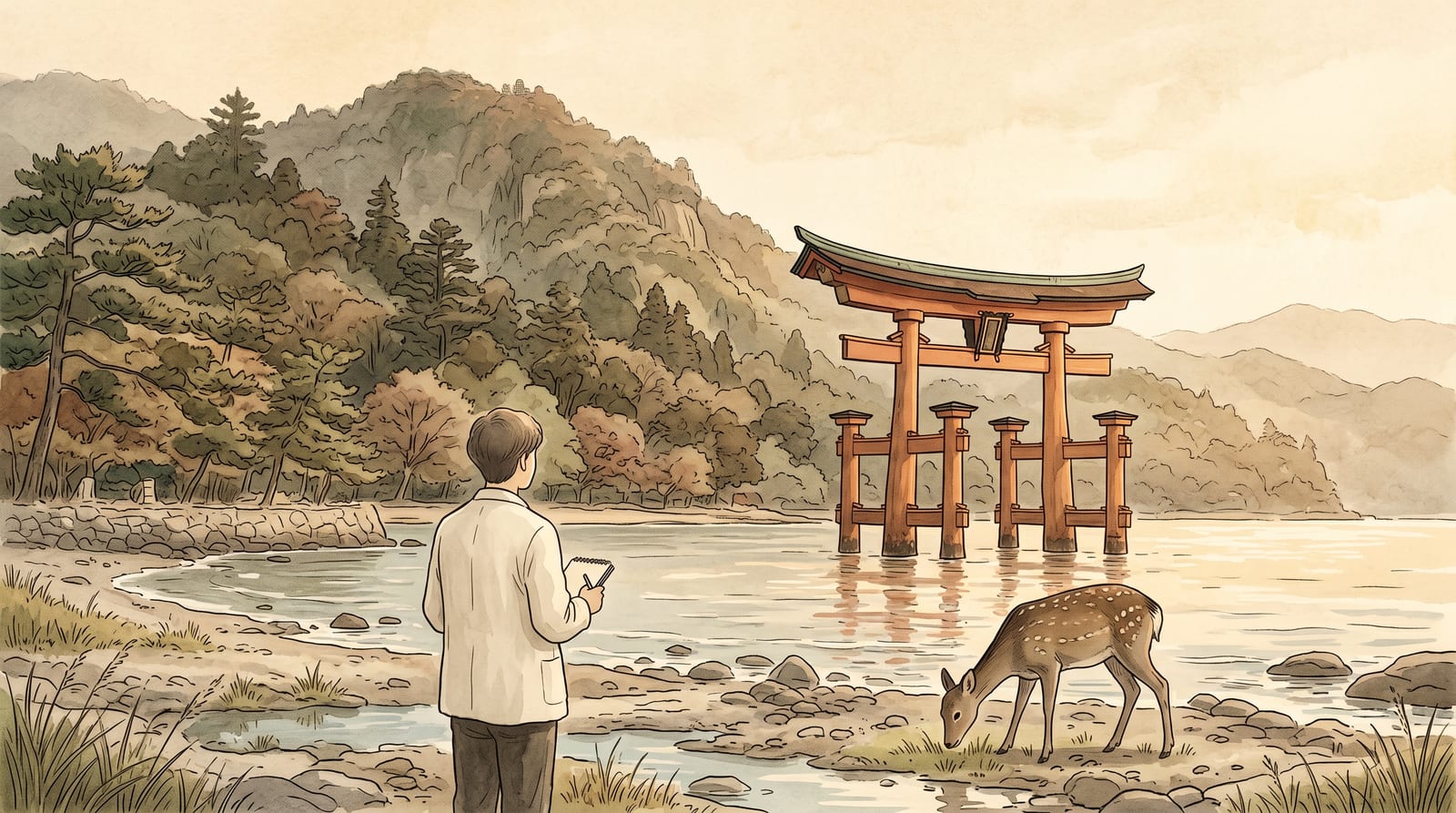
The famous one, and still the safe first choice.
- Fare
- ~¥720 one way (incl. ¥100 tax)
- Time needed
- Half to full day
- Best for
- The one classic Japan image
Miyajima (officially Itsukushima) is the trip almost everyone takes, and the crowds are the honest downside. But the vermilion torii gate standing in the sea, the shrine built over the water, the tame deer, and the climb up Mt. Misen earn the reputation. If you have never been and you only have one side trip, this is the safe choice.
Getting there is simple. From Hiroshima Station, the JR Sanyo Line reaches Miyajimaguchi in about 27 minutes for ¥420, then a 10-minute ferry crosses to the island for ¥200. Two ferry companies run the route; the JR West ferry is covered by a Japan Rail Pass. Note the Miyajima visitor tax of ¥100 per person: it is added to your ferry ticket at the counter, or charged separately at the boarding gate if you tap an IC card, and you only pay it on the way to the island. A cheaper, slower option is the Hiroden streetcar (a flat ¥240) all the way to the ferry pier, which takes roughly 60 to 70 minutes through the city.
We do not yet have a full Miyajima guide of our own, so we will not pretend to depth here. What we can tell you plainly: it is the most crowded of these eight, it is the most photogenic, and it is the least like the rest of this list.
3. Iwakuni: a five-arch wooden bridge most visitors miss
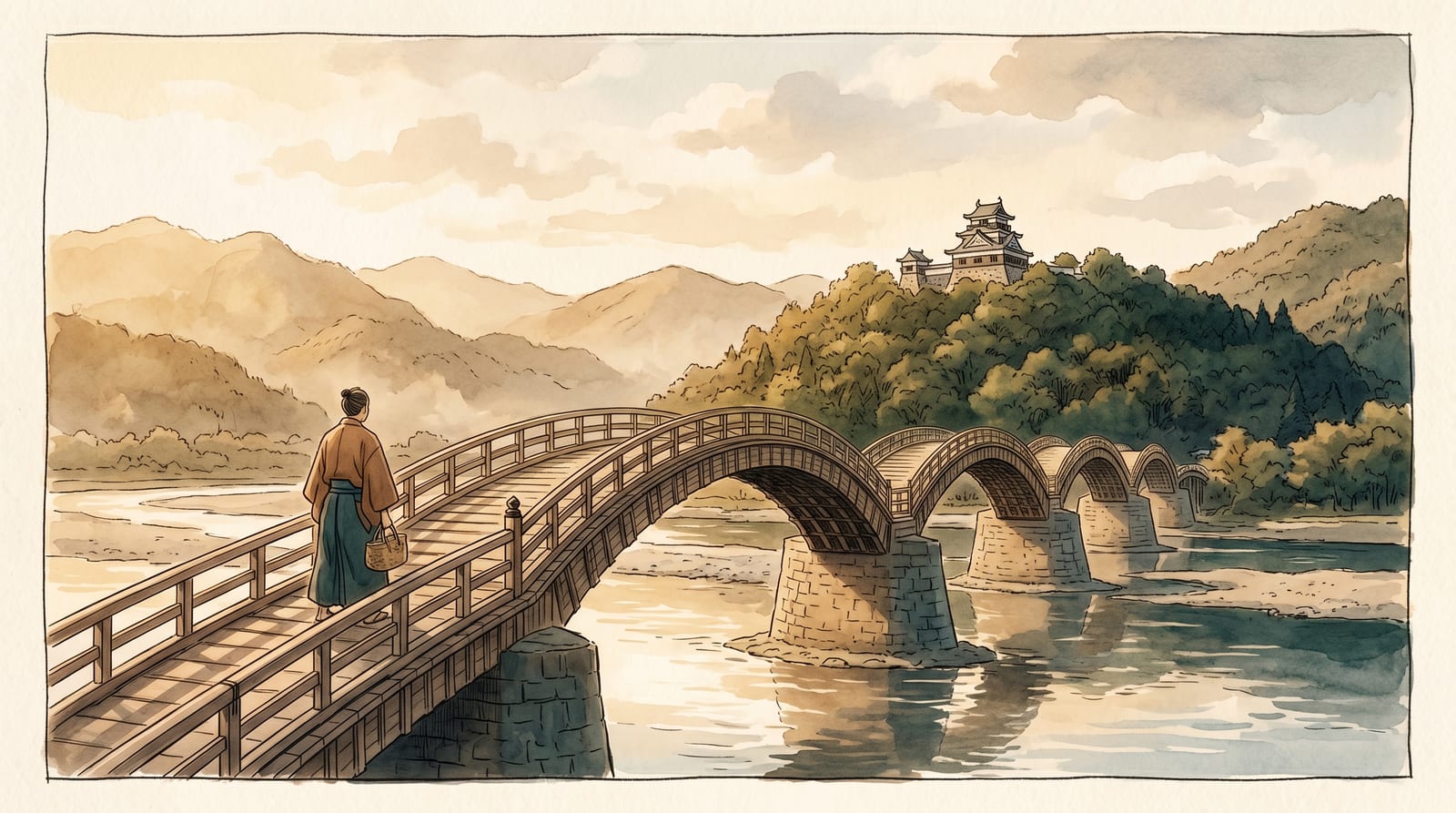
A five-arch wooden bridge most visitors miss.
- Fare
- ~¥1,070 one way, plus toll
- Time needed
- Half day
- Best for
- Architecture, a quieter Miyajima
The Kintaikyo is a 17th-century wooden bridge of five steep arches across the Nishiki River, rebuilt faithfully over the centuries and still crossed on foot today. Above it sits Iwakuni Castle, reached by a ropeway, and the town keeps a small population of rare white snakes that have their own viewing house. It is an easy, satisfying half-day for anyone who likes traditional architecture and wants something less mobbed than Miyajima.
From Hiroshima Station, the JR Sanyo Line reaches Iwakuni Station in about 49 minutes for ¥770, then the Iwakuni Bus runs to the Kintaikyo stop in about 15 minutes for ¥300. Crossing the bridge costs a round-trip admission ticket: ¥310 per adult as of mid-2026, rising to ¥500 from 1 September 2026. This is another trip we have not yet covered in depth, so we will keep our recommendation simple: worth it for the bridge alone, especially in cherry-blossom or autumn-leaf season.
4. Etajima: the former naval academy, for the serious history traveler
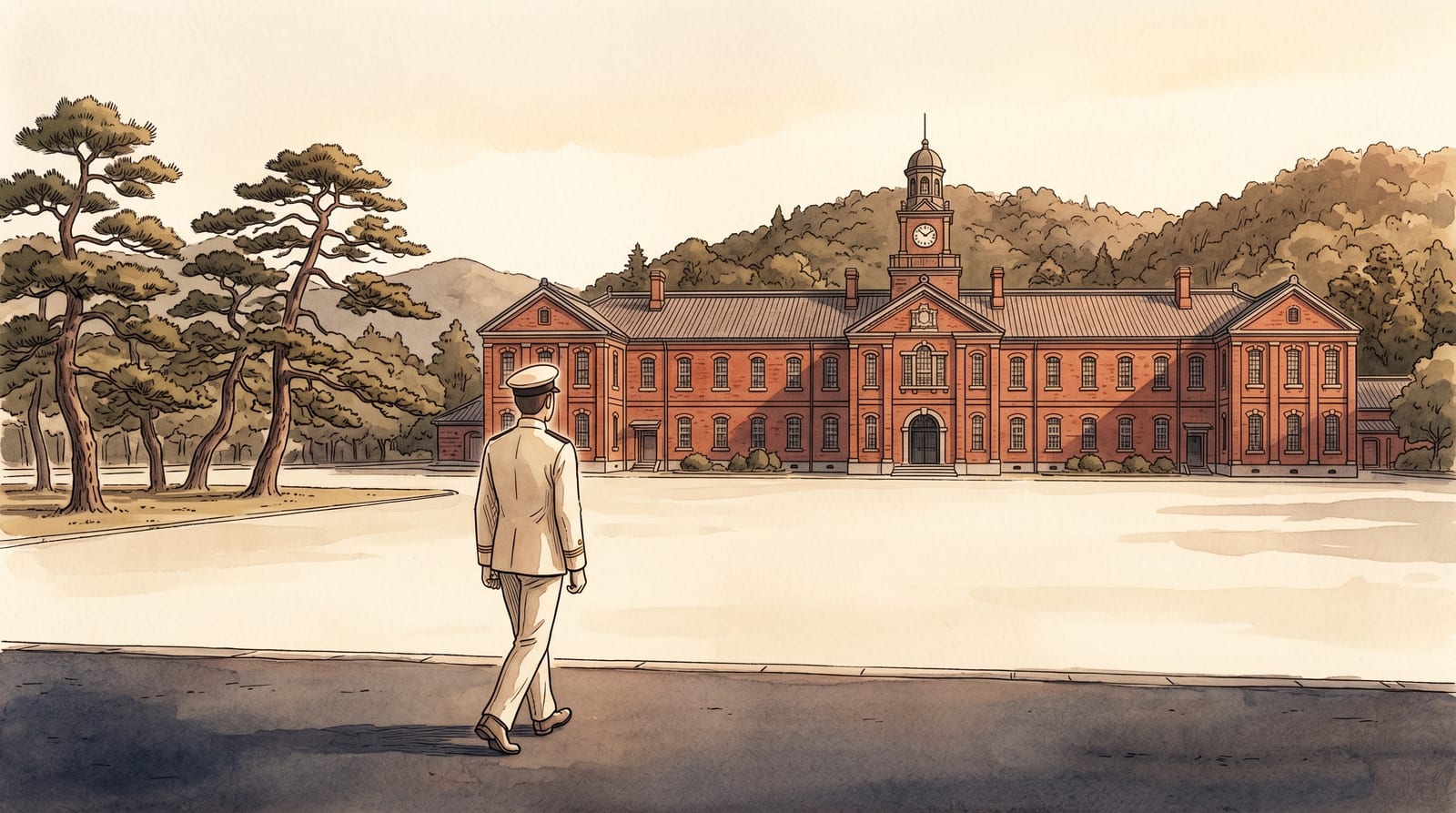
The deep cut for serious naval-history travelers.
- Fare
- ~¥1,080 by boat
- Time needed
- Half day
- Best for
- Military history, a Kure companion
Etajima is the deep cut. The island was home to the Imperial Japanese Naval Academy, where Japan trained its naval officers (including Isoroku Yamamoto) from 1888 to 1945; the site is now the JMSDF First Service School. The free guided tour walks you past the red-brick Midshipmen's Hall, the granite Grand Auditorium, and the Educational Reference Hall museum. It is a genuine pilgrimage for anyone serious about naval history, and it pairs naturally with a Kure visit.
One honest caveat: the tour is guided-only and in Japanese, about 90 minutes, with no foreign-language guidance. From Hiroshima you can take the Setonaikaikisen high-speed boat from Hiroshima Port (Ujina) directly to Koyo Port in about 22 minutes for around ¥1,080, but you first need to reach Ujina by tram, so budget closer to an hour door to door. Many visitors instead come via Kure, a one-minute walk from the Yamato Museum to the Kure ferry terminal.
- Our Etajima Naval Academy guide has the full tour schedule, ferry connections, and the dress code (yes, there is one).
5. Onomichi: hillside temples, cats, and the start of a famous cycle road
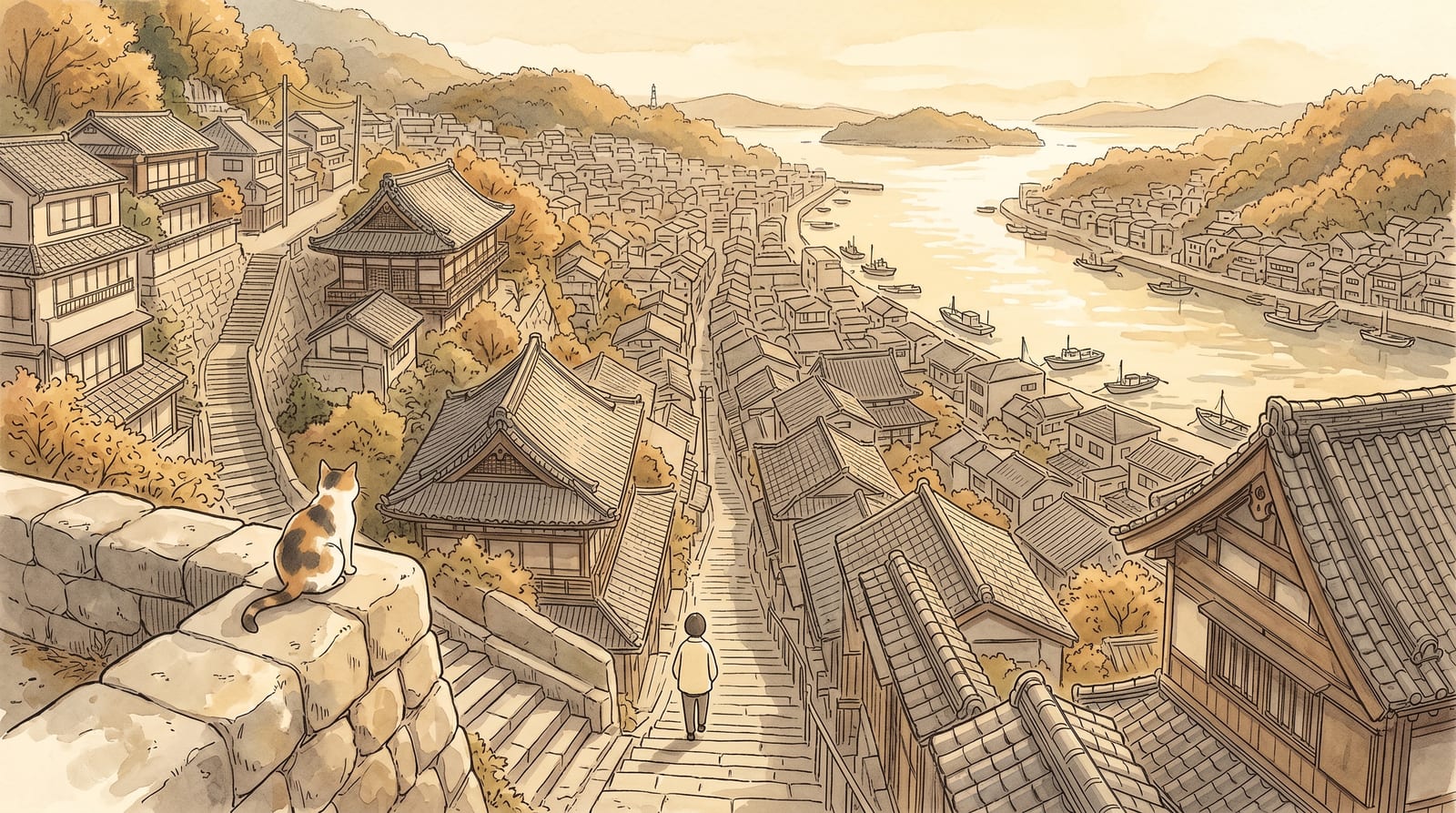
Hill-town lanes, cats, and the cycle road south.
- Fare
- ¥1,520 one way (local)
- Time needed
- Half to full day
- Best for
- Cyclists, slow travelers
Cats on stone walls, temple lanes too steep for bikes, a narrow shipping channel below: Onomichi stacks all of it on one hillside, with literary footpaths and film-location corners threaded between. It is also the mainland gateway to the Shimanami Kaido, the island-hopping cycle road to Shikoku, which makes it a magnet for cyclists. For a half day you wander the slopes; for a full day you rent a bike and ride out over the bridges.
The simplest route is the JR Sanyo Line local train, about 90 minutes for ¥1,520, usually with one transfer at Mihara. The Kodama shinkansen is faster (about 35 minutes) but stops at Shin-Onomichi station, which is 3 km north of the town center and needs a further bus, so for most day-trippers the local train is the practical choice. There is also a direct highway bus, the Flower Liner, from the Hiroshima Bus Center for ¥2,000.
If the Shimanami Kaido sounds appealing but you want a quieter, less crowded ride, read our Tobishima Kaido cycling guide (next on this list); it is the Shimanami's calmer sister route, reached from the Kure side.
6. Okunoshima (Rabbit Island): cute on the surface, sober underneath
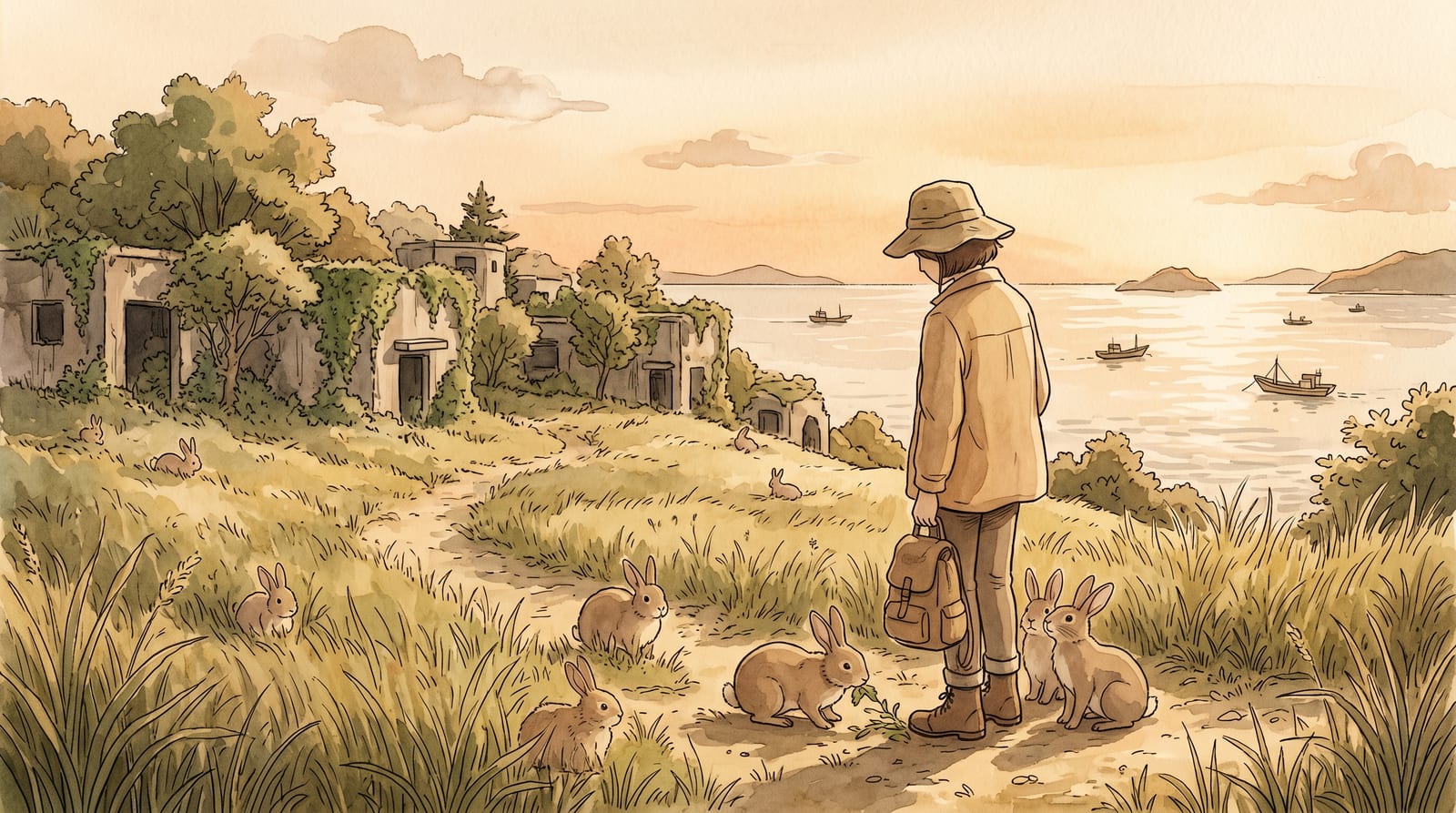
Rabbits on the surface, a sober history beneath.
- Fare
- from ~¥1,680 one way
- Time needed
- Half day
- Best for
- Families, animal lovers, history
The rabbits are real, and families will have a good day chasing them: hundreds of tame wild rabbits approach visitors for food. So is the history beneath them. From 1927 the island housed a secret Imperial Japanese Army poison gas factory, hidden from maps, and the small museum documents that past honestly. The current population of rabbits traces to animals released in the early 1970s, not, despite the popular story, to the wartime test animals, which were culled when the factory closed.
It belongs to Takehara City, not Kure, but it sits down the same JR Kure Line. The usual approach is a train to Tadanoumi (a direct local from Hiroshima takes about 2 hours for ¥1,320, or take the shinkansen to Mihara and change), then a 15-minute ferry from Tadanoumi Port for ¥360. Buy rabbit food before you board, since none is sold on the island.
- Our Okunoshima Rabbit Island guide covers the ferry timetable, the feeding rules, and how to hold the cute and the dark together honestly.
7. Tobishima Kaido: the Shimanami's quiet sister, from the Kure side
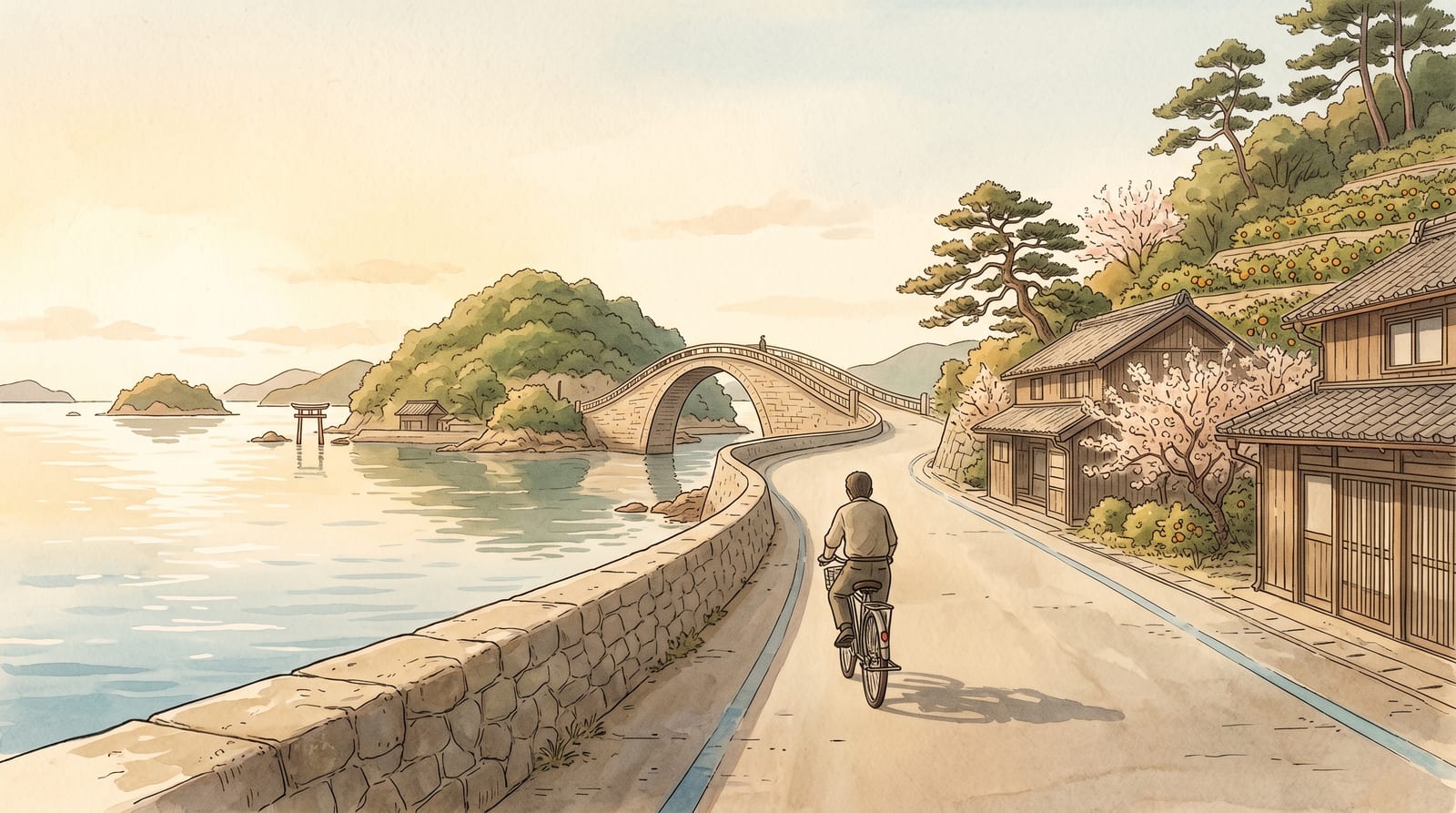
Island-hopping cycling without the Shimanami crowds.
- Fare
- ¥770 one way
- Time needed
- Full day
- Best for
- Cyclists wanting empty roads
If you want the island-hopping cycling experience without the Shimanami's crowds, the Akinada-Tobishima Kaido is the answer. It links Kure's Kawajiri district to Okamura Island across seven islands and seven bridges, all free to cross by bike, with almost no car traffic and a single traffic light on the whole shortest route. The road hugs the coastline, and it passes through the Edo port town of Mitarai (see below).
The trailhead is Aki-Kawajiri Station on the JR Kure Line, about an hour from Hiroshima for ¥770, a few stops past Kure. It is a full-day outing, and one of the most underrated rides in western Japan precisely because so few English-language guides name it.
- Our Tobishima Kaido cycling guide has the route, the bridges, bike rental (return by 5pm, passport required), and the ferry link to the Shimanami at the far end.
8. Mitarai: an intact Edo port town at the end of the line
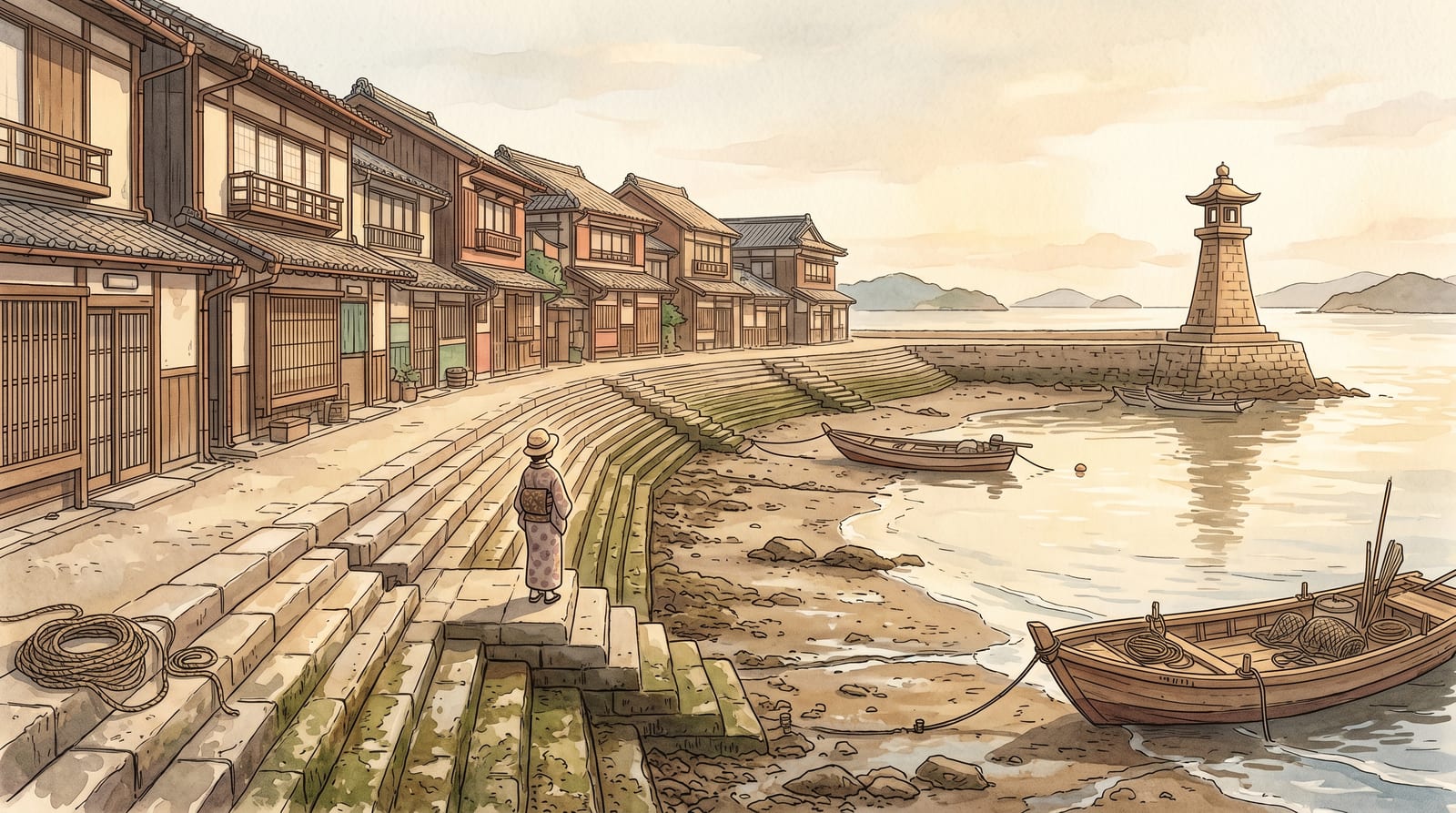
An intact Edo port town, for the patient.
- Fare
- Bus fare not published
- Time needed
- Half day on site
- Best for
- Original fabric over restored
Mitarai is the furthest and most committing of the eight, and that is the point. On Osaki Shimojima island, it was a tide-and-wind-waiting harbor for Edo-period trading ships, and its streetscape survived so intact that it became a national Important Preservation District in 1994. The outdoor streetscape (the stone quays, the lighthouse, the shrines, the merchant houses) is free and open at any hour; two small indoor sites cost ¥200 each.
There is no ferry to Mitarai as of 2026. Public access is the Setouchi Sanko bus from Hiro Station (not Kure Station) on the JR Kure Line, about 84 minutes to the Mitarai-ko stop. By car it is about 90 minutes via the Tobishima Kaido bridge chain, and cyclists on that route pass straight through. The bus fare is not published online, so confirm it with the operator before you go.
- Our Mitarai port town guide has the full transport picture, the paid sites' hours, and the honest history (including which famous local stories the records actually support).
The eight trips, side by side
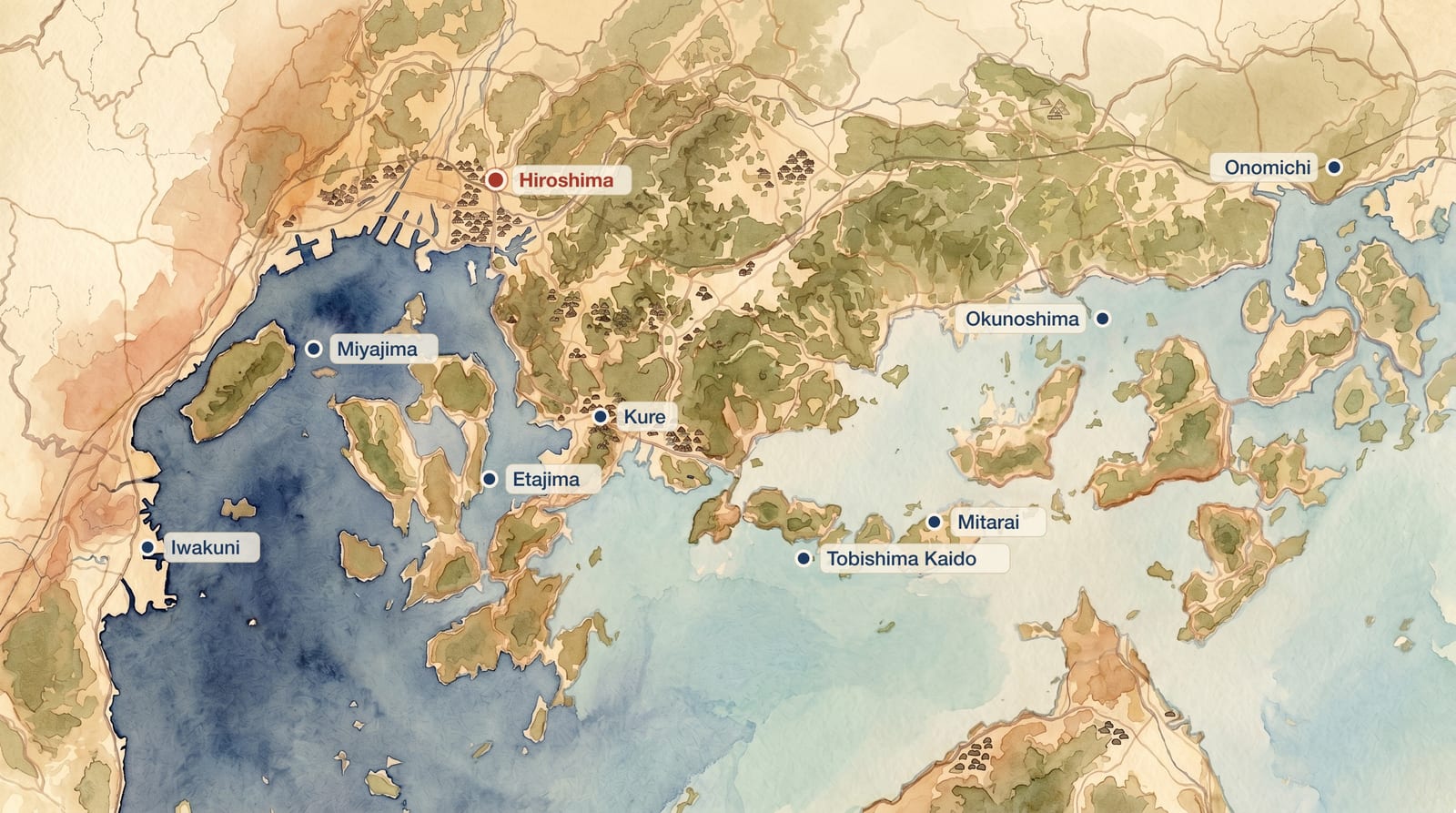
Editorial watercolor map by kure-japan.com; basemap data © OpenStreetMap contributors. Marker positions are approximate; see the table for exact times and fares.
| Destination | From Hiroshima | One-way fare | Time needed | Best for |
|---|---|---|---|---|
| Kure Quiet | ~35 min (rapid train) | ¥510 | Half to full day | Naval history, anime, food |
| Miyajima Busy | ~45–50 min (train + ferry) | ~¥720 (inc. ¥100 tax) | Half to full day | The classic Japan icon |
| Iwakuni Quiet | ~65 min (train + bus) | ~¥1,070 + bridge toll | Half day | The Kintaikyo bridge, architecture |
| Etajima Quiet | ~50–60 min (tram + boat) | ~¥1,320 (tram + boat) | Half day | Serious naval history |
| Onomichi Moderate | ~90 min (local train) | ¥1,520 | Half to full day | Hill town, cycling, cats |
| Okunoshima Moderate | ~2 hr (train + ferry) | ~¥1,680 | Half day | Rabbits + wartime history |
| Tobishima Kaido Quiet | ~1 hr (train to trailhead) | ¥770 | Full day | Quiet island cycling |
| Mitarai Quiet | ~84 min (bus from Hiro) | Confirm with operator | Half day on site | Intact Edo port town |
Fares are adult IC-card or ticket prices, one way, checked against operator and city sources in June 2026. Round-trip and admission costs are higher; confirm current prices before travel.
Which day trip from Hiroshima is right for you?
The honest version of this question is not "which is best," but "which is best for the kind of traveler you are." Here is how we would route people:
- You came for ships, naval history, or war history. Start with Kure, then add Etajima if you have a second day. For a different, sober chapter of wartime history, Okunoshima has its poison-gas museum.
- This is your only side trip and you want one classic Japan image. Take Miyajima. It is the most famous for a reason, and the logistics are the simplest on this list.
- You are traveling with kids, or you just want something gentle and a little offbeat. Okunoshima and its rabbits.
- You want to cycle. Onomichi for the famous Shimanami Kaido, or the Tobishima Kaido for the same island-hopping with a fraction of the crowds.
- You love traditional architecture and old streets. Iwakuni for the Kintaikyo bridge in a half day, or Mitarai for an intact Edo port town if you have the patience for the long ride.
- You are an anime pilgrim (In This Corner of the World, or the naval-history corner of the fandom). Kure, without question.
Our bias, stated plainly: if you are undecided and you have any curiosity about history, ships, or food, Kure gives the most per yen and per minute. If you have never seen the floating torii and you only get one trip, Miyajima first. Everything else on this list is for a more specific appetite, and the better it matches yours, the more it will beat both.
If your phone plan does not include data in Japan, a Klook Japan eSIM eSIM is the single most useful thing to sort before any of these trips, since you will be reading Japanese bus and ferry timetables off your phone. And if you would rather not manage the trains at all, GetYourGuide Kure day tour runs guided day tours from Hiroshima with round-trip transport and an English-speaking guide.
FAQ
What is the best day trip from Hiroshima?
For most travelers we recommend Kure, the naval city about 35 minutes away by rapid train (around ¥510 each way). It combines the Yamato Museum, a walk-through submarine museum, harbor cruises, and certified naval curry on one waterfront. Miyajima is the most famous and the easiest first trip. Beyond those two, the best choice depends on your taste: Okunoshima for rabbits, Iwakuni for the Kintaikyo bridge, Etajima for naval history, and Onomichi or the Tobishima Kaido for cycling.
Which day trip is the fastest, and which is the cheapest?
Kure is both the fastest meaningful trip (about 35 minutes) and the cheapest (about ¥510 each way). Miyajima is close behind on time at about 45 to 50 minutes. Onomichi and Okunoshima are the longest, at about 90 minutes and 2 hours respectively.
Can I use a Japan Rail Pass for these trips?
The pass covers the JR train legs (Kure, Miyajimaguchi, Onomichi, Iwakuni, Tadanoumi for Okunoshima, and Aki-Kawajiri for Tobishima) and the JR West Miyajima ferry. It does not cover the private buses to Iwakuni's bridge or to Mitarai, the Setonaikaikisen ferries to Etajima, or the Okunoshima ferry. On a single day trip a pass rarely pays off; it makes sense as part of a wider shinkansen itinerary.
Is Miyajima or Kure the better day trip?
Miyajima if you want one iconic image and have never been; Kure if you want depth, lower cost, and any interest in ships, history, or the film In This Corner of the World. With only one day and no prior Miyajima visit, take Miyajima. With a second day, or a preference for substance over a postcard, take Kure.
Which trips are best for families with children?
Okunoshima (the rabbits) is the clear family favorite. Miyajima works well too, with the deer, the ferry ride, and the ropeway up Mt. Misen. Kure's submarine and the giant battleship model also land well with older kids.
Which day trip is the least crowded?
The Tobishima Kaido, Mitarai, and Etajima see the fewest visitors. Okunoshima is busy but never overwhelming. Miyajima is by far the most crowded of the eight.
Related guides
- One Day in Kure: Complete 2026 Itinerary. Our master plan for the trip we recommend first: morning museums, naval curry, an afternoon you choose, and the night view to close.
- Hiroshima to Kure Day Trip. The full transport guide (train, bus, ferry) for the Kure leg, so the logistics live in one place.
- Yamato Museum Guide. The centerpiece of a Kure visit, built around the 1:10 battleship model.
- JMSDF Kure Museum (Iron Whale). The free walk-through submarine across the plaza from the Yamato Museum.
- Kure Harbor Warship Cruise. The 40-minute boat past the active Maritime Self-Defense Force fleet, leaving from the Kure waterfront.
- Etajima Naval Academy Guide. The free guided tour of Japan's former naval officer school, reached by ferry.
- Okunoshima (Rabbit Island) Guide. The rabbits, the ferry, and the island's honest wartime history.
- Tobishima Kaido Cycling Guide. The quiet island-hopping ride from the Kure side, the Shimanami's calmer sister.
- Mitarai Port Town Guide. The intact Edo port town at the end of the Tobishima chain.
- In This Corner of the World Locations. The Kure film pilgrimage for anime travelers.
Last visited: 2026-06 | Author: Masayuki Ogasahara | Illustrations generated with AI (Gemini). This article contains affiliate links to GetYourGuide, JRPass.com, Klook, and Rakuten Travel. We may earn a small commission at no extra cost to you. All transit times, fares, and operational details were verified against operator and city sources in June 2026; please confirm with the relevant operator before your visit, as fares and schedules change.