
This post contains affiliate links. We may earn a small commission at no extra cost to you.
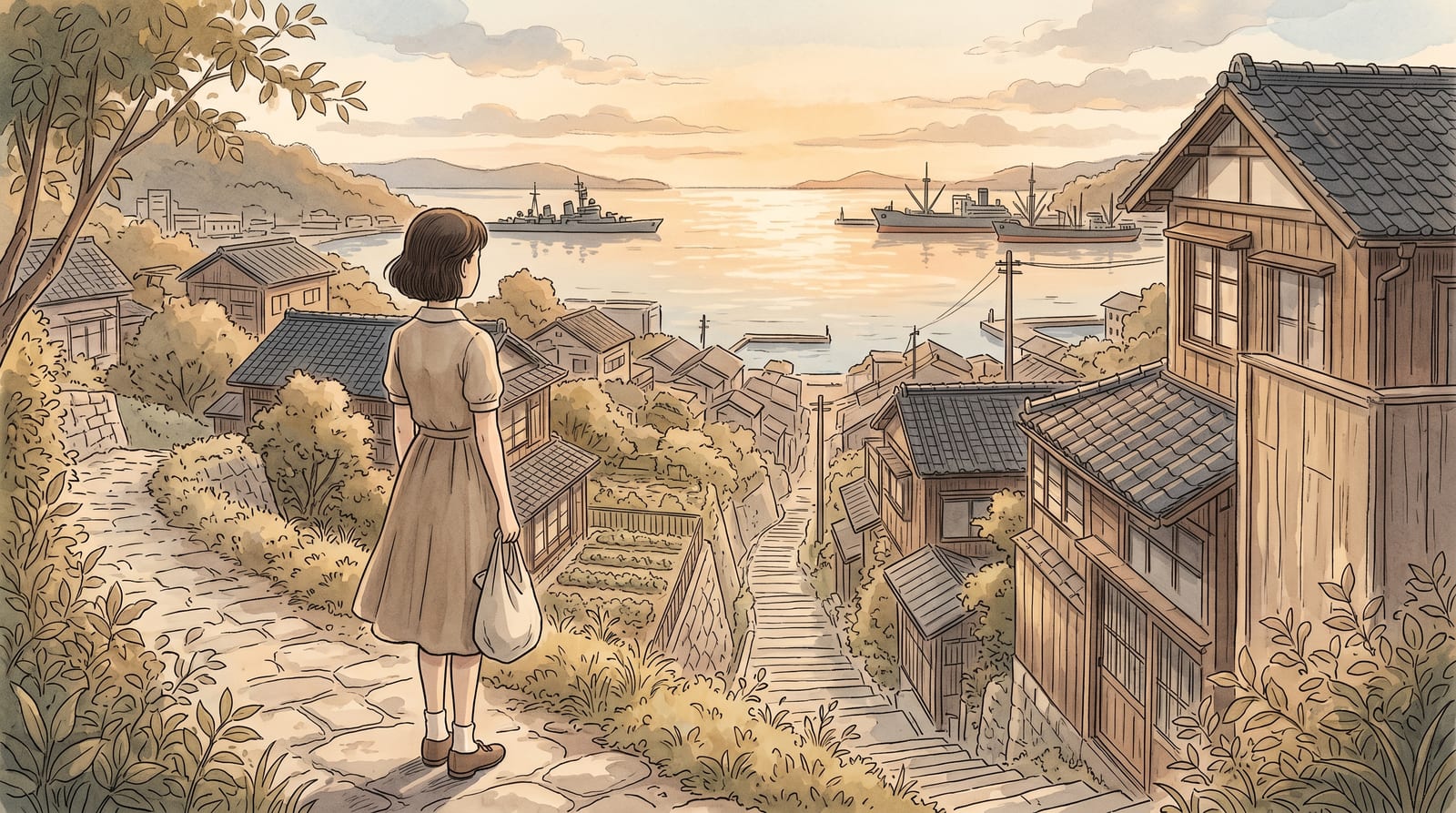
In the film, Suzu keeps stopping to look at things most people walk past — the curve of the harbour, the light on a tiled roof, a hillside of small houses stacked toward the sea. Stand in the real Kure she was drawn into, and you start doing the same thing. The streets are ordinary. What you bring to them is the whole point.
In This Corner of the World turned a working naval city into one of the most quietly moving settings in modern animation, and the real Kure is still here to walk through. This is a guide to the actual filming locations behind the film — what survives, what is a careful recreation, where to find the official map, and how to do all of it without intruding on the people who live there now.
What is In This Corner of the World, and why visit Kure?
In This Corner of the World (この世界の片隅に) is a 2016 animated film directed by Sunao Katabuchi, based on the manga by Fumiyo Kōno . It follows Suzu, a gentle young woman from a seaside town near Hiroshima who marries Shusaku, a civilian official at the naval court in Kure, in 1943 and moves to his family home there. The story is everyday life — cooking, drawing, getting by — set against the last years of the war.
It won the Japan Academy Prize for Best Animated Film, the Kinema Junpo Award for Best Japanese Film, and the Jury Award at the Annecy International Animated Film Festival . A 2019 release, In This Corner (and Other Corners) of the World, is a 168-minute extended cut with roughly 40 minutes of additional footage — an expanded version of the same story, not a sequel.
If you have not seen it, the official trailer is the fastest way to understand why Kure became a pilgrimage:
Kure matters because the film's backgrounds were grounded in the real city. The hills, the harbour, the stone steps and narrow lanes were studied from the Kure of the 1940s, so walking the city today is the closest thing to stepping into the frame — and the quietest way into a history the Yamato Museum and the submarine museum tell from the naval side.
Visiting respectfully: please read this first
This pilgrimage is different from a museum visit. Several locations are ordinary streets and homes where people live now, and the recreated Suzu's house sits in a quiet residential hillside. The film's own team and the city ask visitors to tread lightly, and it genuinely matters here.
- Come on foot or by bus. There is no visitor parking at the residential sites .
- Keep your voice down, especially near homes, early or late in the day.
- Do not enter private property or the terraced fields, and do not photograph people's houses or laundry.
- Stay on public paths. If a spot feels like someone's doorstep, it is — admire it from the street and move on.
Treated this way, the walk is welcome. Treat it carelessly and you wear out the goodwill that keeps these spots open at all.
Where are the locations?
The simplest way to find them is the official map. Beyond that, a few anchor spots are worth knowing before you go.
The free hand-drawn location map
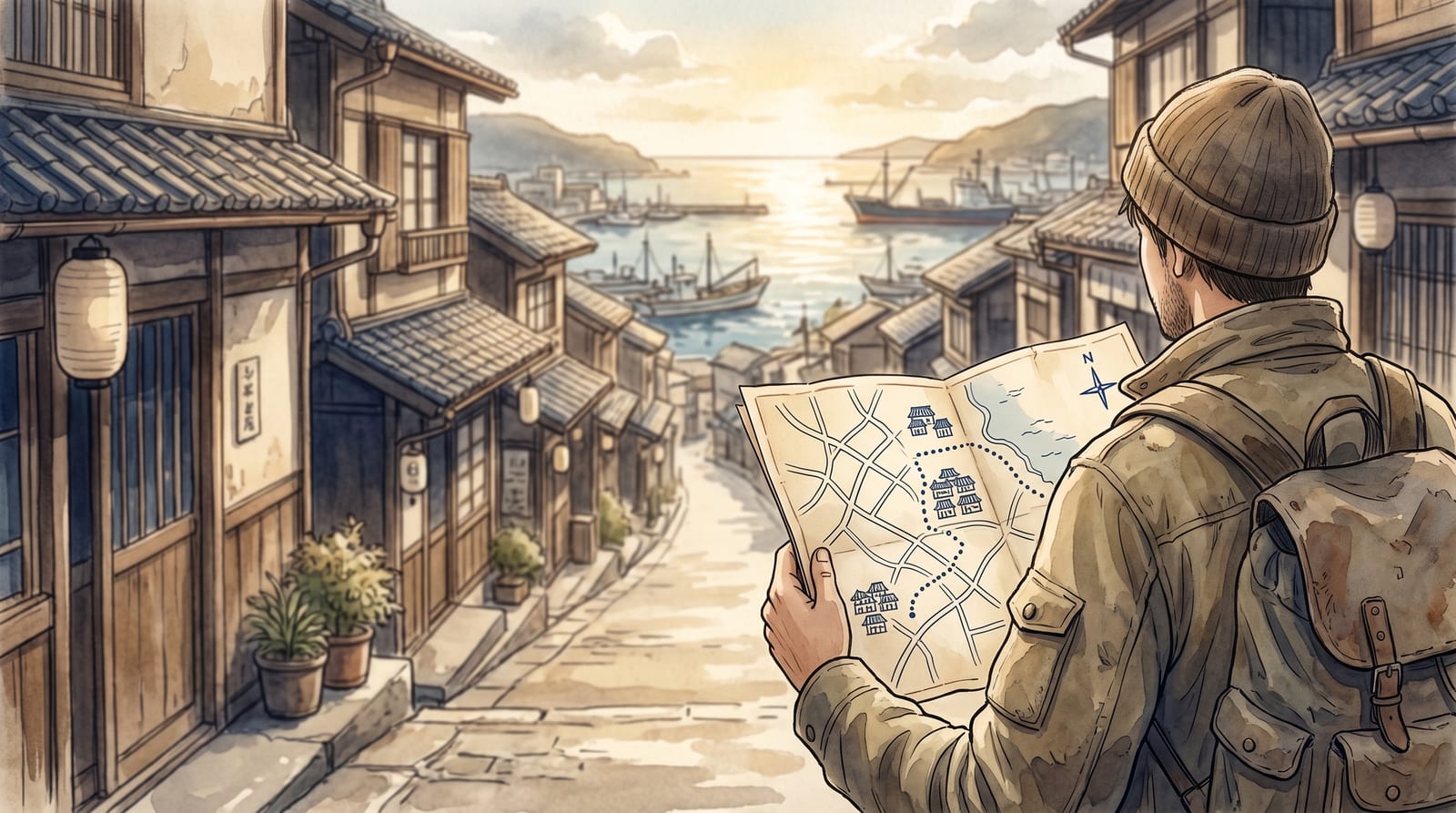
The film's director and staff drew a free illustrated location map of Kure and Hiroshima, made so you can walk while remembering the scenes . Ask for the current map at Kure Station tourist information or the Yamato Museum (it has appeared in both printed and digital form). It is the best single thing you can carry, because it puts the spots in a sensible walking order and shows which frames match which corners.
Suzu's house (recreated layout)
The Hojo family home where Suzu lives is recreated as a layout in the Uneharacho hillside area of Kure, modelled on the original author's design, with a guide board designed by Fumiyo Kōno herself . It is reached on foot or by bus, with no parking, in a residential neighbourhood — so this is exactly the spot to apply the respectful-visit rules above. For current access and any opening details, ask the Kure City Tourist Information Center (0823-23-7845) when you pick up the map.
The Aoyama Club (former navy NCO meeting hall)
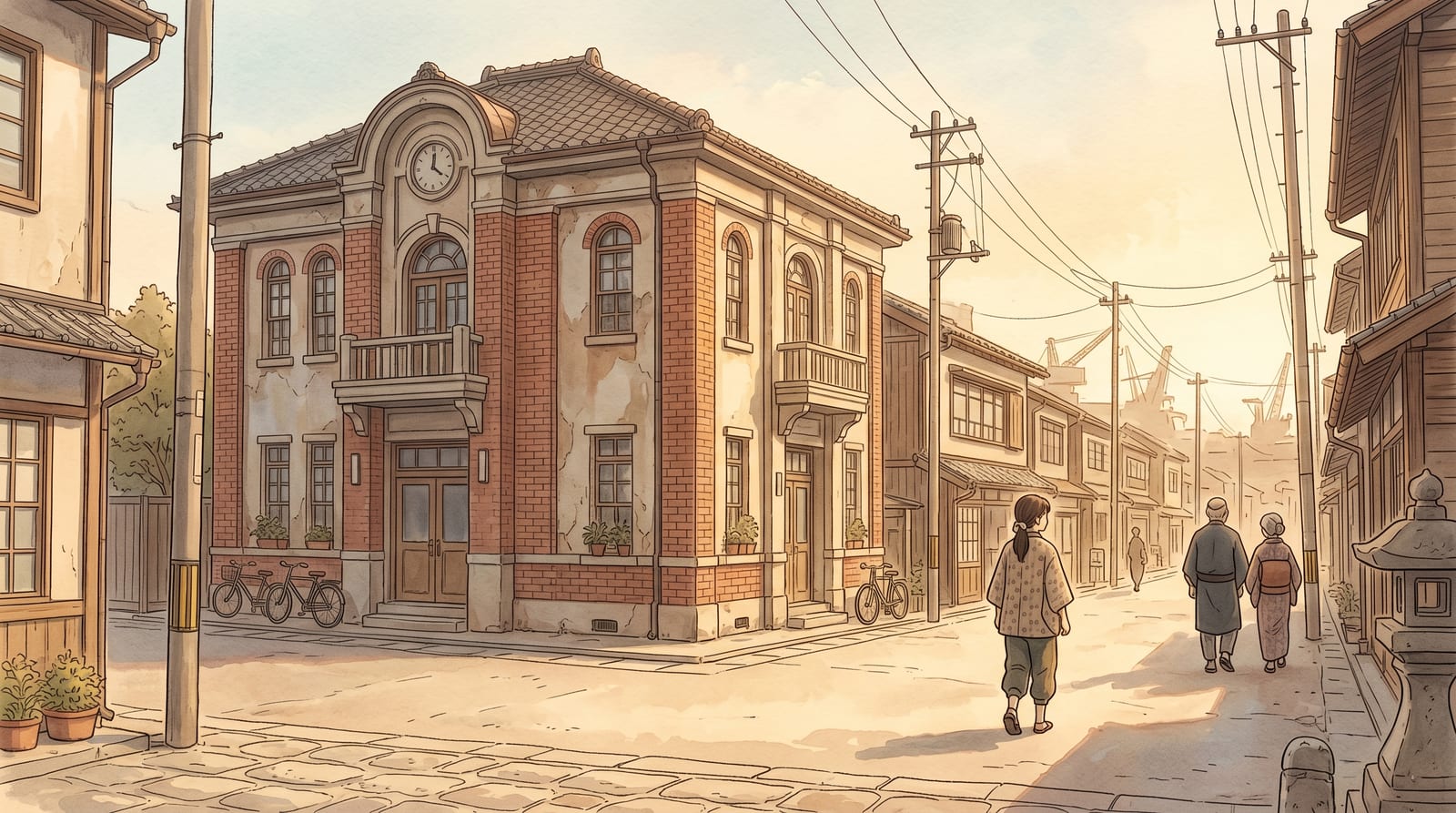
The Aoyama Club, the former meeting hall for navy non-commissioned officers, is a surviving piece of the wartime naval town and a listed spot connected to the film's setting . It is one of the few pre-war buildings still standing on the route, and walking up to it does more than any plaque to place you in the Kure that Suzu married into.
Other spots on the route
The official Kure Film Commission location map links several more corners that appear in the manga and film — among them the Mitsukura storehouses, the steps near the former naval hospital, and Koharu Bridge in the old town, all listed on the city's location map . Rather than chase every frame, pick the handful nearest your route and let the map guide the order.
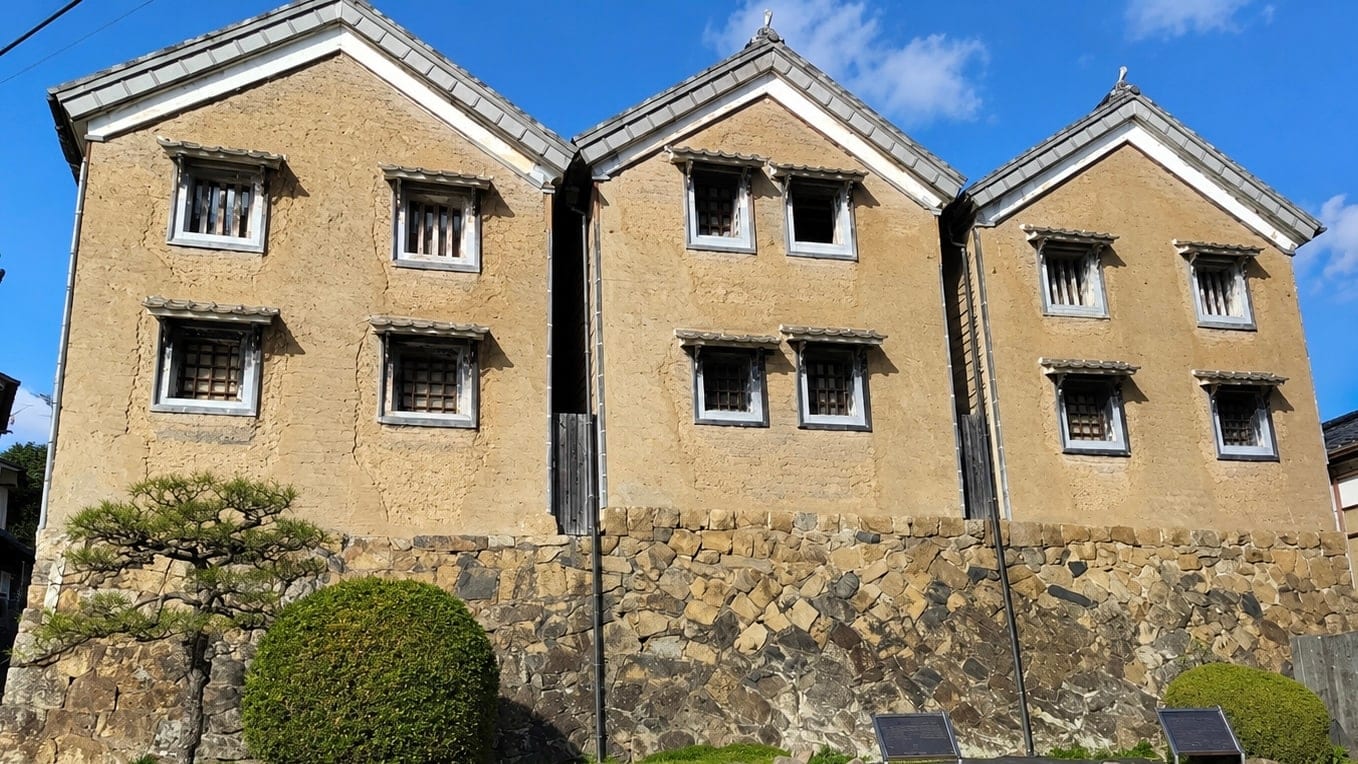
The Mitsukura is the one we would not skip. Three storehouses shoulder to shoulder on their stone base, photographed here from the street at the angle Suzu passes them — it is the rare spot on the route that looks almost untouched between the film's 1940s and now.
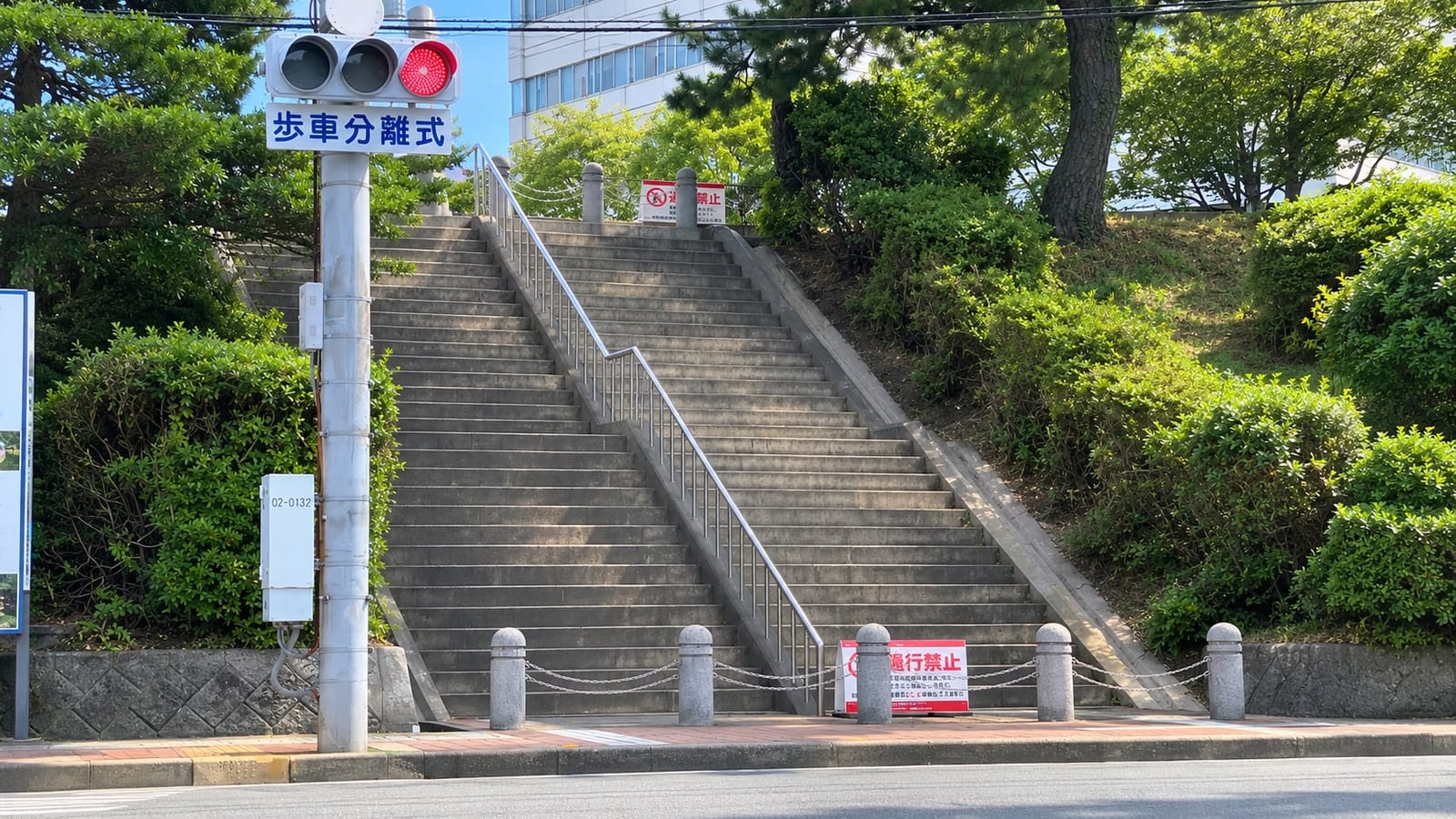
One honest note from our own visit: the hospital-front staircase was chained off with no-entry notices when we photographed it, so plan on seeing this one from the sidewalk rather than climbing it. The view from street level still reads instantly as the film's composition.
How to do the pilgrimage in a day
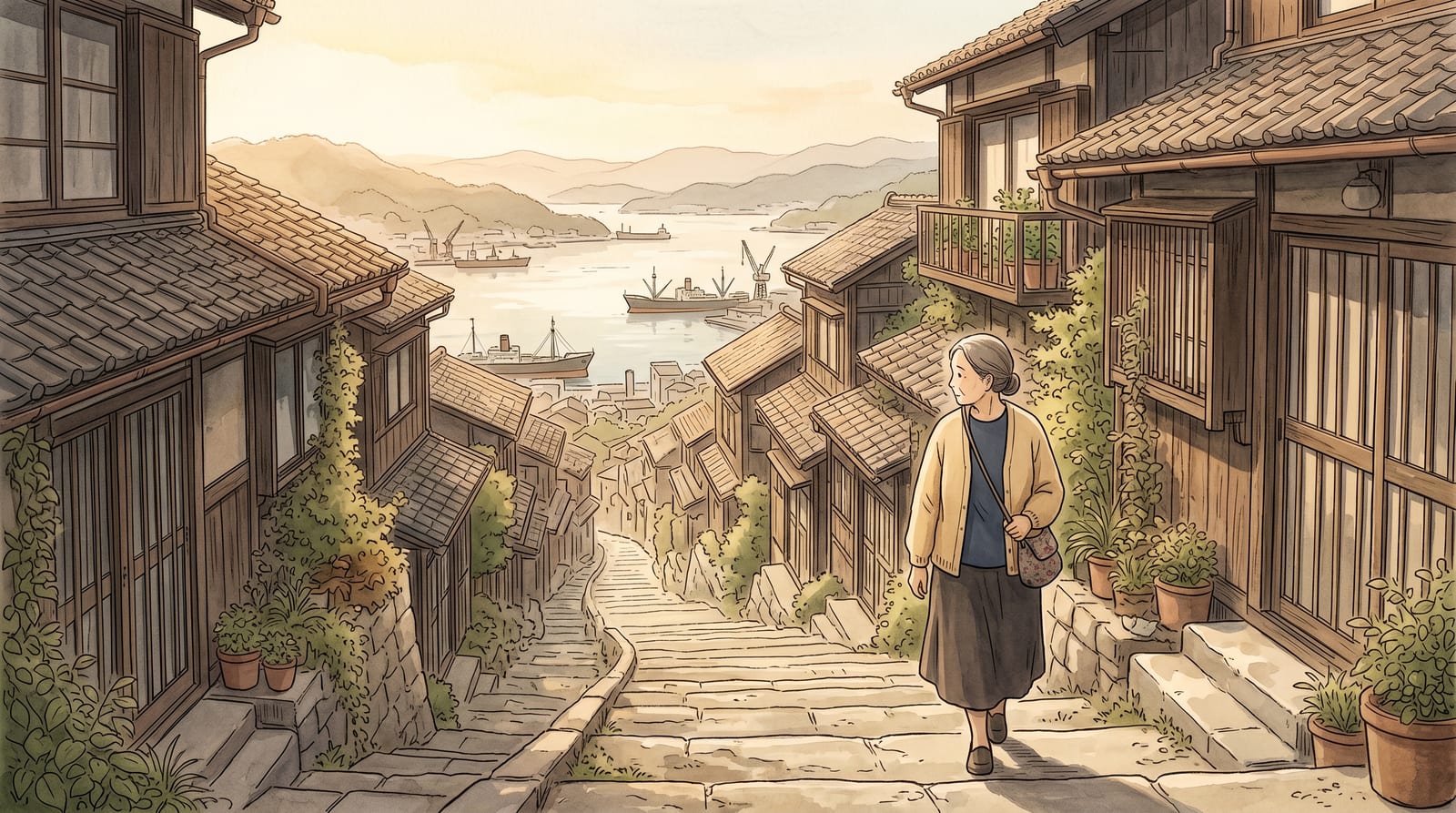
Most people do this as a half day and pair it with the waterfront museums. Get to Kure by train (see our Hiroshima to Kure day trip guide), pick up the map at the station, and walk the central spots first while you are fresh. Save the hillside residential sites for when the light is kind and the streets are quiet.
Pilgrimage Only
Central film spots, on foot
- Arrive Kure, get the map at the station
- Central locations (Aoyama Club, old-town lanes)
- Harbour viewpoint
- Lunch near the station
- Train back to Hiroshima
Film + Curry Day
Pilgrimage + Yamato Museum + curry
- Train from Hiroshima, map at Kure Station
- Central film locations on foot
- Naval curry lunch
- Yamato Museum
- Suzu's house area (quiet hours) + harbour
Deep Kure
Adds the hills and the light
- Day 1: Film locations, museums, curry
- Day 2: Mt. Haigamine view, slow backstreets
- Stay: a hotel near Kure Station
History and tone: what the film asks of you
The film is a war story told almost entirely through ordinary life. It does not glorify the navy or the war; it stays at the level of a young woman trying to keep a household together while the world tightens around her, up to and past the atomic bombing of Hiroshima in August 1945. Kure itself was heavily bombed as a naval base, and the film holds that loss quietly rather than dramatically.
That tone is worth carrying with you. The pilgrimage is not a theme park; it is a walk through a real city that lived the events the film depicts, and many of its residents have direct family memory of them. Going gently — watching the light, keeping quiet on the hills, thanking the people who keep the spots open — is both the respectful thing and, honestly, the way the film itself would have you see the place.
FAQ
Was In This Corner of the World really set in Kure?
Yes. Most of the story takes place in Kure, the naval port where Suzu moves after her marriage in 1943. The film's backgrounds were closely based on real Kure streets, hills and harbour views of the 1940s, which is why the city is now a popular pilgrimage destination.
Can I visit Suzu's house?
There is a recreation of the Hojo family home's layout in the Uneharacho hillside area of Kure, with a guide board designed by Fumiyo Kōno. It sits in a quiet residential neighbourhood with no parking, so come on foot or by bus, keep your voice down, and do not enter private property or the terraced fields nearby.
Where do I get the location map?
The director and staff drew a free illustrated location map of Kure and Hiroshima. You can pick it up at Kure Station, the Yamato Museum, and major hotels. It is the easiest way to walk the route in the right order.
Do I need to watch the film before visiting?
It helps a lot. The locations are ordinary streets and buildings that become meaningful once you know the story, so watching the 2016 film or the 2019 extended version beforehand turns a normal walk into a pilgrimage.
What is the difference between the 2016 film and the 2019 version?
The 2019 release, In This Corner (and Other Corners) of the World, is a 168-minute extended cut with about 40 minutes of extra footage that deepens certain characters. It is an expanded version of the same story, not a sequel.
Can I combine the pilgrimage with the Yamato Museum?
Yes, easily. The film locations and the waterfront museums are in the same compact city, so many visitors do the pilgrimage in the morning and the Yamato Museum or submarine museum in the afternoon as a single Kure day trip from Hiroshima.
Related guides
More in our Kure series:
- Best day trips from Hiroshima — the overview, with Kure as the film-pilgrimage option
- Tobishima Kaido cycling from Kure — island-hopping by bike
- Mt. Haigamine sunset guide — the harbour view that echoes the film's hillside scenes (coming soon)
Last visited: 2026-06 | Author: Masayuki Ogasahara | Illustrations generated with AI (Gemini); they evoke the atmosphere of 1940s Kure and are not screenshots from the film. Photographs are original or used with permission; some include light AI-assisted post-processing for cleanup or exposure, with the scene itself unchanged. This article contains affiliate links to GetYourGuide, JRPass.com, Klook, and Rakuten Travel. We may earn a small commission at no extra cost to you. All location and access details were verified against official Kure tourism sources in June 2026; please confirm with the Kure City Tourist Information Center before your visit, and respect residents at all film locations.