
This post contains affiliate links. We may earn a small commission at no extra cost to you.
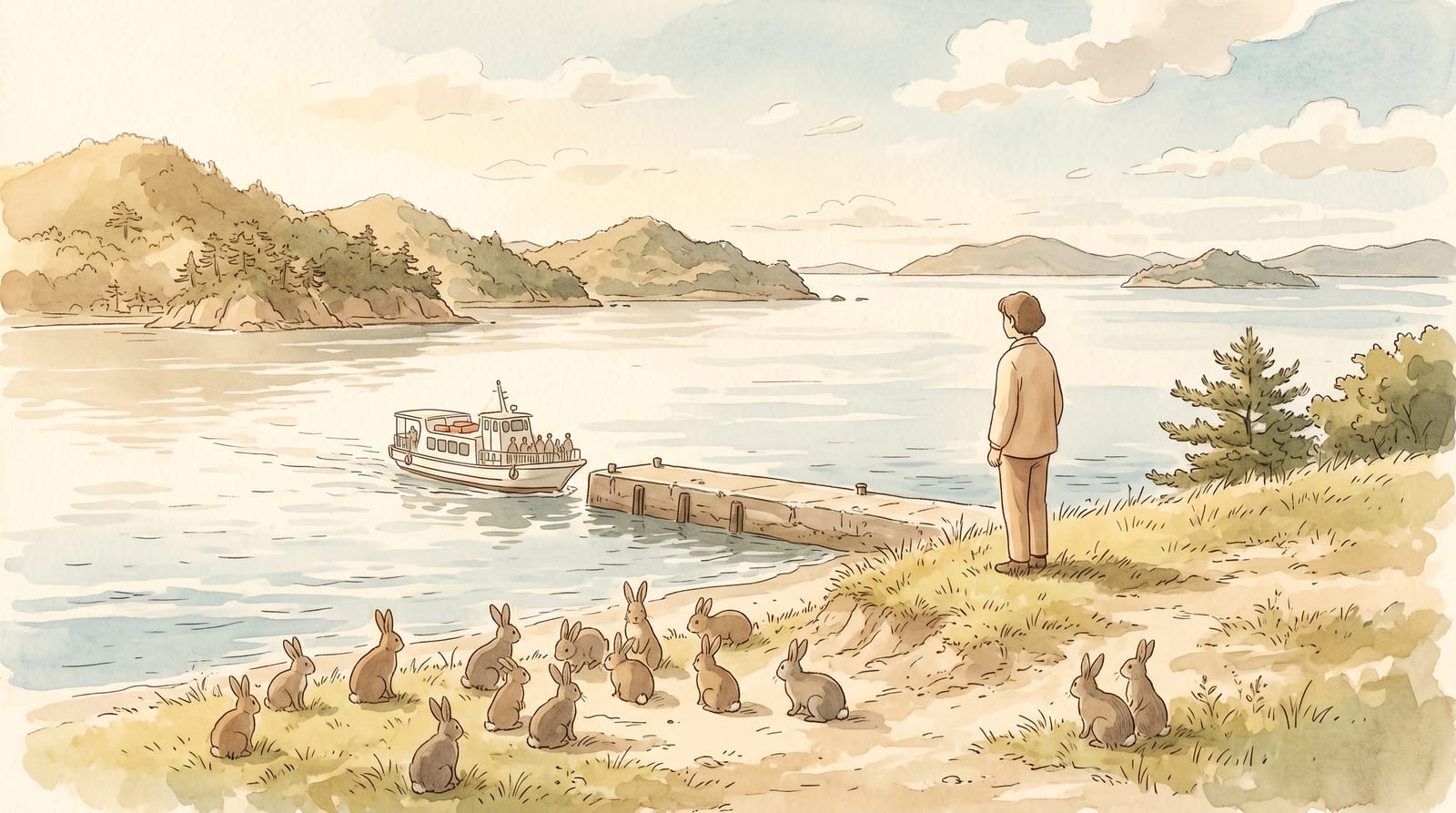
The ferry doors open and the rabbits are already there, sitting at the edge of the concrete, not startled, not retreating — just waiting. A hundred brown ears tilt toward the new arrivals. The island smells of warm grass and salt air, and there is a particular quality to the silence that you do not expect: no cars, no convenience store speakers, only the wind and the low sound of the Seto Inland Sea. What almost no one boarding that ferry knows is that the same island holds a much darker history underneath its pastoral surface.
Okunoshima sits about 3 kilometres off the coast of Takehara, reached from a small port that most Hiroshima visitors drive past without stopping. The island belongs to Takehara City, not Kure — but it is on the same JR Kure Line, a natural extension of the route that connects Hiroshima to Kure and beyond. For anyone spending a few days in the Hiroshima area with a day to spare, it makes sense as a standalone trip or as the second half of a day that begins in Kure. We visited in June 2026 to put this guide together.
For the train from Hiroshima down the Kure Line and everything you need for that journey, see our Hiroshima-to-Kure transport guide. This article picks up from Tadanoumi.
What is Okunoshima, and why does it have so many rabbits?
Okunoshima (大久野島) is a small island of about 4 kilometres in circumference in the Seto Inland Sea, administered by Takehara City in Hiroshima Prefecture. It has no permanent residents, one resort hotel, and several hundred wild rabbits that roam freely across its paths, lawns, and coastal ruins.
The rabbits attract the visitors. But the question almost everyone asks once they start reading about the island — "are they descendants of the poison gas test rabbits?" — has a documented answer: no. Japanese primary sources and experts agree the wartime test animals were euthanized when the chemical-weapons facility was dismantled in 1945; no descendants of that population survive. The replacement origin story — a tidy founding release in 1971 — is cleaner, and also incomplete.
The most-cited version credits a local elementary school releasing eight domestic rabbits in 1971. The earliest newspaper record, however, is a Chugoku Shimbun report from April 1972 that attributes the founding to the National Holiday Village (国民休暇村) on the island: it reportedly released eight pairs of white and white-black rabbits around 1970; the colony reached roughly 200 animals within eighteen months, with no predators to check it. Both accounts give the number eight; they disagree on who released them and whether eight means eight animals or eight breeding pairs.
A 2024 conservation-genetics study — reported in a researcher interview rather than a peer-reviewed paper — gives a cleaner picture of what actually happened. Kaneko Shingo at Fukushima University could not handle the island's hands-off rabbits, so his team collected droppings from over 260 animals and ran microsatellite DNA analysis — finding multiple distinct genetic lineages. A single release of eight or sixteen animals cannot produce that diversity. The coat colours support the same conclusion: the first reported animals were white and white-black, but today's colony includes brown, grey, and black rabbits. Kaneko's conclusion is unambiguous: the population reflects decades of humans abandoning unwanted pet rabbits on the island, not one clean founding moment. The rabbits survive at scale because dogs and cats were removed from the island before the colony formed — no natural predators remain — and the tourist food supply does the rest.
The myth of the test-rabbit lineage persists on social platforms despite being refuted by every Japanese expert source. The actual history — a disputed founding, decades of quiet human abandonment, and a population that depends entirely on tourist food — is less picturesque, and more honest.
How do I get to Okunoshima?
The journey has three legs: train to Tadanoumi, walk to the port, ferry to the island. The essentials are below; for the full access picture (routes from Osaka and Tokyo, flying via Hiroshima Airport, driving, and cycling), see our dedicated how to get to Okunoshima guide.
By train from Hiroshima
The most direct option is the JR Kure Line local train from Hiroshima Station to Tadanoumi Station: about 2 hours, ¥1,320 one way. Trains run at intervals, so check the timetable before you go.
A faster but more expensive option: Shinkansen from Hiroshima to Mihara (about 30 minutes, ¥2,290 non-reserved) then the JR Kure Line local from Mihara to Tadanoumi (about 22 minutes, ¥320). This cuts about an hour off the journey but costs roughly ¥1,200 more each way.
If you are coming from Kure rather than Hiroshima, the trip to Tadanoumi is about 1 hour 14 minutes with one transfer, ¥860 one way. Pairing an Okunoshima visit with a Kure morning is a realistic full-day plan; more on that below.
A JR Pass does not make economic sense for the Hiroshima–Tadanoumi ride alone — the direct local fare is ¥1,320 each way, and the pass breakeven requires several longer-distance trips. If Okunoshima is part of a wider Japan itinerary that already includes Shinkansen travel, Japan Rail Pass the pass covers both the Kure Line and the Shinkansen legs and can still be the most economical way to bundle the trip.
Tadanoumi Port: the 5-minute walk
From JR Tadanoumi Station, Tadanoumi Port is about a 5-minute walk on flat, well-signed ground. This is where you buy rabbit food before boarding — there is nothing for sale on the island.
The ferry
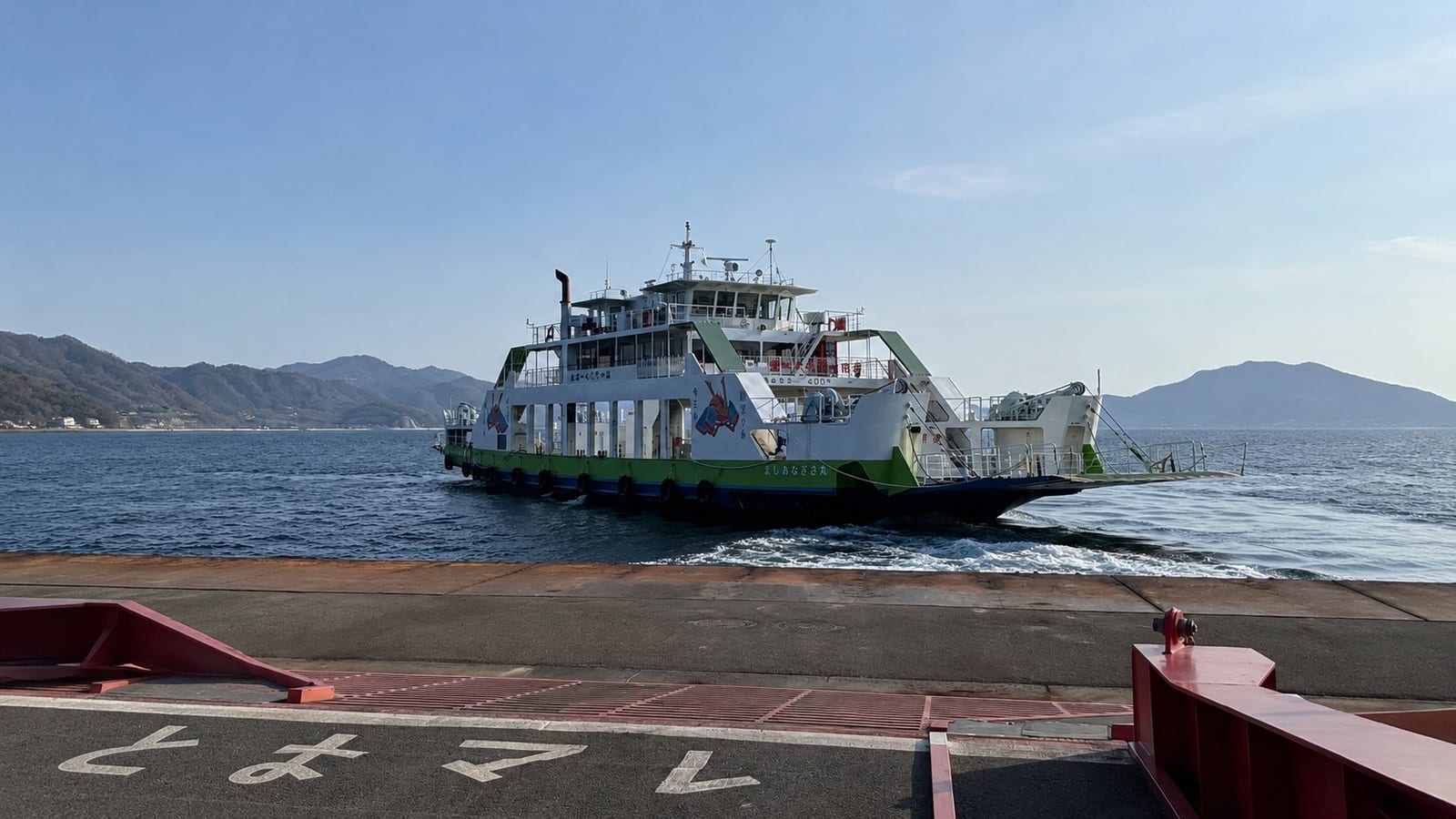
Two operators serve the route year-round with roughly 1–2 sailings per hour: the Daisan Omishima car ferry (Sanyo Shosen) and the Kyukamura passenger boat. The crossing takes about 15 minutes.
Fares (adult): ¥360 one way / ¥720 return. Children (school age): ¥180 / ¥360. Preschoolers: free. The older figure of ¥300 that still circulates in travel blogs is out of date. Confirm the current timetable at the port or via the Kyukamura Okunoshima access page before you travel.
The rabbits: what to expect
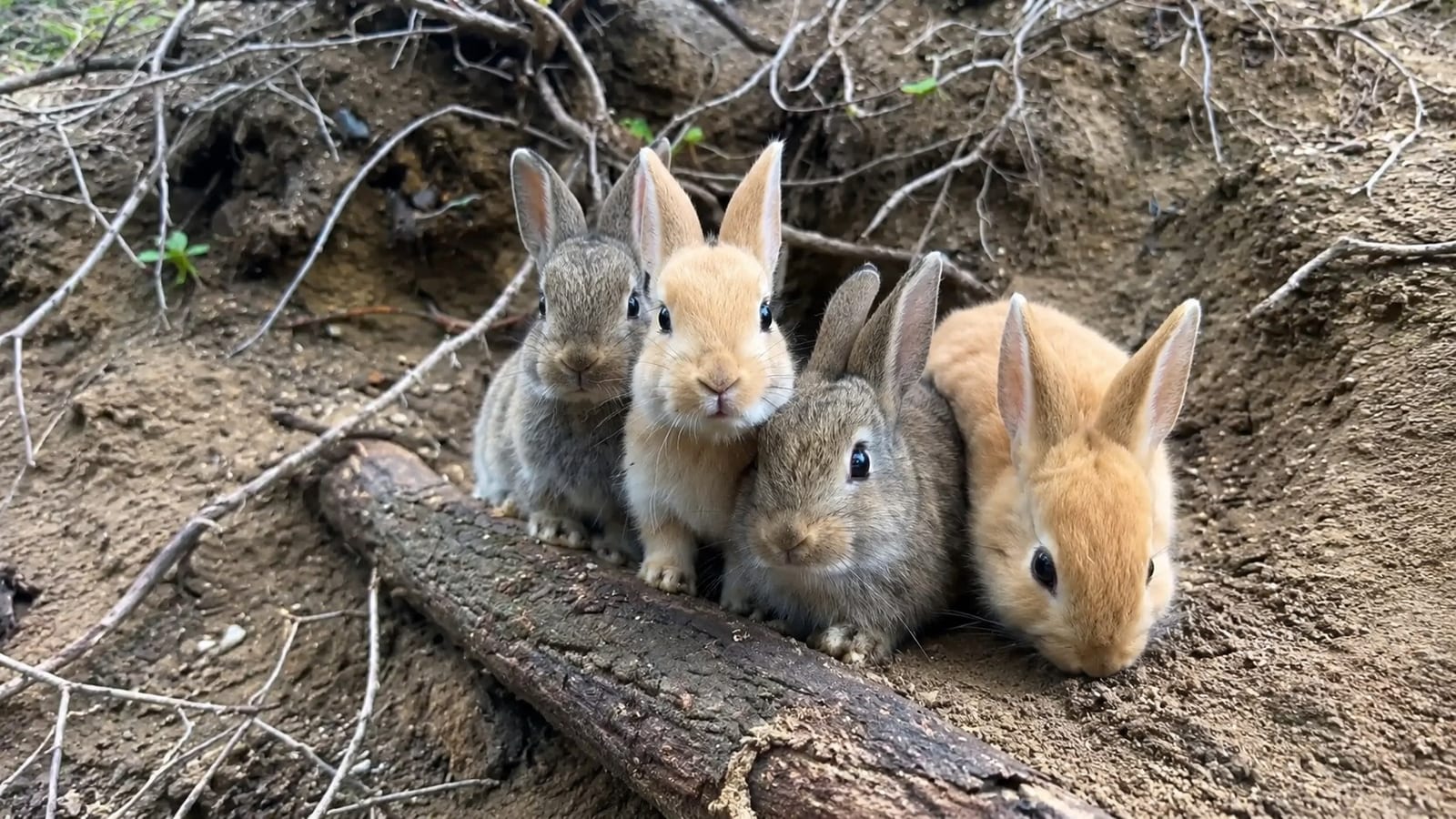
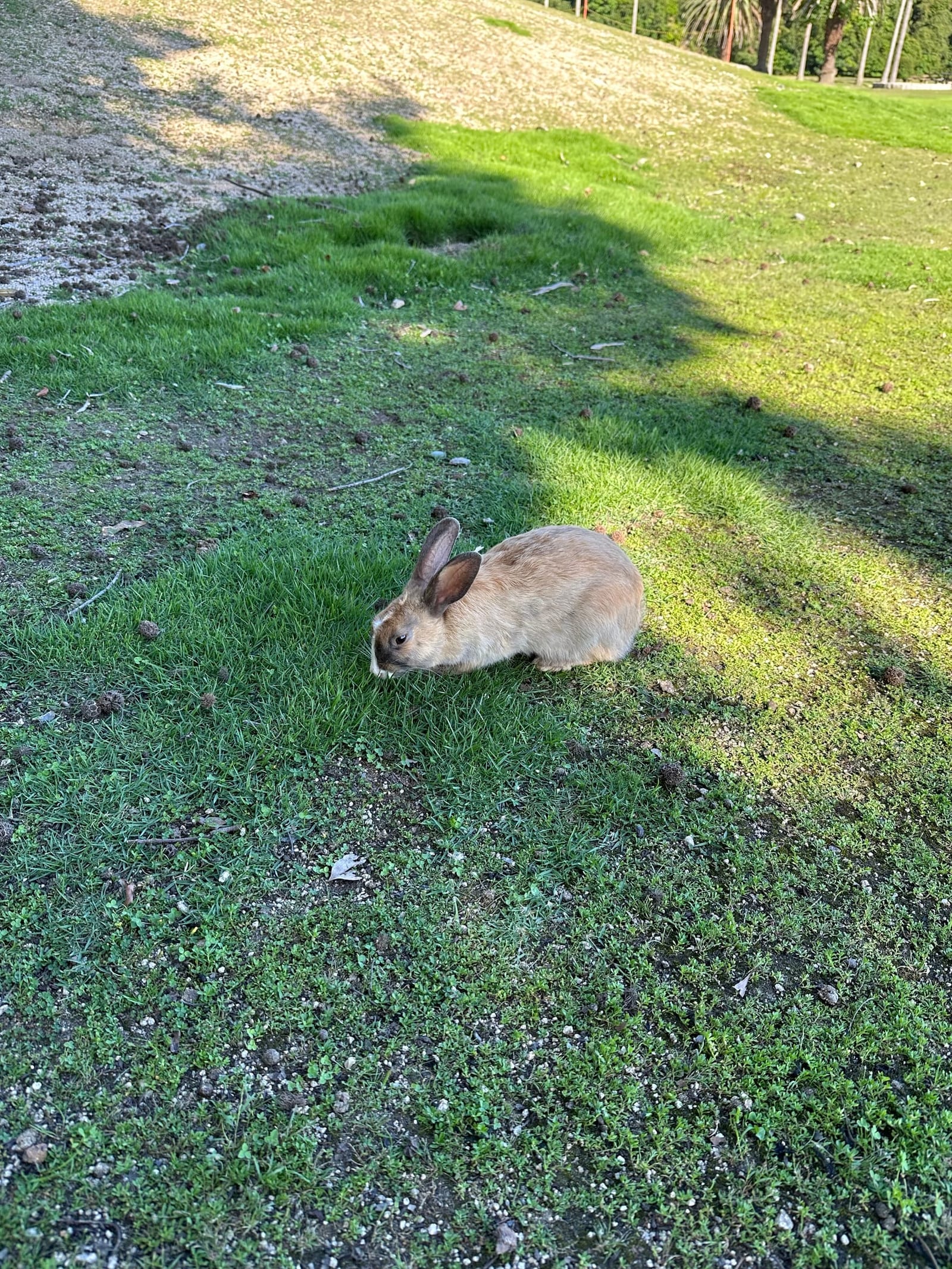
Photo: Masayuki Ogasahara / kure-japan.com
The rabbits on Okunoshima are wild animals, not tame pets — but decades of contact with tourists have made them unafraid of people. They approach quickly when they see food, and a cluster can form around a visitor within seconds of the bag coming out.
They concentrate most heavily near the ferry pier and around the Kyukamura hotel, but they are present across the island's paths, in the open areas around the ruins, and in the wooded sections. Early morning — the first ferry of the day — tends to be quieter; the rabbits are active and the crowds are smaller.
A few things to know before you go:
Rabbit food rules. Buy food at Tadanoumi Port before boarding. Suitable: pellets, cabbage, carrot. Harmful: bread, snacks, green onions or any allium. Do not feed rabbits on the road surfaces, where they risk being struck by hotel vehicles. Do not try to pick them up — they are wild, and the stress is real even if they tolerate it.
Numbers and welfare. Visitor-centre estimates put the population at over 900 in 2018; an Environment Ministry visual survey counted roughly 400 by 2022, a drop that coincided with COVID halting tourist feeding almost entirely. The ministry framed the decline as a return toward a more appropriate level rather than a crisis. Several hundred rabbits are present across the island as of the mid-2020s. The wild lifespan in this colony is roughly two years — turnover is constant, and the total tracks the tourist food supply more than any seasonal cycle. Dogs and cats are permanently banned from the island; without that, the colony would not exist at this scale.
They are not the test rabbits. Wartime animal experiments at the gas facility ended when the plant was dismantled in 1945 — the test animals were euthanized, not freed. The actual founding of the colony is disputed (see above), and a 2024 DNA study suggests the ongoing abandonment of pet rabbits contributed as much as any single release event.
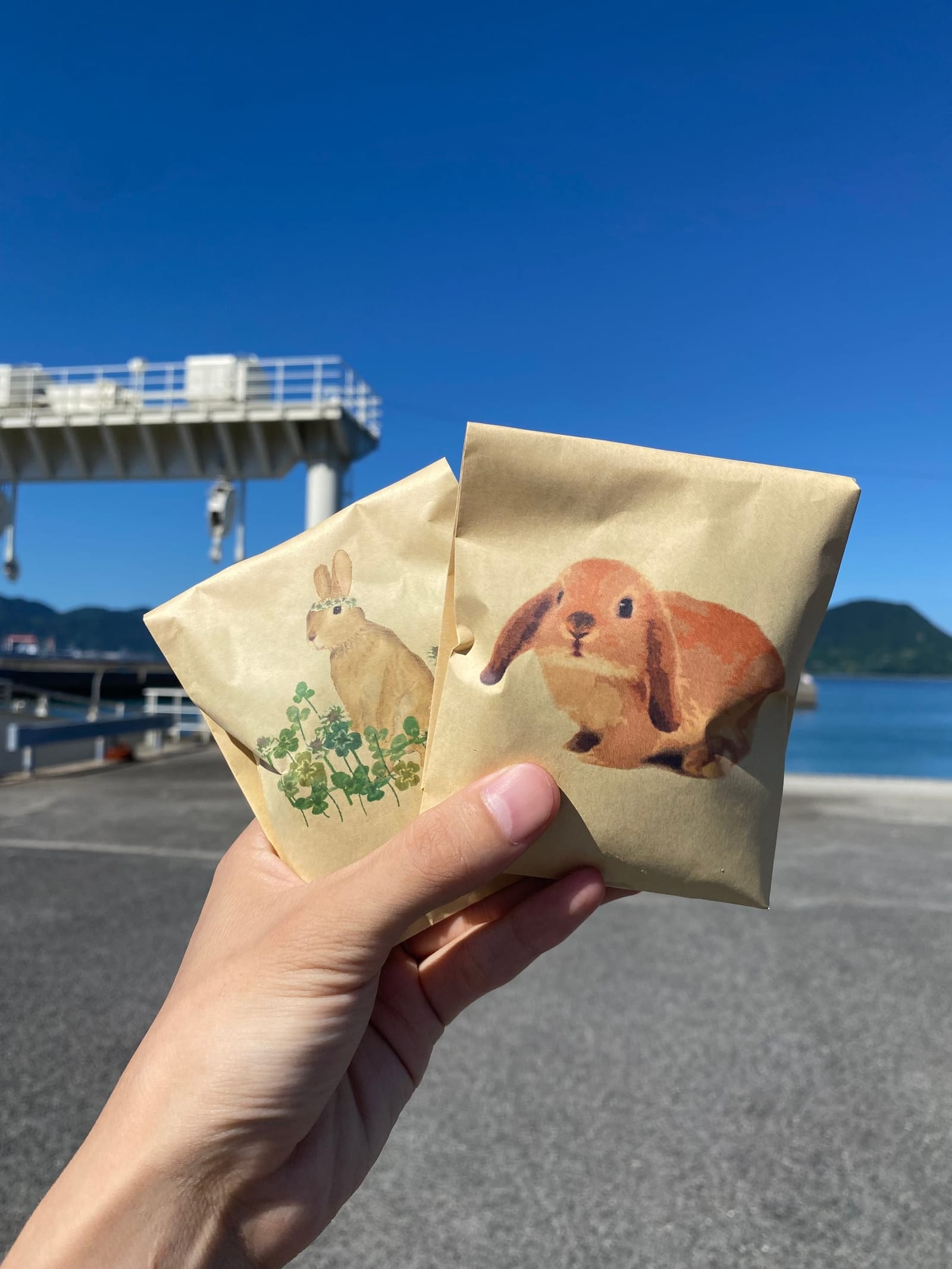
Photo: Masayuki Ogasahara / kure-japan.com — rabbit food bought at Tadanoumi Port before boarding.
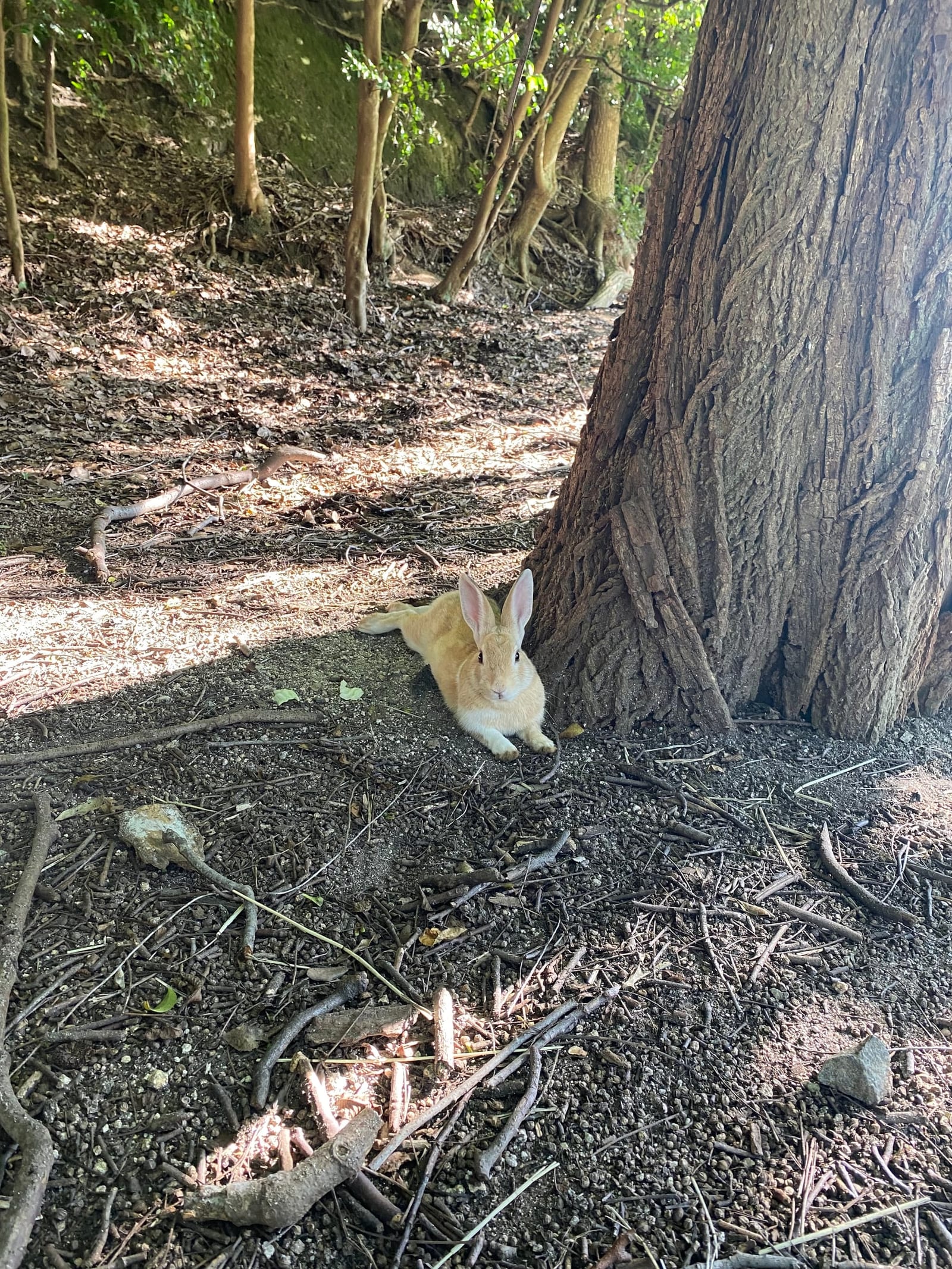
Photo: Masayuki Ogasahara / kure-japan.com
The island's darker history
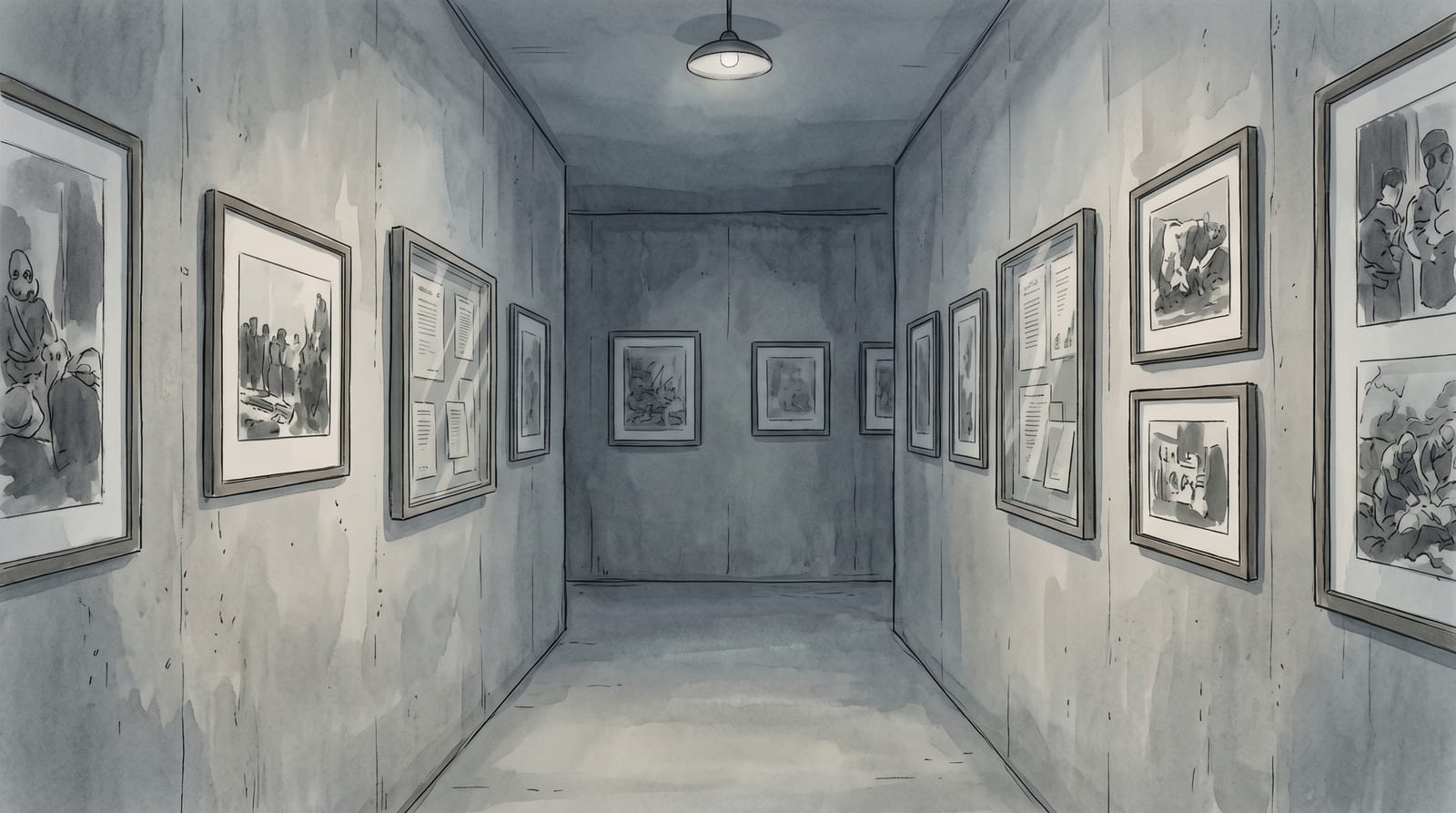
The same ground where rabbits now graze was, for sixteen years, one of the most dangerous places in Japan.
From 1927 to 1929, the Imperial Japanese Army built a secret poison gas manufacturing facility on Okunoshima. The island was chosen partly because it was small, isolated, and could be secured. It had already been suppressed on civilian maps before the gas plant opened: the Geiyō Fortress (芸予要塞), a network of gun batteries constructed between 1897 and 1902, was the original reason the area was painted out under fortress-secrecy rules. The gas plant, built decades later, reinforced a concealment already in place. The "erased from the map because of the poison gas factory" line is accurate, but the suppression ran deeper and longer than that story suggests. Over the life of the facility, more than 6,500 people worked on Okunoshima.
By the end of the Pacific War, the plant had produced roughly 6,600 tonnes of toxic agents, categorized by the army into four types: blister agents — mustard gas and lewisite (army code "きい/yellow", mustard alone accounting for roughly 2,800 tonnes); a vomiting and sneeze agent, diphenylcyanoarsine ("あか/red"); hydrogen cyanide ("ちゃ/brown"), from the same chemical family as the gas used in Nazi extermination facilities; and tear agent ("みどり/green"). These were not stockpiled solely in Japan. The gas manufactured on Okunoshima was used primarily in China. Estimates for Japan's broader chemical-warfare program run into the tens of thousands of casualties among Chinese soldiers and civilians; the share attributable specifically to Okunoshima-produced gas is not precisely documented. This is not an abstract footnote; it is the central fact of the island's wartime role.
From 1944, as adult men were conscripted for frontline service, the most dangerous tasks at the facility — handling shells, cleaning the production works — were transferred to mobilized students, including schoolgirls. Of the total workforce and postwar disposal workers combined, roughly 6,800 people are recognized by the Japanese government as having suffered gas-related disabilities. In the 2015 fiscal year, 2,073 recognized sufferers were still alive, at an average age of 88. Japan enacted a relief framework in 1974 — a mitigation measure, not a compensation law, a distinction those who documented this history are careful to make.
At the end of the war, records were burned and machinery was destroyed. Allied forces disposed of remaining gas stockpiles by dumping and burial. None of the operators were prosecuted.
In 1988, the Okunoshima Poison Gas Museum (大久野島毒ガス資料館) opened on the island. It documents the production history, the human cost among the Japanese workers who manufactured the weapons, and the broader context of chemical warfare in the Asia-Pacific conflict. The displays include photographs, production records, and medical documentation of the long-term health effects on workers and their families.
The museum is not easy viewing. It is also the place on Okunoshima that most clearly explains why the island matters beyond its rabbits. We recommend visiting it, not after. The ruins scattered across the island — the concrete generator rooms, the storage bunkers, the coastal battery emplacements — read differently once you understand what they were part of.
We will not tell you how to feel about the juxtaposition of the rabbits and the ruins. The island holds both.
What remains: the ruins
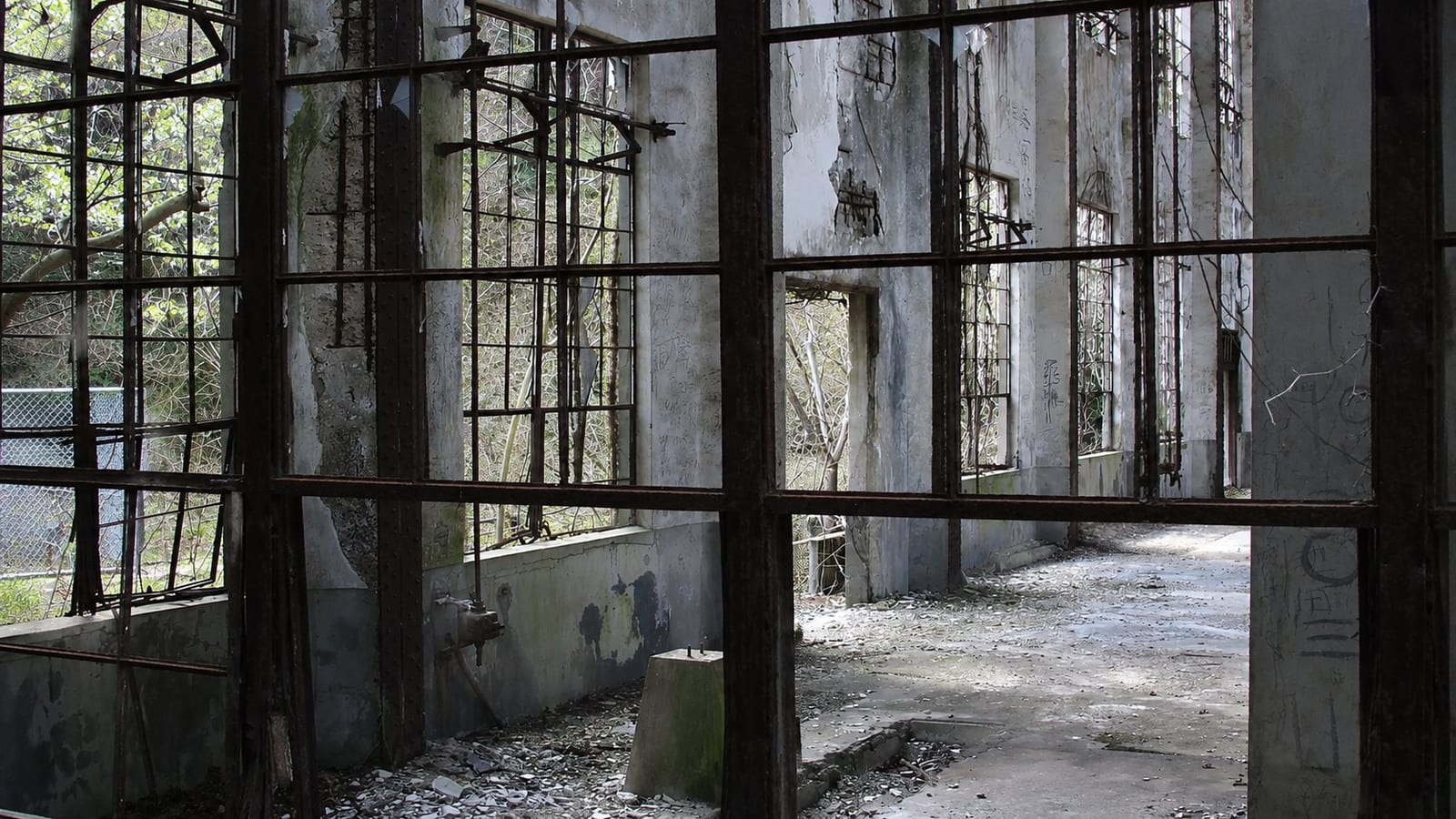
The island's ruins span three distinct military periods, compressed into roughly four kilometres of path. The oldest layer is the Geiyō Fortress: gun battery emplacements from the Meiji era, including positions that once held 28-centimetre guns, their concrete rings still intact. The poison gas production era left storage bunkers, generator rooms, and manufacturing shells scattered around the perimeter; the Nagaura storehouse on the western side held six tanks of roughly 100 tonnes each, and the concrete bases with the circular imprints of those tanks remain visible. A third layer sits on top of both: the power plant that supplied electricity to the gas works was reused by US forces as an ammunition depot during the Korean War period. The word "MAG2" — short for magazine — is reportedly still painted inside one of the structures, though this rests on the Takehara City ruins-tour documentation and we could not confirm it independently on our visit.
These are not curated museum spaces. They are simply there, open, weathered, and accessible on foot. Bring a torch if you intend to enter any of the darker interior passages. The paths between ruins are unpaved in places and can be muddy after rain.
The full circumference walk — paved path around the island's perimeter — is approximately 4 kilometres and takes 60–90 minutes at a relaxed pace. It passes the major ruin sites, the Poison Gas Museum, and several rabbit-dense areas. It is the best way to see the island as a whole rather than just the pier and hotel area.
Practical tips for your visit
Food and water
The Kyukamura Okunoshima hotel restaurant is the only place to eat a proper meal on the island. Day visitors can use it; hours are posted at the pier on arrival. If you want reliable options, bring a packed lunch and water from the mainland. There are no convenience stores.
Getting around the island
A free shuttle bus runs from the pier to the Kyukamura hotel. Beyond that, the island is walked. Rental bicycles are reported to be available, but we could not confirm the operator or rates from a primary source; ask at the Kyukamura hotel front desk on arrival. The terrain is manageable for most visitors; the perimeter path is paved for most of its length.
Photography
No restrictions on outdoor photography. The Poison Gas Museum — confirm at the entrance whether photography of exhibits is permitted, as this varies for museum interiors. No drone flights are permitted over the island.
Cash
Bring cash. There is no ATM on the island. The hotel restaurant and the ferry are both cash payment environments — confirm whether card payment is available at the hotel when you book.
Best time to visit
The rabbits are present year-round. Spring and autumn bring the most comfortable walking weather. Summer visits (July–August) mean hot conditions on the exposed perimeter path; start early and carry water. The island is significantly quieter on weekday mornings — the first or second ferry of the day will give you at least an hour before the main visitor rush from later trains.
Stay connected
Mobile data works on the island, but coverage can be patchy in some wooded sections. If your phone plan does not include Japan data, pick up a Klook Japan eSIM eSIM before leaving Hiroshima so navigation and translation apps work from Tadanoumi onwards.
Should I combine Okunoshima with a day in Kure?
The two fit together naturally on a single itinerary, but the logistics require planning. Kure and Tadanoumi are on the same JR Kure Line — from Kure Station to Tadanoumi is about 1 hour 14 minutes with one transfer, ¥860. The question is sequencing.
A Kure-first, Okunoshima-second day works if you arrive in Kure early (before 09:00), spend the morning at the Yamato Museum and the JMSDF submarine museum, have a quick lunch, and catch a mid-afternoon train toward Tadanoumi. The problem is that a meaningful visit to Okunoshima needs 3–4 hours on the island, and the last ferry back to Tadanoumi needs to be confirmed against the timetable so you do not miss your connection home. This plan is tight.
An Okunoshima-first, Kure-second day — catching the earliest ferry from Tadanoumi, spending 3–4 hours on the island, then heading back to Tadanoumi and connecting to Kure for the late afternoon — works better as a pace. The one-day Kure itinerary covers the Kure half in detail.
Realistically, both destinations deserve a half-day each. If you have only one full day, choose: Okunoshima is the more unusual experience, Kure is the denser one in terms of museums and history. Neither is a consolation prize for the other.
Sample itineraries
Quick Visit
Rabbits and ruins, back for dinner in Hiroshima
- Depart Hiroshima Station (JR Kure Line local, platform to check)
- Arrive Tadanoumi Station; walk 5 min to port; buy rabbit food
- Ferry to Okunoshima (¥360, 15 min)
- Island arrival — pier area, then perimeter walk and Poison Gas Museum (~3 hours)
- Ferry back to Tadanoumi (¥360 or use return ticket)
- Back in Hiroshima (via JR Kure Line)
Best Balance
Full island day — ruins, rabbits, perimeter walk, and museum
Recommended- Depart Hiroshima Station; arrive Tadanoumi ~09:00
- Buy food at Tadanoumi Port; take first or second morning ferry
- Full perimeter walk (~4 km, 90 min), major ruins, Poison Gas Museum (allow 45–60 min)
- Lunch at Kyukamura hotel restaurant (or packed lunch on the grass)
- Rabbit time near the pier, photos, slower pace
- Ferry back; return to Hiroshima by 17:30–18:00
Island + Kure
Okunoshima day one, Kure museums day two
- Day 1: Morning ferry from Tadanoumi, full day on Okunoshima, evening return to Kure or Hiroshima
- Day 2: Yamato Museum (¥1,000) and JMSDF submarine museum (free) in Kure, naval curry lunch, optional harbour cruise (¥2,200, pre-book)
- Stay: Rakuten Travel Hiroshima hotels — Hiroshima is the most central base; Kure Station hotels are also an option for day 2
The Poison Gas Museum
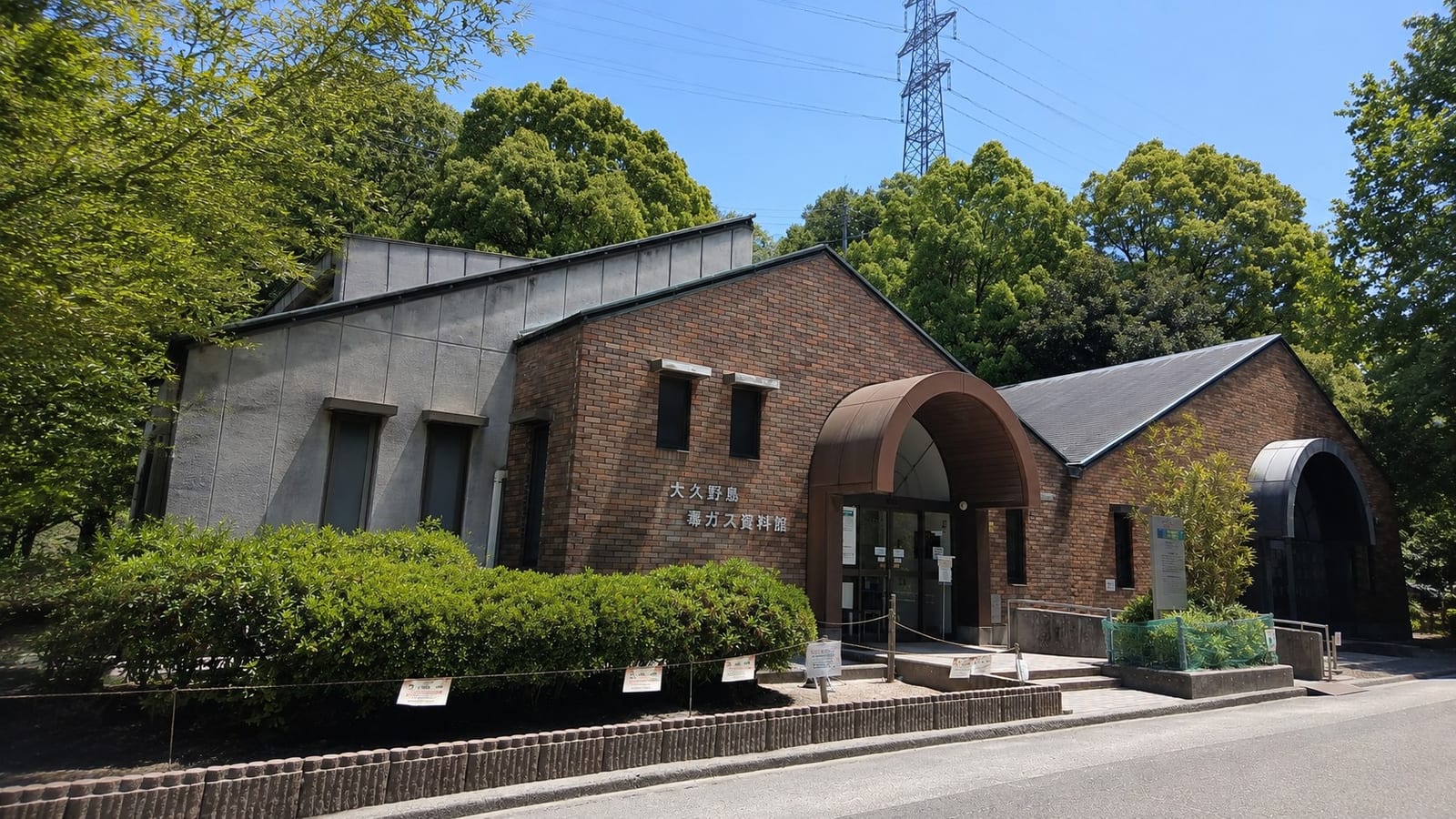
The Okunoshima Poison Gas Museum (大久野島毒ガス資料館) opened in 1988, forty-three years after the facility it documents was dismantled. The building was not a government initiative: it was constructed by the victims' own association (大久野島毒ガス被害者対策連絡協議会) and donated to Takehara City, making it the only museum of its kind in Japan. The building is modest — a single-storey structure near the island's interior — and the exhibits are not theatrical. Some 600 items are on display: photographs of the factory in operation, production logs, testimonies from surviving workers, and medical records of the long-term health effects of gas exposure.
The museum's primary focus is the Japanese workers who produced the weapons — the 6,500-plus people who worked the plant over its operational life, including the mobilized schoolgirls and students drafted from 1944. Their story has received less international attention than the wartime use of the gas they produced. Both are part of the same history.
Confirm the museum is open before you travel. It was temporarily closed from June 22, 2026 after a power outage, with no reopening date announced as of early July 2026. Check the Takehara City page (city.takehara.lg.jp) or call 0846-26-3036 before making it a centrepiece of your day.
When open, the normal hours are 09:00–16:00 (last entry 15:40). Admission is ¥150 for adults (19 and over); under-19s are free, and groups of 20 or more pay ¥120. It is closed December 29–January 3 and on occasional days.
The museum has some English signage, but the depth of documentation is primarily in Japanese. Visitors who read Japanese will get considerably more from the exhibits. A printed English pamphlet may not be available; we were unable to confirm one, so do not count on printed English material beyond the in-gallery signage.
This is not a visit you book. You walk in, pay (if there is an entry fee), and take whatever time you need. Most visitors spend 30–45 minutes. Some spend longer.
FAQ
How long should I spend on Okunoshima?
A half-day — 3 to 4 hours on the island — covers the rabbits near the pier and hotel, the Poison Gas Museum (allow 30–45 minutes), and a partial walk of the ruins. A full day (5–6 hours) allows the complete 4 km perimeter walk, all the major ruin sites, and a relaxed lunch at the hotel. Most day-trippers from Hiroshima aim for the half-day shape and find it satisfying.
Is Okunoshima suitable for children?
Generally yes, with caveats. Young children enjoy the rabbits and the open outdoor space. The Poison Gas Museum is not designed for children, and the content — chemical weapons, student labour, wartime casualty records — is unsuitable for younger ages. Parents should decide in advance whether to visit the museum with children present, and how to frame it if they do. The island itself is safe for children; the ferry crossing is calm in normal weather.
Can I stay overnight on Okunoshima?
Yes. The Kyukamura Okunoshima hotel is the only accommodation on the island. Staying overnight means you have the island in the early morning and evening, when the rabbit population is most active and the day-tripper crowd is absent. Book well in advance for peak season.
Are there any facilities on Okunoshima?
The Kyukamura hotel has a restaurant, restrooms, and rental equipment. The pier area has basic restrooms. Beyond that, facilities are minimal. There is no ATM, no convenience store, and no vending machines beyond what the hotel provides. Come prepared.
How does Okunoshima fit with the WWII history of the Hiroshima area?
Okunoshima's Poison Gas Museum covers a different aspect of WWII history than either Hiroshima's Peace Memorial Museum or the naval history museums in Kure. The Peace Memorial Museum focuses on the atomic bombing. Kure's Yamato Museum focuses on the Imperial Japanese Navy. Okunoshima focuses on the covert production of chemical weapons and the cost to the Japanese workers who made them — combined with the Chinese civilians and soldiers who were affected by those weapons. Together, the three destinations offer an unusually complete picture of the Pacific War's multiple layers. Visitors with a serious interest in WWII history in western Japan will find each one distinct.
Do I need to book the ferry in advance?
No advance booking is available or required. The ferry is a scheduled public service — you arrive at Tadanoumi Port and board the next sailing. Sailings run roughly every 30–60 minutes year-round. In peak season (spring, summer school holidays, Golden Week), the first few sailings of the day can fill quickly; arrive early if you want the morning ferry.
Related guides
More in our Hiroshima–Kure series:
- Best day trips from Hiroshima — the ranked overview, with Rabbit Island as the wildlife pick
- How to get to Okunoshima (Rabbit Island) — the full access guide: routes from Hiroshima, Osaka, and Tokyo by train, plane, and car, with the ferry timetable
- Hiroshima to Kure transport guide — all four options compared: JR train, highway bus, ferry, and car
- One day in Kure — the Yamato Museum, JMSDF submarine museum, naval curry, and afternoon options
- Yamato Museum complete guide — every floor, every major exhibit
- Etajima and the former naval academy — the ferry, the free guided tour, and the red-brick Midshipmen's Hall
- Tobishima Kaido cycling — the quieter island-hopping ride from Kure
Last visited: 2026-06 | Last updated: 2026-07-04 (deep-research enrichment: rabbit origin DNA study, production tonnage breakdown, victims' association history, ruins three-era layer) | Author: Masayuki Ogasahara | Illustrations generated with AI (Gemini) using reference photographs where a specific place is shown. Photographs marked "Photo: Masayuki Ogasahara" are original images taken on site. Some photographs include light AI-assisted post-processing for cleanup or exposure, with the scene itself unchanged. This article contains affiliate links to JRPass.com, Klook, and Rakuten Travel. We may earn a small commission at no extra cost to you. All admission, pricing, and operational information was verified against official sources in June 2026 where available; please confirm with the relevant operators before your visit as details can change.